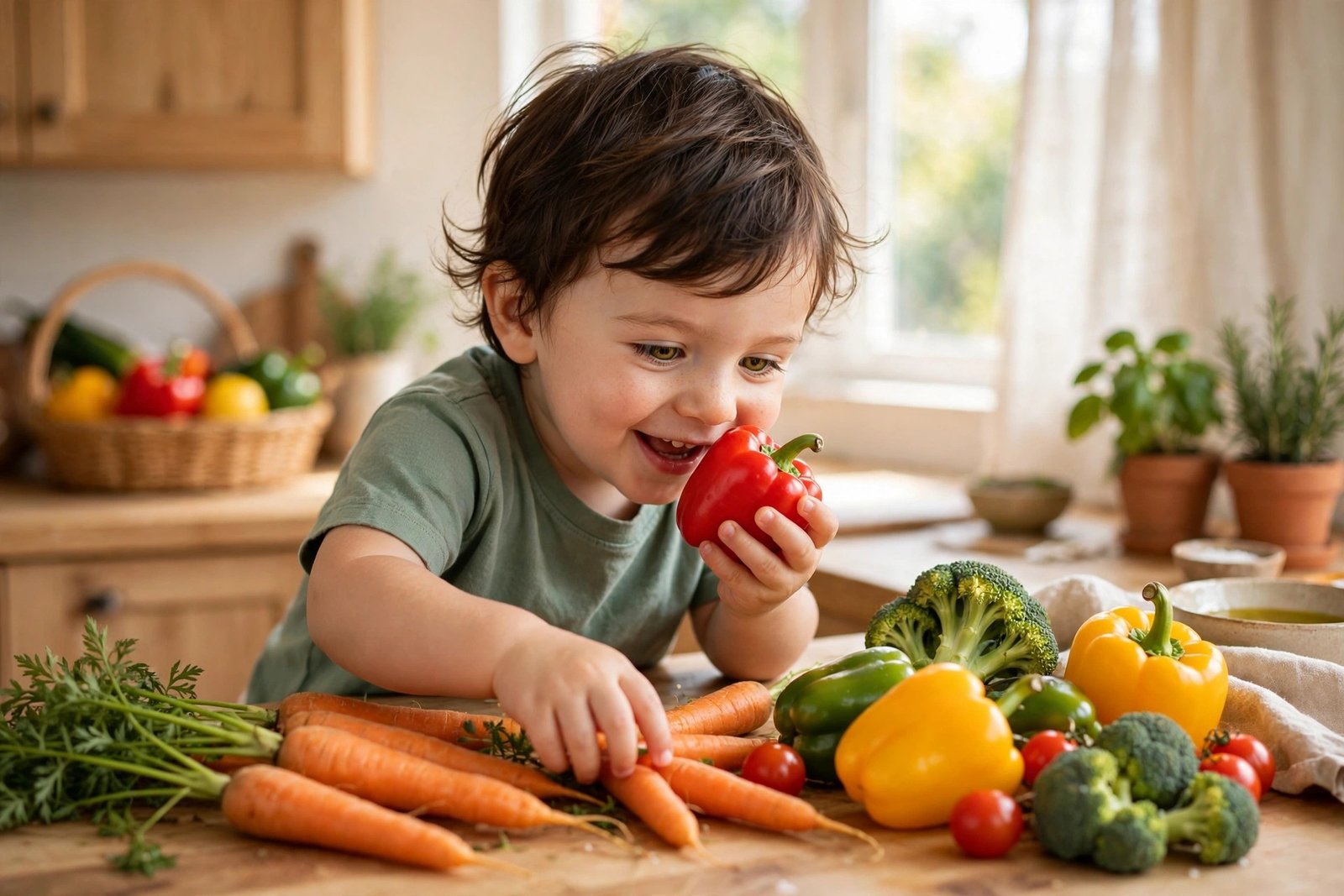
If your toddler refuses vegetables, you are not alone, and you have not failed. In our kitchen, peas were pushed off the tray, carrots were studied like tiny strangers, and broccoli was once hidden in a toy truck. At the time it felt worrying. Looking back, it was very normal toddler behaviour.
Many toddlers go through a cautious phase with new food. Bitter flavours can taste strong, and saying no is also how they practise being their own person. A vegetable loved one week may be rejected the next. That swing does not mean you need a stricter plan. It usually means you need a calmer, more patient one.
This guide shares 12 low-pressure ways that helped in our home. None of them involves forcing, chasing your child around with a spoon, or promising dessert as a reward. The goal is not to win a single meal. The goal is familiarity, so vegetables start to feel safe, ordinary and worth trying in their own time. If you are also planning first foods, our baby’s first foods week-by-week plan shows how early tastes can build gradually too.
Quick Answer
When a toddler refuses vegetables, keep offering them in tiny amounts alongside a food your child already accepts, stay neutral, and repeat often without pressure. Looking at, touching, smelling and licking a vegetable all count as progress. It can take 10 to 15 or more calm exposures before a toddler tastes and accepts a new vegetable. You decide what food is offered and when. Your toddler decides whether to eat it and how much. That simple split, often called the division of responsibility, takes the battle out of mealtimes.
Why Toddlers Refuse Vegetables
Understanding the reason makes refusal easier to handle. Some toddlers dislike strong tastes. Others dislike texture, such as slimy courgette or stringy beans. Some are simply full, tired, teething or distracted. A large portion can also feel overwhelming before a bite is taken.
Growth slows after the first birthday, so appetite often drops too. Your toddler may eat little at one meal and much more at the next. That pattern is common. What helps most is a steady routine, regular chances to see vegetables, and no drama when they are left untouched. For wider support, our guide to picky eater toddler mealtime survival shares routines that kept our table calmer.
If your toddler only eats a few foods, vegetables are often the first group to disappear. Even then, slow familiarity work still matters, and fruit can help provide variety while vegetable confidence grows.
12 Low-Pressure Ways to Make Veggies Familiar
Use one or two ideas at a time. You do not need to do all 12 in one week. Small steps, repeated often, work better than a big push.
1. Keep exposure neutral and repeat it
Put the vegetable on the table or plate regularly, even if it was refused yesterday. Say nothing special about it. Neutral exposure means your child can look, poke, smell or ignore it without a speech about being healthy. Over time, ordinary becomes familiar, and familiar feels safer to taste.
2. Always add a safe food
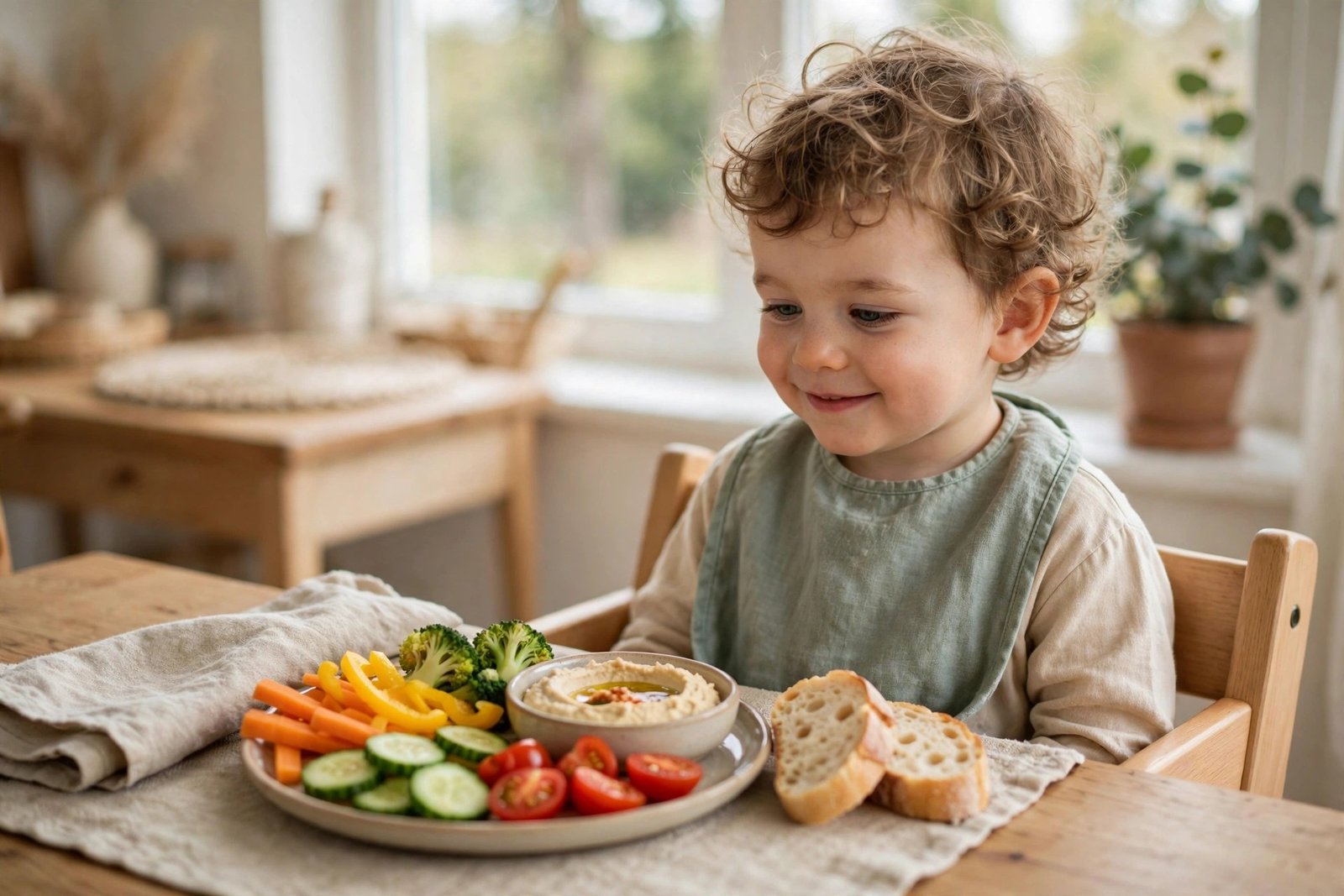
Never serve vegetables alone and hope for the best. Always place them alongside one accepted safe food, such as bread, pasta, rice, cheese or a favourite fruit. A safe food lowers stress for your toddler and for you, because the meal does not depend on the new vegetable being eaten.
3. Serve tiny portions
Start very small: one pea-sized taste, two sweetcorn kernels, or a single thin carrot stick. A tiny portion looks manageable and reduces waste. If your toddler eats it and wants more, you can offer more. If not, the small amount left behind feels like no big loss.
4. Let touching and smelling count
Progress is not only swallowing. Watching you eat broccoli, touching a green bean, smelling cucumber, licking tomato and then putting it down are all real steps. Praise curiosity lightly, or simply smile. When we stopped waiting only for a clean plate, we noticed how much learning was already happening.
5. Eat the same vegetables yourself
Toddlers copy. Sit down, eat the same vegetables, and enjoy them without performing. A simple comment such as crunchy carrots is enough. Avoid turning your plate into a lesson. Modelling works because it is normal life, not pressure in disguise.
6. Involve your toddler before the meal
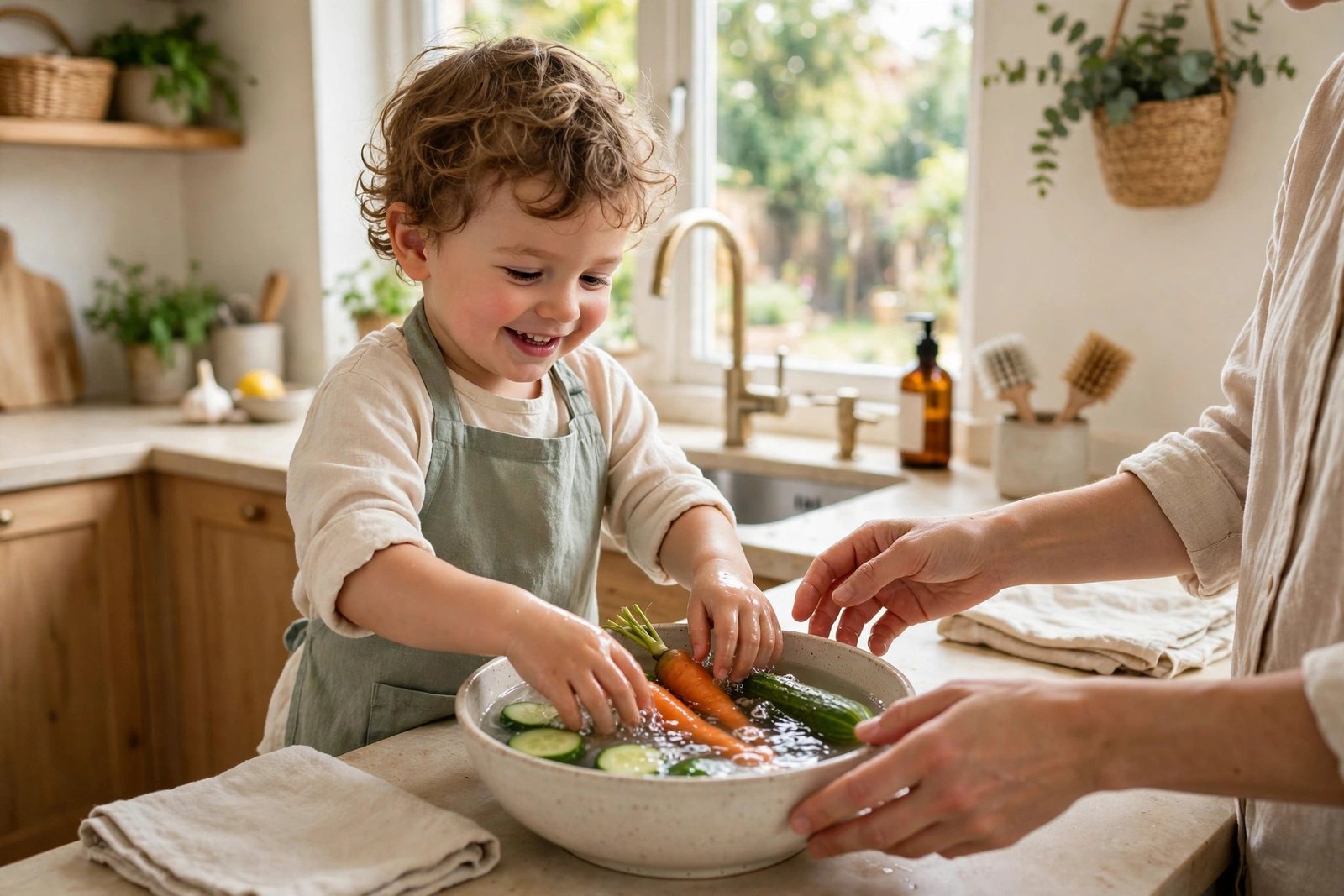
Let your toddler choose between two vegetables at the shop, carry the pepper in the basket, wash carrots in a bowl of water, or tear lettuce with their hands. Helping makes the food known before it reaches the plate. A vegetable they helped wash feels less like a surprise.
7. Grow or pick something together
You do not need a big garden. A pot of herbs on a windowsill, cress on damp kitchen paper, or a few cherry tomato plants can spark interest. Watering and watching something grow builds connection. Your toddler may still not eat the first harvest, and that is fine. The familiarity still counts.
8. Offer choices, not orders
Try a choice between two vegetables: peas or sweetcorn today? Choices give control without opening the whole menu. Keep the choice small and real. If both are refused, stay calm and move on. The offer itself was another exposure.
9. Change the form, keep the vegetable visible
Serve the same vegetable in different honest forms: raw carrot sticks, cooked carrot coins, roasted wedges or grated carrot in a sandwich. Add a dip such as yoghurt dip or hummus if your toddler likes dipping. Keep the vegetable recognisable most of the time so learning transfers to the plain vegetable later.
10. Use play and books away from the table
Play kitchens, toy vegetables, colouring pictures and simple storybooks about food all build familiarity without any expectation to eat. Sorting vegetables by colour at the kitchen counter became a favourite game in our house. Low-pressure learning away from meals often shows up later at the table.
11. Keep meals short, calm and predictable
Aim for a regular meal and snack routine, with a meal lasting about 20 to 30 minutes. When the meal is over, clear the food away without comment or a replacement meal cooked to order. Predictable endings help toddlers trust that no battle is coming, which makes the next exposure easier.
12. Add hidden vegetables only as an extra
Blending vegetables into a sauce, soup or muffin can be a useful extra, and there is no need to feel guilty about it. But do not hide veggies as the only strategy. If a child only ever meets vegetables hidden, they never learn to recognise and accept them openly. Use hidden vegetables for nutrition support, and keep visible vegetables for learning.
Making the Wider Plate Work
Vegetables are one part of the plate, not the whole story. Offer a variety of fruits and vegetables across the week in different colours. If vegetables are refused at lunch, a favourite fruit at snack time still adds variety and keeps the day balanced without a fight.
Keep milk as a drink, not a meal replacement. A toddler who fills up on milk before meals may have little appetite left for food. Offer milk in a cup at set times rather than letting it replace lunch or dinner, and offer water freely. If unsure how much milk suits your child, ask your health visitor or doctor.
Above all, hold on to the division of responsibility. Your job is to offer a range of foods at regular times in a calm place. Your toddler’s job is to decide what and how much to eat from what is offered. When both jobs are respected, mealtimes feel safer.
Mistakes to Avoid
- Forcing, spoon-chasing or holding food to your toddler’s mouth after they have said no.
- Using dessert as a bribe, such as eat your broccoli and then you can have pudding. This makes dessert seem more valuable and broccoli seem like a punishment.
- Making a separate replacement meal every time vegetables are refused.
- Serving a large portion of a new vegetable with no safe food beside it.
- Giving up after two or three tries. Many toddlers need 10 to 15 or more exposures.
- Hiding vegetables as the only plan, so your child never learns to know them openly.
- Commenting on every bite, praising too heavily, or showing disappointment at the table.
- Letting milk or endless snacks replace meals, leaving no appetite for trying food.
When to See a Doctor
Most vegetable refusal is a normal phase and improves with time and calm exposure. Get help sooner if your toddler is losing weight, not growing as expected, or seems unwell. Also speak to your doctor or health visitor if your child gags or vomits often with textures, coughs or chokes regularly when eating, has ongoing tummy pain, blood in their stool, or persistent diarrhoea or constipation.
Ask for support too if accepted foods keep shrinking for several weeks, mealtimes cause strong distress, or you worry about missing nutrients. You do not need to wait until you feel desperate. A short conversation can bring reassurance. This article shares parent experience only and does not diagnose any condition.
Frequently Asked Questions
How many times should I offer a vegetable before giving up?
Do not give up after a few tries. Research and feeding guidance often suggest 10 to 15 or more neutral exposures, and some toddlers need even more. Each calm look, touch, smell or lick is part of learning, so keep portions tiny and keep offering without comment.
Is it okay to hide vegetables in sauces and soups?
Yes, as an extra. Hidden vegetables can support nutrition on hard days. Just do not rely on hiding as your only approach. Keep also serving vegetables openly in small amounts so your toddler can learn their look, smell, texture and taste.
What if my toddler will only eat fruit and no vegetables?
Keep offering vegetables calmly while continuing the fruits your child enjoys. Fruit and vegetables share many helpful nutrients, so fruit still supports variety while vegetable confidence grows slowly. Keep a safe food at each meal and speak to your doctor if the accepted list keeps getting smaller.
Should I stop dessert if my toddler refuses vegetables?
No. Serve dessert, if your family has it, as a normal part of the meal rather than a prize for eating vegetables. Using dessert as a bribe usually backfires. A neutral approach protects both foods: vegetables stay ordinary, and dessert stays ordinary too.
This article is for general information and parent-to-parent support only and is not medical advice. For the full details, please read our Disclaimer.