
If mealtimes with your toddler have turned into a daily battle, you are not alone. One day they love pasta, the next day the same pasta is pushed away. You end up stressed, worried they have not eaten enough, and tempted to cook something different just so they eat.
In my experience, this stage is exhausting because it feels personal. You cooked with love, and your child acts as if you served something terrible. Picky eating is very common in the toddler years. Appetites go up and down, growth slows after the first year, and toddlers are learning to say no. You are not doing something wrong.
This guide will help you survive mealtimes without pressure and without becoming a short-order cook, with a calmer way to plan meals, offer new foods, and end a meal when your toddler is done.
Quick Answer
Serve one family meal at set times, always include at least one accepted safe food your toddler already likes, and let your toddler decide whether to eat and how much to eat. Keep meals short and calm, about 20 to 30 minutes, with no pressure, no force, and no bribes. Offer new foods in tiny amounts alongside familiar foods. A new food can take 10 to 15 or more exposures before acceptance. Do not cook a separate meal if the first one is refused.
Understanding the Division of Responsibility
The idea that helped me most is the division of responsibility. As the parent, you decide what food is offered, when meals and snacks happen, and where eating happens, usually at the table. Your toddler decides whether to eat, and how much to eat from what is served.
When you respect that split, you stop chasing your child with a spoon, counting bites, or making deals for one more mouthful. Your child learns to listen to hunger and fullness. Some meals they will eat a lot, some meals almost nothing. Over a whole week, most toddlers do better than one stressful dinner suggests.
If your little one is younger, our guide on what to do when your baby is refusing solids may help too. The same calm, no-pressure idea starts with those first tastes.
How to Build a Plate Your Toddler Can Handle
Always Include a Safe Food
A safe food is one your toddler accepts most of the time, like bread, plain pasta, rice, cheese, yoghurt, or a favourite fruit. Always include at least one safe food on the plate, even if the rest of the meal is new.
Your toddler feels safer knowing there is something they can eat, and you can relax knowing they will not leave completely hungry. The safe food is not a reward or a backup meal. It is part of the family meal, served from the start.
Keep New Foods Small and Neutral
Offer something new in a tiny amount. One spoonful of peas or two small cubes of carrot feels much less scary than a full portion. Put it on the plate, say what it is simply, then talk about something else.
Do not watch every reaction or praise tasting too much. Licking, poking, smelling, or taking food out again still counts as learning. These small steps often come before eating.
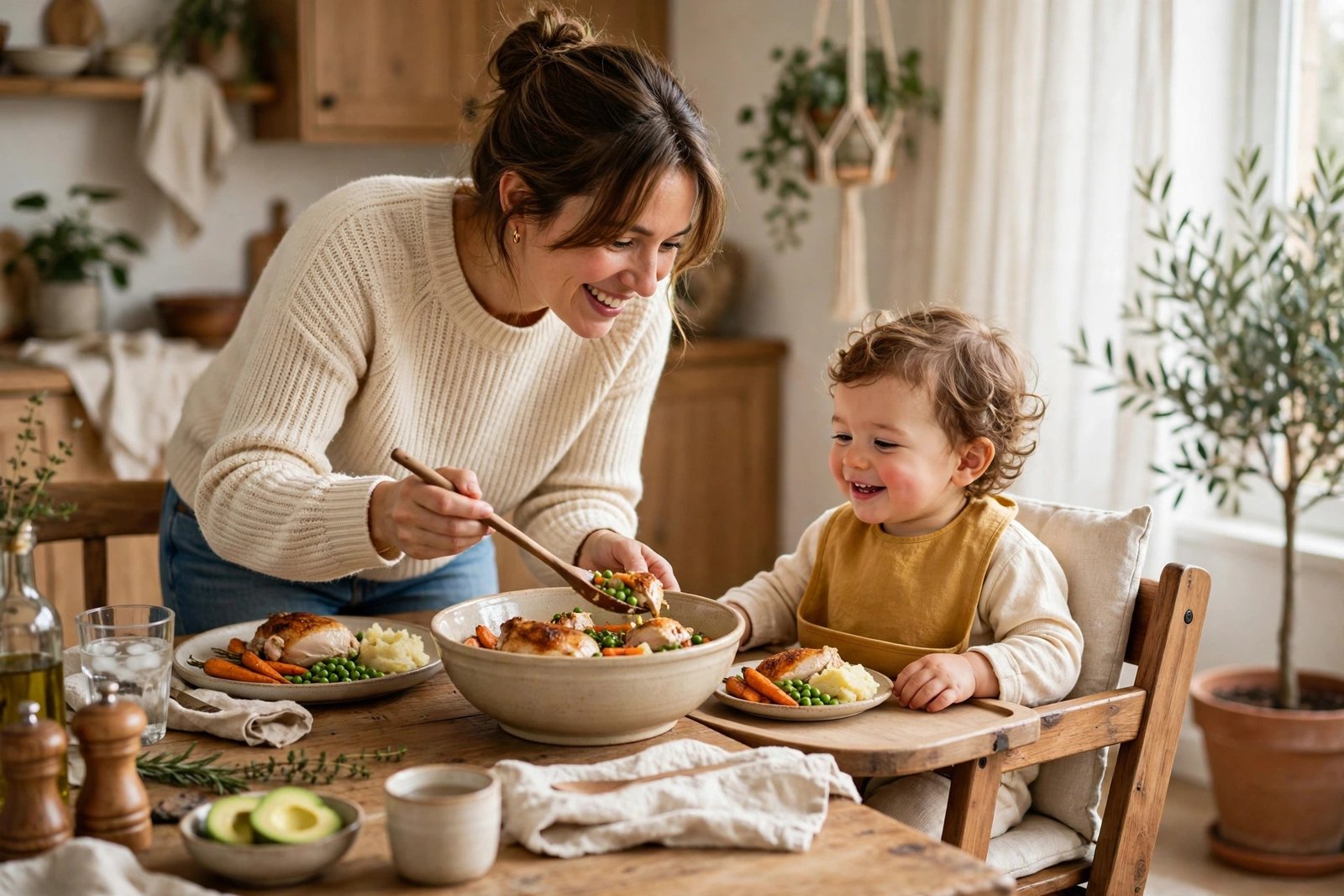
Serve One Family Meal, Not Separate Meals
Do not cook separate short-order meals. Making a different dish every time the family meal is refused will burn you out, and your toddler learns that refusing brings a better option.
Serve one family meal with a safe food included. Keep it toddler-friendly without making it different: serve sauces on the side, leave chilli out until the end, and cut food into safe, easy pieces.
Set a Simple Meal and Snack Routine
Offer three meals and one or two planned snacks each day, at roughly the same times. Structured meals and snacks work better than all-day grazing, and your toddler can come to the table a little hungry, not starving and not already full.
Grazing is a common trap. Crackers in the pushchair, a pouch in the car, and milk all morning can fill a small tummy, so lunch is refused. Between meals, water is usually enough. Sit for snacks at the table when you can, so eating has a clear start and end.
Keep mealtimes short and calm. When 20 to 30 minutes are up, or your toddler is throwing food, pushing the plate away, or trying to climb down, end the meal in a friendly way, clear the food without comment, and move on. The next meal or snack comes at the usual time.
What to Say and Do at the Table
Try neutral, short phrases that describe what is happening without pressure.
- You do not have to eat it. You can leave it on your plate.
- Dinner is pasta, chicken, peas, and bread tonight.
- You are telling me you are all done. Okay, we will wash hands now.
- Kitchen is closed until snack time.
Sit together when you can and eat the same food. Toddlers copy what they see. Talk about the day or a funny story, not about bites or how much is left on their plate.
Never use dessert as a bribe or reward for eating. Saying ice cream comes only if vegetables are eaten teaches that vegetables are the hard job and dessert is the prize. If dessert is part of the meal, serve a small portion in a neutral way, for everyone, whether they ate a lot or a little.
If vegetables are your biggest struggle, our ideas for when a toddler refuses vegetables offer more gentle ways to keep offering them without a fight.
Keep Offering Without Pressure
It is easy to stop offering a food after three or four refusals. But a new food can take 10 to 15 or more neutral exposures before acceptance, and some take many more. Seeing it on your plate, helping wash it, or having a tiny piece on their plate all count as exposure.
Try the same food in a different way. Broccoli may be refused roasted, touched when steamed, and eaten with a dip weeks later. Pair new foods with a safe food, stay calm, and offer again another day. No pressure does not mean no offering. It means offering often, in a relaxed way.
In my experience, there is no magic recipe. What helps is keeping the routine, keeping the table calm, and repeating the same patient message: this is what is for dinner, you can eat what you need.

Mistakes to Avoid
- Pressuring, forcing, or spoon-feeding a toddler who is saying no or turning away.
- Using dessert, sweets, or screen time as a bribe or reward for eating.
- Cooking a separate short-order meal when the family meal is refused.
- Serving a meal with no safe food your toddler feels able to eat.
- Letting meals drag on, or chasing your toddler with food afterwards.
- Allowing all-day grazing, so your toddler never arrives at a meal hungry.
- Giving up on a new food after only two or three tries.
- Commenting a lot on how little or how much your toddler ate.
We all do some of these on a hard day. I have too. The goal is not perfection, just noticing the pattern and returning gently to the routine at the next meal.
If every meal is the same few foods, you may relate to our article about a toddler who only eats a few foods and what steady, low-pressure support can look like at home.
When to See a Doctor
Most picky eating improves slowly with time, routine, and repeated calm offers. Still, some signs mean you should get help rather than wait. Trust your instincts. You know your child best.
Talk to your doctor, health visitor, or pediatrician if your toddler is losing weight, not growing as expected, seems very tired, or you worry they are not eating or drinking enough over many days. Also seek advice if problems last a long time, get worse, or cause stress at nearly every meal.
Get help sooner if your toddler gags, coughs, chokes, or vomits often with eating, has trouble chewing or swallowing, or seems in pain when eating. Ask for advice too for ongoing tummy problems, blood in stool, frequent illness, or suddenly refusing foods they used to eat well. This guide cannot diagnose any child or condition and is not medical advice. A professional who knows your child can check growth and refer you for feeding support if needed.
Frequently Asked Questions
What if my toddler eats nothing at dinner?
Stay calm and end the meal at the usual time. If a safe food was on the plate, they had a fair chance to eat. Offer the next planned snack or meal at the usual time, not a special replacement. Most toddlers make up for a light meal later. If it happens often and you worry about growth, talk to your doctor.
Should I make a separate meal if my toddler refuses the family meal?
No. Serve one family meal, but always include at least one safe food in it. Your toddler then has something they can eat without you cooking again. Cooking a separate meal teaches that refusing works, and it makes much more work for you.
How many times should I offer a new food before giving up?
More times than most of us expect. A new food can take 10 to 15 or more neutral exposures before acceptance, sometimes longer. Keep portions tiny, offer it alongside safe foods, and do not pressure your toddler to taste it. Seeing, touching, and smelling still help.
Is it okay to offer dessert if my toddler did not eat dinner?
Yes, if dessert was planned as part of that meal. Serve it in a neutral way, and do not link it to how much dinner was eaten. Never use dessert as a bribe or reward for eating. If dessert is not part of the meal that day, move on to the next meal or snack at the usual time.
Please note: this article is for general information only and is not medical advice. For the full details, please read our Disclaimer.