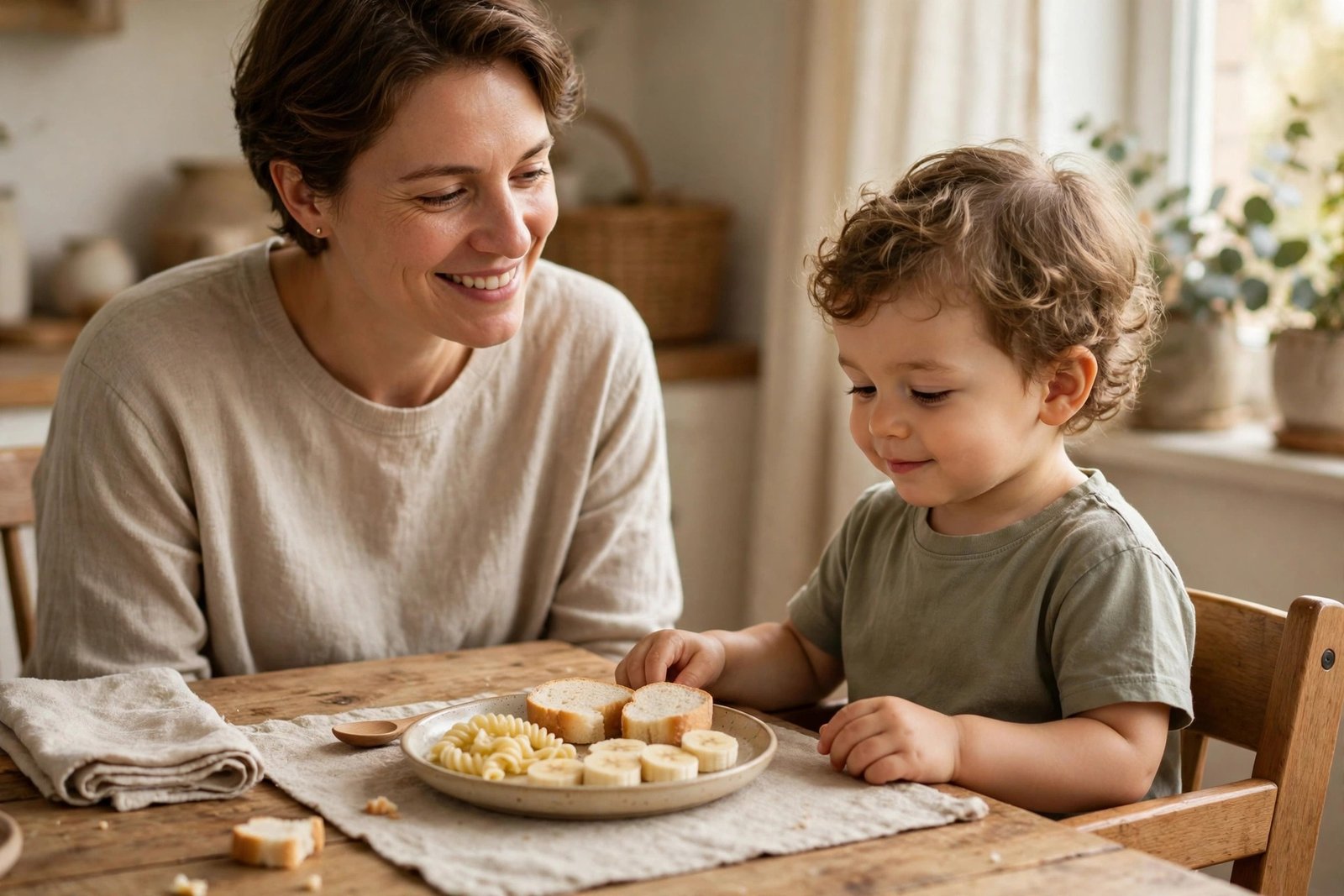
If your toddler will only eat a few foods, you are not alone, and you are not doing something wrong. One week it is pasta, banana, and toast. The next week toast is out, and you wonder how anyone grows on three bites of pasta.
It can feel frightening when other children seem to eat everything. You serve a lovely family meal, your toddler pushes it away and asks for the same safe food again, and you end the evening feeling guilty. I have sat at that table too.
The helpful truth is that a short list is very common in toddlers, and for many children it is a phase that slowly widens. This guide helps you sort out when to relax at home, and when to ask for extra help.
Quick Answer
Most toddlers who only eat a few foods are going through a normal, common phase, especially between about 18 months and three years. If your child is growing steadily along their own pattern, has energy to play, and reliably eats some foods from a few different groups, you can usually relax and keep offering tiny tastes alongside a safe food.
Small steps work better than big changes. Try food chaining, where you change one small thing at a time from an accepted food. Avoid force or bribes. Get help promptly if you notice weight loss or faltering growth, regular gagging or vomiting on textures, a list that keeps shrinking, clear nutritional gaps, strong distress at meals, or swallowing problems.
Why Toddlers Narrow Their List
Toddlers are learning everything at once: walking, climbing, and talking. A new flavour, a mixed texture, a sauce touching something else, or even a different pasta shape can be enough to say no.
Control and caution are normal
Saying no is part of development. Your toddler cannot choose much about their day, but they can close their mouth. That does not mean they are being difficult. Caution also makes sense. If something looks or feels unfamiliar, waiting and watching is sensible. Many children need to see a food many times before they will taste it.
Appetite goes up and down
Toddler appetite is rarely steady. Growth slows after the fast first year, teeth come through, and colds come and go. One big lunch and a tiny tea is common, so look at food over a week rather than judging one meal. You may recognise the same ups and downs you saw when your baby was refusing solids.
What a Small but Reassuring List Can Look Like
There is no magic number that makes a diet good enough. What matters is the spread and the trend. A child who eats plain pasta, bread, banana, yoghurt, cheese, cucumber, and one or two trusted hot foods is eating from several groups, even if it feels repetitive. That is very different from a list down to one or two foods and getting smaller.
Ask yourself a few gentle questions. Is my child growing along a steady pattern? Do they have energy to play? Do they accept some foods for energy, some for protein, and some fruit or vegetables, even if only one or two of each? If the answer is mostly yes, that is reassuring. A loved food may also be dropped without warning, then return weeks later.
Gentle Ways to Help at Home
You cannot make a toddler like a new food, and force usually backfires. Build a calm routine, keep tastes very small and safe, and let repetition do the slow work. Your job is offering. Your child’s job is deciding how much to eat.
Keep a safe food on every plate
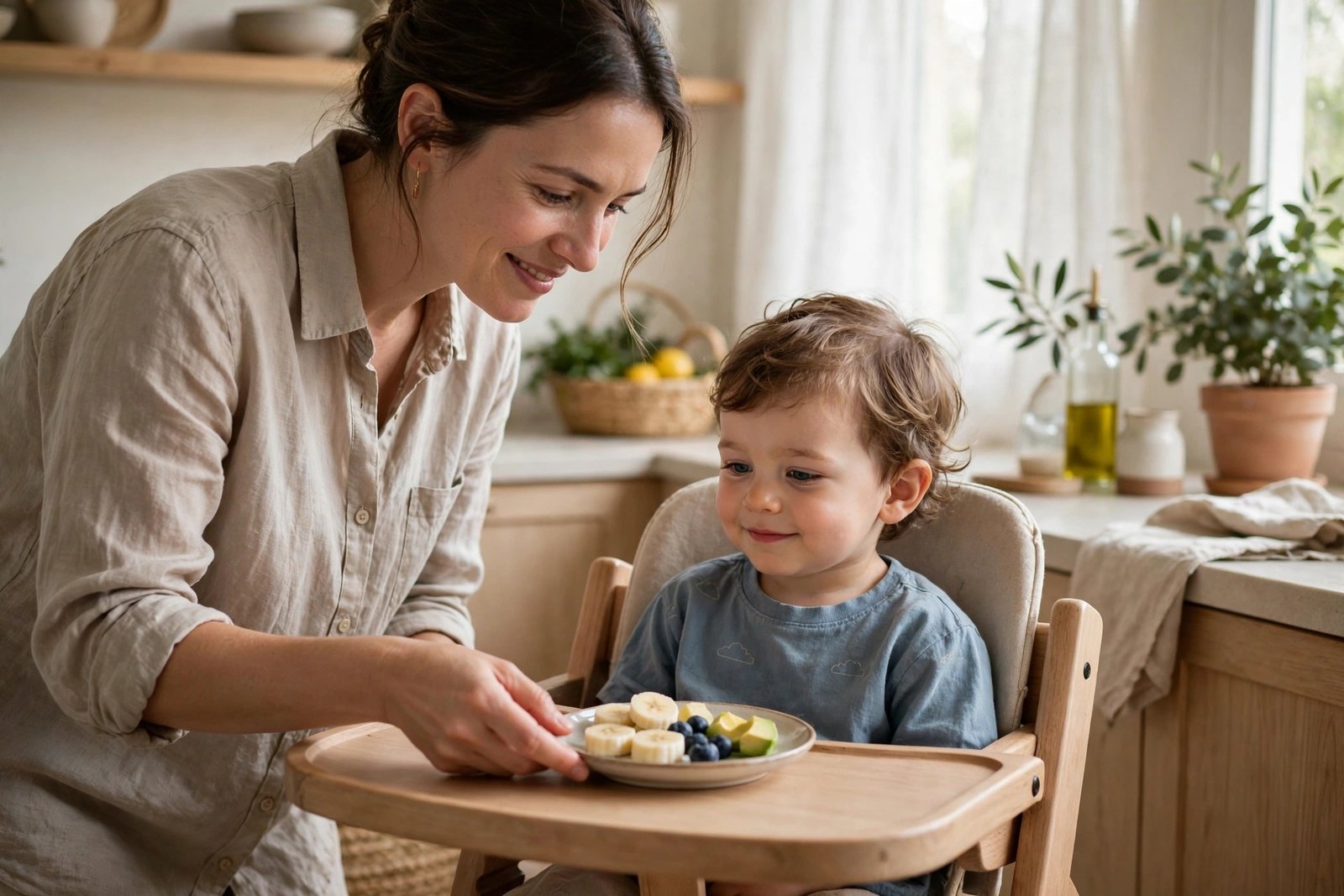
Always include at least one food you know your child will eat. That takes the panic out of the meal. Alongside it, add a tiny taste of something new, perhaps one spoonful. A full serving can look overwhelming, while a pea-sized taste feels doable. If it is ignored, that is still useful. Looking, touching, and licking are all part of learning.
Try food chaining, one small change at a time
Food chaining is a simple, kind idea. Start from an accepted food, and change just one small thing at a time. If they love plain pasta, offer it with a tiny bit of butter, then later with a little grated cheese, then much later a spoonful of mild sauce on the side for dipping. If they love a soft white roll, try it lightly toasted, then in a different shape. Going back a step is fine.
Make meals calm, short, and regular
Aim for regular meals and one or two planned snacks, and eat together when you can so your child sees you enjoying the same foods without pressure. Keep meals short, around 20 to 30 minutes, then clear away calmly. If mealtimes have become tense, our guide to surviving picky eater mealtimes has more ideas for keeping things calm.
Watch drinks, especially milk
Drinks can quietly fill a small tummy. A toddler who drinks a lot of milk may not feel hungry at meals, and may miss out on iron from food because milk itself has very little iron. That does not mean milk is bad. It just helps to keep it in balance. If you are unsure, this guide on how much milk a toddler should drink helps.
Think about vitamin D in general terms
When a diet is narrow, parents often worry about vitamins. One to be aware of is vitamin D, which we get mostly from sunlight and only a little from food. In many countries, guidance advises a daily vitamin D supplement for under-fives. Local advice varies, so follow local guidance and ask your health visitor or pharmacist.
Watch the Growth Trend, Not Single Meals
Single meals lie. A toddler can eat almost nothing at tea and still be fine across the week. What matters is the trend over weeks and months. Is your child growing steadily, following roughly their own pattern rather than dropping steadily across it? Do they seem well and active?
- Look at food over a whole week, not one plate.
- Notice energy, mood, sleep, and play, as well as eating.
- Keep an eye on growth at routine checks, rather than weighing at home often.
- Note foods that are dropped and whether the list is stable or shrinking.
Mistakes to Avoid
These are easy mistakes when you are worried, and most of us have tried at least one. Naming them is not about blame.
- Forcing bites or insisting on a clean plate. Pressure usually makes a child eat less, and can make them dread meals.
- Using dessert as a bribe. Promising something sweet if they eat the savoury part teaches them the savoury part must be unpleasant.
- Making a separate special meal after every refusal. A safe food on the plate from the start is kind. Becoming a short-order cook adds pressure and removes the chance to learn.
- Serving huge portions of new foods. Big piles look scary. Start with a tiny taste.
- Commenting on every bite. Constant praise and counting bites can feel like pressure too.
- Grazing all day and filling up on drinks. Endless snacks and milk leave no appetite for meals.
- Removing a food forever after one refusal. Keep offering dropped foods from time to time, in tiny amounts.
When to See a Doctor
Most selective eating improves slowly with calm offering at home. Sometimes a child needs more support, and asking early is right. Book an appointment with your doctor, and consider asking about a referral to a dietitian or feeding specialist, if you notice any of the following:
- Weight loss, or faltering growth, where your child is dropping steadily away from their usual growth pattern.
- Regular gagging, retching, or vomiting when certain textures are offered, not just an occasional fussy face at a new taste.
- Dropping previously accepted foods so the list keeps shrinking, with few or no new foods added over a long period.
- Clear nutritional gaps that worry you, such as a diet with almost no iron or protein sources, or signs like unusual tiredness or frequent illness.
- Strong distress at meals, such as crying, panic, or dread around eating that goes well beyond ordinary toddler protests.
- Swallowing problems, such as coughing or choking often when eating or drinking, food seeming to get stuck, a wet voice after swallowing, or frequent chest infections. Seek prompt advice if swallowing seems unsafe.
- Long-standing constipation, reflux-type discomfort, or pain linked with eating that has not settled.
- A very small total list, for example only a handful of foods for a long time, especially if whole food groups are missing.
You do not need a red flag to ask for help. If worry is taking over your days, or your gut says something is not right, book a chat.
How to prepare for the appointment
A simple food diary helps a lot. For three to seven days, note what was offered, what was eaten, roughly how much, what was drunk, and any gagging or foods dropped. Take your child’s growth chart if you have it, say what worries you most, and ask what the next step is.
Frequently Asked Questions
How many foods should a toddler eat?
There is no set number. What matters is whether the list covers a few groups, whether your child is growing steadily and seems well, and whether the list is stable rather than shrinking. A food diary for a week can help you see the pattern.
Should I hide vegetables in foods my toddler already likes?
You can add vegetables into sauces, soups, and bakes, and many parents do. Just also keep offering some in a visible, no-pressure way, in tiny tastes alongside a safe food, so your child can learn to accept the food as itself, at their own pace.
What if my toddler drops a favourite food?
This is very common and does not always mean the food is gone for good. Keep serving it sometimes, without comment or pressure. Often it returns after a break. If foods are dropped one after another and the list keeps shrinking, mention it to your doctor.
Are vitamin supplements needed if my toddler is picky?
It depends on where you live and what your child eats. Many countries advise a daily vitamin D supplement for under-fives, so check local guidance or ask your health visitor. Other supplements are not automatically needed. If you worry about a gap, such as iron, raise it at an appointment rather than guessing.
This article is general information only and is not medical advice. If you are worried about your child’s eating, growth, or health, please speak to your doctor or health visitor. You can read more in our disclaimer.