
If your baby or toddler wakes at 4 or 5 a.m. ready to start the day, I know that sinking feeling. The room is still dark, your eyes sting, and your little one is bright, chatting, or crying as if it is morning.
I have sat by the cot in the dark more times than I can count, hoping a quiet pat would be enough. Early waking often has a clear cause, and small, steady changes can help. There is no instant fix, and I will not promise any method will make your child sleep through, but understanding why it happens is a hopeful place to start.
Quick Answer
Early waking is very common. Babies and toddlers often wake at 4 or 5 a.m. because dawn light or sound reaches the room, bedtime is too early or too late, they are overtired, a young baby is hungry, or sleep is naturally light late in the night. Too much late daytime sleep can play a part too. What helps most is blocking dawn light, using white noise, checking bedtime in both directions, and treating waking before 6 a.m. as night-time. Always feed a young baby who is hungry, and keep sleep safe: back to sleep, in a clear, flat cot.
Why Your Baby or Toddler Wakes So Early
Dawn Light and Early Sounds
Sleep is lightest in the early morning, so small things wake little ones more easily then. Dawn light creeping around curtains can be enough. So can birds, traffic, or another family member getting up. If the room looks or sounds like morning, your child’s body takes the hint, even at 4.30 a.m.
Bedtime Is Too Early or Too Late
This one confused me for a long time. A child who goes to bed very early may simply have had enough sleep by 5 a.m. But a child who goes to bed too late can also wake early, because overtired sleep is restless. Both directions can cause the same problem. Look at the whole pattern: total sleep, naps, and how easily your child falls asleep.
Overtiredness Builds Up
When children miss sleep over several days, sleep becomes lighter. They then wake at the lightest point, often around 4 or 5 a.m., and cannot get back to sleep. If your child also fights bedtime or wakes a lot early in the night, overtiredness is worth considering first. Our guide on why a baby wakes every hour explains how cycles and tiredness fit together.

Hunger in Young Babies
For young babies, hunger is a genuine, common reason. Small tummies empty quickly. A baby who last fed at 2 a.m. may well be hungry again by 5 a.m. That is not a bad habit. It is a need. Please never ignore a hungry young baby in the hope of teaching longer sleep. Feed them calmly in dim light, then settle them back into the cot.
Sleep Cycles End in Light Sleep
All children cycle through deeper and lighter sleep. Towards morning, sleep gets lighter overall, and at the end of each cycle your child stirs. In the middle of the night they may drift off again. At 5 a.m., with less sleep pressure left, that stir is far more likely to become a full waking. This is normal biology.
The Last Nap Matters
Daytime sleep shapes the night. A long late-afternoon nap can leave a toddler not tired enough at bedtime, so the night shifts early. A nap ending too early can lead to an overtired bedtime, which also causes early waking. If your little one is fighting naps or refusing daytime sleep, that often shows up first as a 5 a.m. start.
What Helps With Early Morning Waking
Block the Dawn Light
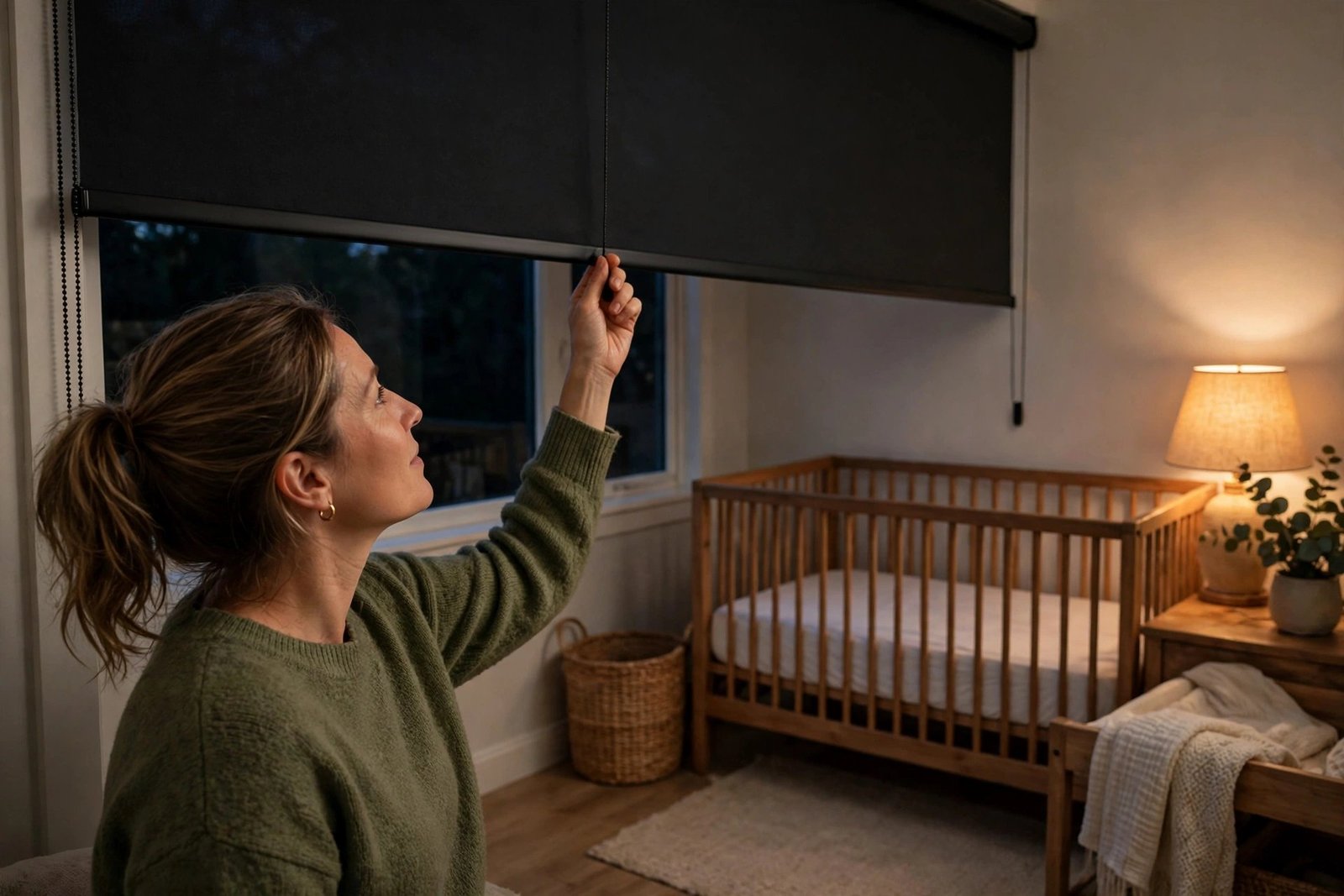
Blackout blinds are the first change I suggest. They are simple and often surprisingly effective. Fit them so light does not leak around the edges. Keep the room dark until your chosen wake-up time, then open the blinds and let bright light in. That clear difference teaches the body when night ends and day begins.
Use White Noise to Cover Early Sounds
A continuous white noise machine, at a safe, low volume away from the cot, can soften dawn birdsong, traffic, and household sounds. Choose a steady sound, not music that changes. Keep it on all night, follow the maker’s guidance, and never place it inside the cot.
Check Bedtime in Both Directions
If you suspect bedtime, change it slowly. Try 15 minutes later every few nights if your child falls asleep easily and may simply be done sleeping by 5 a.m. Try 15 minutes earlier if your child is grizzly by evening or wakes a lot at night. Give each change at least four or five days.
Treat Pre-6 a.m. Waking as Night-Time
Until 6 a.m., or the wake time you choose, respond as if it is still night. Keep lights dim, your voice low, and the room quiet and boring. Check the basics, feed a young baby if hungry, then settle your child back down. Avoid bright lights, screens, toys, and breakfast. If your toddler gets up, guide them gently back to bed with little chat. Some mornings it will not work, but the message slowly sinks in.
Get Enough Daytime Light and Activity
Daylight is a powerful sleep helper. Get outside in the morning if you can, and let your child be active in the day. Fresh air, play, and regular meals support the body clock. In the evening, dim the lights before bed and keep play calm. If evenings feel hard because your toddler is scared of the dark, a dim warm night light can help without making the room bright.
A Toddler Clock, Only as a Gentle Tool
For toddlers aged 2 and over, a toddler clock that shows a sun at your chosen time can help. Introduce it as a fun guide, not a test. Set it just a little later than the current wake time, praise your toddler when they wait for the sun, and move the time slowly. It is not suitable for babies, and never use it to ignore a distressed toddler.
What Not to Use: No Melatonin or Sleep Aids
Please do not use melatonin or any sleep aids, sleep medicines, or herbal sleep remedies for babies or children unless a doctor has specifically prescribed them for your child. Early waking is a routine and development issue, not something to medicate at home. If tempted by a product online, talk to your doctor or pharmacist first.
Safe Sleep Reminders for Early Mornings
Early mornings are when tired parents are most tempted to bring a baby into bed or doze on the sofa. Keep these basics in place wherever your baby sleeps.
- Always place your baby on their back to sleep.
- Use a firm, flat mattress in a cot or bassinet, with a fitted sheet.
- Keep the cot completely clear: no pillows, loose blankets, cot bumpers, soft toys, sleep positioners, or pods and nests.
- Your baby sleeps safest in their own cot or bassinet, ideally in your room for the first 6 months.
- Never use bed-sharing or sleeping on a sofa or armchair with your baby as a solution to early waking. Sofa sleeping is especially dangerous.
- Do not use inclined sleepers, swings, bouncers, or car seats as routine sleep places.
- Avoid overheating. Feel your baby’s chest or the back of the neck to check, dress them for the room temperature, and use no hats indoors.
If you feel sleepy holding your baby at 5 a.m., put your baby down on their back in the clear cot first, then rest.
Mistakes to Avoid
- Starting the day at 5 a.m. with bright lights and play, which rewards early waking.
- Moving bedtime by a whole hour at once, instead of small 15-minute steps.
- Keeping your child up very late, which usually causes more overtired waking.
- Ignoring a hungry young baby, or cutting feeds without medical advice.
- Using melatonin, sleep aids, or medicines to make a child sleep longer.
- Bringing your baby into your bed or falling asleep on the sofa together in the early morning.
- Expecting a toddler clock to fix waking for a baby.
- Changing naps, bedtime, and routine all at once.
When to Ask for Help
Most early waking is normal, but sometimes you need extra support. Talk to your doctor or health visitor if you notice:
- Loud snoring, gasping, or pauses in breathing during sleep.
- Your child seems unwell, has a fever, feeds much less, or has fewer wet nappies.
- Poor weight gain or growth worries alongside broken sleep.
- Sudden, very different waking, with inconsolable crying or signs of pain.
- Extreme daytime sleepiness that stops normal activities.
Please also ask for help for yourself. Waking at 4 or 5 a.m. daily is exhausting, and exhaustion affects mood, safety, and patience. Tell your health visitor, doctor, or a trusted family member how you feel, and share the early mornings if you can.
Frequently Asked Questions
Is waking at 5 a.m. normal for a baby or toddler?
Yes, it is very common. Sleep is lightest towards morning, and bedtime or naps may be slightly out of balance. For most children it improves gradually. If your child is otherwise well, growing well, and happy in the day, early waking alone is usually not a cause for worry.
Should I feed my baby at 5 a.m. or try to resettle without a feed?
If your baby is young and seems hungry, feed them. Never ignore a hungry young baby to try to extend sleep. Feed calmly in dim light and settle them back into the cot. For older babies and toddlers who no longer need night feeds, your doctor or health visitor can advise.
How long does it take for changes to work?
Give each change at least four or five days, and often a week or two. Sleep rarely improves in a straight line. You may see two better mornings, then a worse one during teething or illness. Brief notes on bedtime, naps, and wake times can help you spot patterns.
Will a toddler clock stop my toddler waking early?
It may help some toddlers aged 2 and over understand when to get up, but it is not a guarantee and does not stop the waking itself. Think of it as a gentle tool alongside a dark room, a good bedtime, and boring pre-6 a.m. responses. If your toddler is distressed, always go to them.
I am Daisy, a mum sharing experience, not a medical professional. This article is general information only, not medical advice, and cannot diagnose any problem. If you are worried about your child’s sleep, breathing, feeding, or growth, talk to your doctor or health visitor. Read our disclaimer.
2 thoughts on “Early Morning Waking: Why Your Baby or Toddler Wakes at 4 or 5am and What Helps”