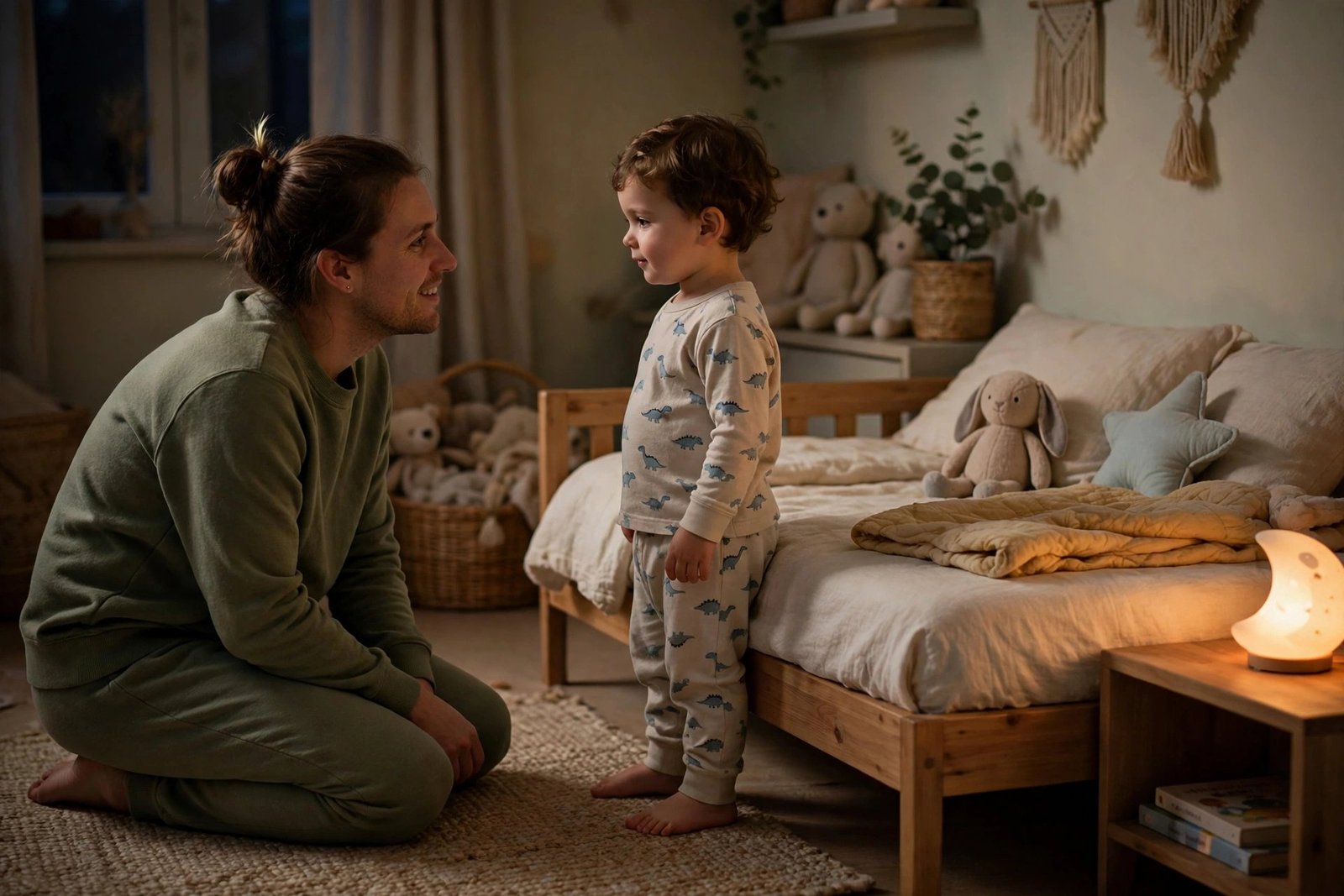
The first night my toddler climbed out of her new low bed and appeared in the doorway, she was so pleased with herself. I was less pleased at 9 p.m., again at 10 p.m., and again just as I was falling asleep. If your toddler keeps getting out of bed, I understand that mix of love, worry, and exhaustion.
This stage often starts after the move from a cot to a bed. The sides are gone, the freedom is new, and your little one can visit you whenever she likes. It does not mean you have done bedtime wrong, or that your child is being naughty. It helped us when I treated staying in bed as a skill to learn, slowly and calmly.
Here I share what helped us: why toddlers keep getting up, how to make the room safe, and the calm returns that made evenings quieter over time. Nothing worked in one night, and I will not promise it will for you. Steady, boring repetition made the difference.
Quick Answer
If your toddler keeps getting out of bed, first check: does she need the toilet, a drink, or comfort because she feels unwell or scared? If she is fine, walk her back calmly and quietly, with as little fuss as possible. Use the same few words each time, tuck her in once, and leave. Keep the routine predictable, meet usual requests before lights out, make the room safe, and praise her in the morning for time spent in bed. Most toddlers improve over days and weeks, not hours.
Why Toddlers Keep Getting Out of Bed
Understanding why the visits happen makes it easier to stay calm, and to respond in a way that helps.
New freedom feels exciting
A low toddler bed is a big change. Your child can get in and out by herself, possibly for the first time. Many toddlers test this skill again and again, simply because they can. The novelty fades, especially when getting up brings nothing interesting.
Testing boundaries is normal
Toddlers learn rules by testing them. If getting up sometimes leads to extra stories, a chat, or falling asleep in your bed, your child learns it is worth trying again. If it always leads to the same quiet walk back, the test loses its appeal.
Fears, the dark, and wanting you close
Some visits are not tests. Your toddler may feel scared, lonely, or unsure in the dark. Imaginations grow fast at this age, and shadows and noises can feel big at night. If your little one is worried about the dark, our guide on what to do when a toddler is scared of the dark shares gentle ideas.
Not tired enough, or overtired
Sometimes the body is simply not ready for sleep. A nap that runs too late or too long can leave a toddler wide awake at bedtime. Too little daytime sleep or a very exciting evening can also make a child wired and restless.
Curtain calls become a habit
One more drink. One more hug. One more trip to the toilet. One lost teddy. These small requests are often called curtain calls, and toddlers are experts at them. Together they can stretch bedtime by an hour. Usually they are less about water and more about keeping you close a little longer.
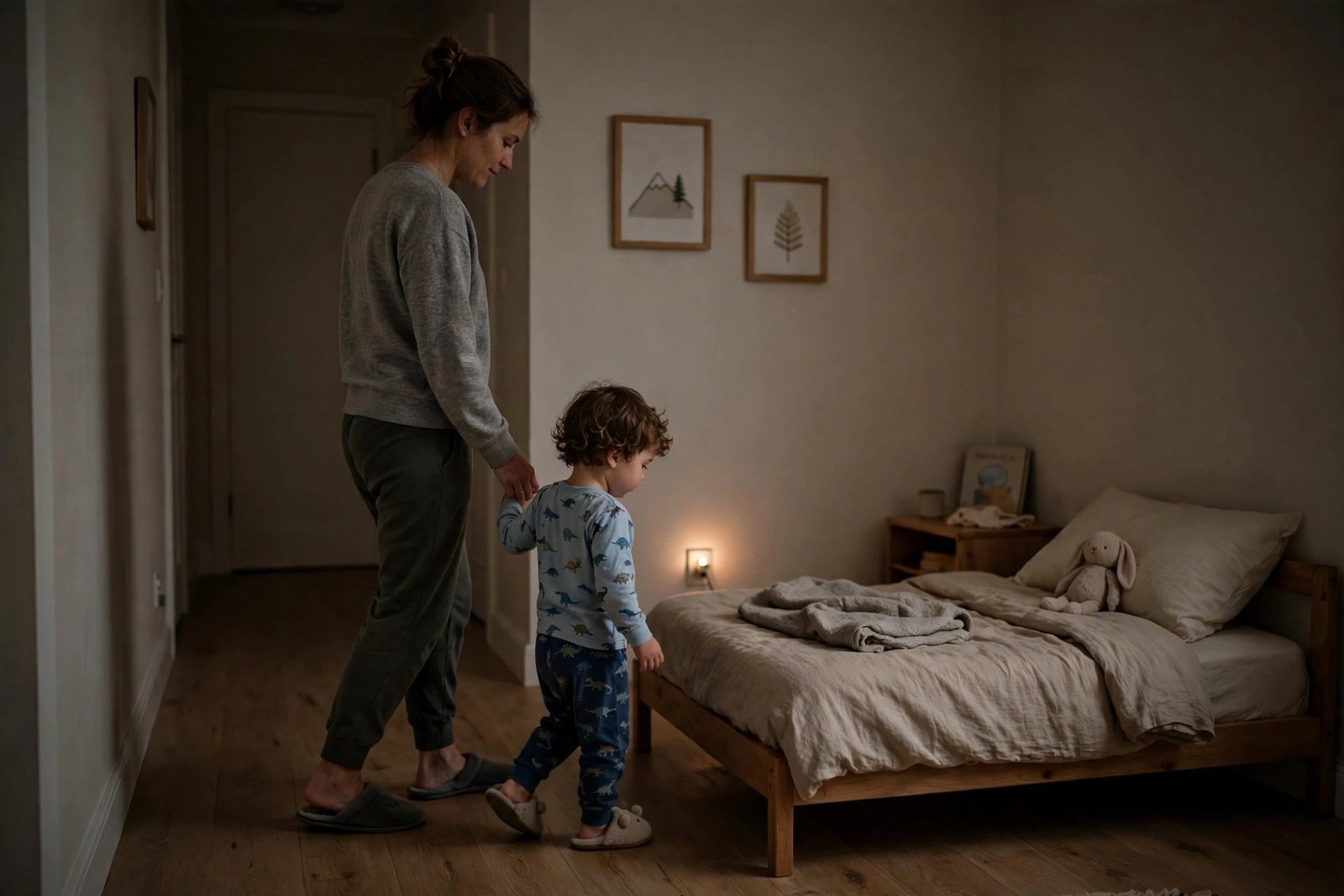
Make the Room Safe First
Before you work on behaviour, make the room safe for a toddler who can get out of bed alone. This step gave me the most peace of mind.
- Anchor wardrobes, drawers, and bookshelves firmly to the wall so they cannot tip if climbed.
- Secure all cords out of reach, especially blind and curtain cords, tied up high or fitted with a safety cleat.
- Remove small objects, coins, medicines, and creams, and anything that could be swallowed or spilled.
- Choose a low toddler bed, close to the floor, so a roll or climb out is a small drop.
- Keep a clear, soft path from the bed to the door, with no hard or sharp toys left out.
- Use a warm, dim night-light if your child likes one, placed safely away from bedding.
- Fit a stair gate at the bedroom door or at the top of the stairs, so night wandering stays in a safe area.
Please hear this clearly: never lock your child in her room. A locked door can frighten a child and is dangerous in an emergency. A stair gate is fine, because your child can still call you and you can reach her quickly. A locked door is never needed for this calm plan.
I also checked the room from toddler height. You spot hazards from down there that you miss standing up.
Calm Strategies That Helped Us
Keep the same predictable routine
We do the same steps in the same order every night: bath, pyjamas, teeth, toilet, two short stories, a song, lights out. When the routine never changes, bedtime holds fewer surprises and fewer reasons to negotiate. The routine itself becomes a sleepy signal.
Agree a short list of bedtime rules in the day
During the day, we talk through our short list: we stay in bed, we lie quietly, we call if we truly need help, and we get up when the morning light says so. I keep it positive, and we practise it playfully with a teddy.
Meet curtain-call needs before lights out
Before the light goes off, I run through the greatest hits: water, toilet, one story, one big hug, teddy in place. Then I say, kindly and clearly, that those jobs are done and it is sleep time. This removed most nightly requests.
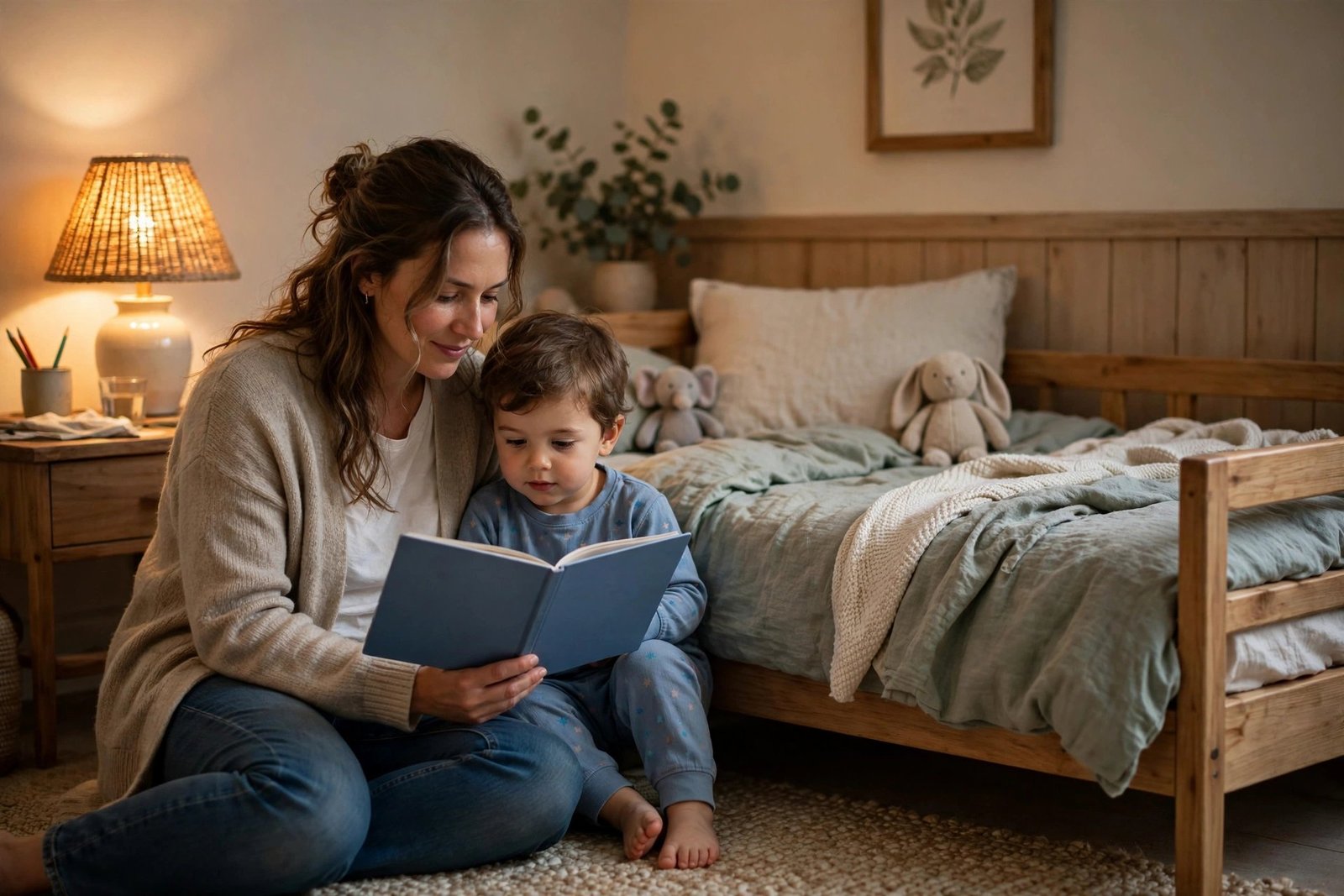
Use calm, boring returns to bed
When my daughter appears, I first check quickly: does she need the toilet or water? Does she feel hot, unwell, or truly scared? If she is scared or unwell, I comfort her properly. I never withhold comfort from a frightened or poorly child.
If she is fine and simply visiting, I keep the return boring. I say the same words each time, in a soft, flat voice: it is sleep time, back to bed. I walk her back, tuck her in once, and leave without extra stories or play. Because every return was the same and very dull, the visits slowly dropped.
Try a toddler clock as a gentle visual tool
For children aged two and over, a toddler clock that shows a sun in the morning can help. My daughter could not tell the time, but she understood the star meant night and the sun meant morning. If your child also pops up far too early, our article on early morning waking in babies and toddlers looks at the causes.
Praise the morning, without pressure
In the morning I praise any time spent staying in bed, even a short stretch: you stayed in your bed so well. I do not use punishment, shaming, or threats, and I do not rely on reward charts with pressure attached. If you like a chart, keep it light, never something your child can fail at.
Comfort genuine fears
If your toddler talks about monsters, shadows, or noises, take it seriously. Check under the bed together in the day, leave the door ajar, and offer a comfort toy. Separation worries can also show up at bedtime, and our piece on toddler separation anxiety at nursery drop-off may feel familiar.
Look at the day, not just the night
Active play and daylight, ideally in the morning, help sleep pressure build by bedtime. Then check the nap. A nap that ends too late or runs very long can steal sleep from the night. If your child is dropping the nap, expect a bumpy few weeks, and bring bedtime earlier on no-nap days.
Mistakes to Avoid
- Locking the bedroom door, or threatening to. It frightens children and is unsafe.
- Punishing, shouting at, or shaming a toddler for getting up. Fear does not teach sleep skills.
- Withholding comfort when your child is genuinely scared, thirsty, needs the toilet, or is unwell. Always check first.
- Making night visits fun, with long chats, extra stories, screens, or snacks, which reward getting up.
- Changing the rules each night, or giving in after many visits, which teaches your child to keep trying longer.
- Starting silent returns when your child is ill or very unsettled. Wait for a normal night.
- Expecting instant results. In our home, progress came in small steps over a couple of weeks.
I made several of these mistakes, including chatty returns that turned into a midnight party for one small person. You can simply start the calmer plan tonight.
When to Ask for Help
Most bedtime wandering is a normal stage, but please ask for help if you need it. Speak to your family doctor, health visitor, or pediatrician if your child snores loudly, seems to pause breathing in sleep, or is very sleepy in the day. Also ask if your child seems unwell, has pain or a fever, or any change worries you.
Get support for yourself too if nights feel unmanageable. Asking for help is good care, not failure.
Frequently Asked Questions
How long does this stage usually last?
It varies a lot. For many families, the worst settles within a few weeks once the room is safe, the routine is steady, and returns stay calm and boring. Some toddlers test again after holidays or illness. When that happened to us, we restarted the same plan, and it settled faster.
Should I use a stair gate on the bedroom door?
A gate can be a kind and safe choice. It keeps your toddler in a safe space while letting her see out and call you. Fit it securely and check it often. A locked door, by contrast, shuts a child in alone, which you should never do.
What if my toddler cries when I walk her back?
Some protest is common in the first nights of a new plan. Use your calm voice, keep your words short, and repeat your return. If the crying sounds frightened, or your child seems unwell, stop the plan, comfort her fully, and try again another night.
Is a toddler clock worth trying for a two-year-old?
For many two-year-olds, yes, as a simple visual clue rather than a strict rule. Practise it in the day as a game, and praise your child for waiting for the sun. It is one gentle tool among several, not a test your child must pass.
This article shares my personal experience as a parent and general information only. It is not medical advice. If you are worried about your child’s sleep, health, or safety, please speak to a qualified professional. Read our full disclaimer for more details.
1 thought on “Toddler Keeps Getting Out of Bed at Night: Calm Strategies That Work”