
If you have noticed yellowish, crusty patches or dry, flaky skin on your baby’s scalp, you are not alone. Many parents spot these flakes while feeding or bathing their baby, and their first thought is worry. Is the skin sore? Did I wash my baby’s hair the wrong way?
In many young babies, flaky or crusty patches on the scalp are what parents commonly call cradle cap. It is very common in the first weeks and months, it is usually harmless, and most babies do not seem bothered by it at all. It can look worse than it feels.
I am Daisy, and I know small skin changes can feel very big when your baby is tiny. The good news is that care at home is simple and gentle. You do not need strong products or hard scrubbing. This guide explains how to soften and loosen flakes safely, what to avoid, and the signs that mean a doctor should look at your baby’s skin.
Newborn care brings several small worries at once, from feeding and sleep to things like how to care for your baby’s umbilical cord stump. Take things one step at a time. A calm, gentle routine is enough for most mild scalp flaking.
Quick Answer
Cradle cap is a very common, usually harmless flaky or crusty scalp condition in young babies. It is not caused by poor hygiene, and it is not contagious. Wash your baby’s hair gently with a mild baby shampoo, rinse well, and loosen soft flakes with a soft brush or cloth. If you wish, soften crusts first with a little plain baby oil or olive oil. Never pick or scrape crusts off hard. It usually clears on its own over weeks or a few months. See a doctor if the skin looks red, inflamed, oozing, or bleeding, if a rash spreads, or if your baby seems very itchy or uncomfortable.
What Cradle Cap Can Look Like
Cradle cap does not look the same on every baby. Some babies have only a few light, white or yellow flakes, a little like dandruff. Others have thicker, yellow or light brown crusty patches that stick to the scalp. The skin under the flakes may look slightly pink or normal, and a few loose hairs may be caught in the crusts as they come away.
The patches are most often on the top of the head, but mild flaking can also appear around the ears or on the eyebrows. Your baby will usually feed, sleep, and play as normal, and the area does not normally look sore. Only a health professional who can see your baby can say what a skin change is, so use this description as general information, not to diagnose your own baby.

Why Does Cradle Cap Happen?
The exact cause is not fully clear. One idea is that hormones passed from mother to baby before birth can make the baby’s oil glands more active for a short time. Extra oil can help dead skin cells stick together on the scalp instead of falling away, forming flakes and crusts. Common skin yeasts that normally live on skin may also play a part.
What matters most is this: cradle cap is not your fault. It is not caused by poor hygiene, or by washing your baby too little or too much. It is not a sign that your baby is dirty, and it is not contagious, so it cannot pass to other children through cuddles and play.
Skin worries often come together. If you are also dealing with a sore nappy area, our guide on a baby diaper rash that won’t go away may help with that problem too.
A Gentle Step-by-Step Home-Care Routine
You do not need to do this routine every day. For many babies, washing the hair two or three times a week is enough, and the oil step once or twice a week is plenty. Keep bath time short and calm, and stop if your baby is tired or upset.
Step 1: Soften the Flakes First, If You Wish
If the crusts look thick or dry, rub a few drops of plain baby oil or olive oil very gently over the flaky patches with your fingertips. Leave it on for fifteen to thirty minutes to soften the crusts, perhaps just before a bath. Use only a small amount, so your baby’s head does not become slippery to hold. Avoid nut-based oils, such as almond oil, if there is any concern about allergy, and skip oils if the skin looks broken, sore, or weepy.
Step 2: Wash With a Mild Baby Shampoo
Wet your baby’s head with warm, not hot, water. Use a small amount of mild, fragrance-free baby shampoo and massage the scalp gently with your fingertips or a soft cloth, in small circles, letting the shampoo lift the softened flakes. Do not use your nails, and do not scrub hard. If you did not use oil, this gentle wash alone is still a good routine.
Step 3: Loosen Flakes With a Soft Brush or Cloth
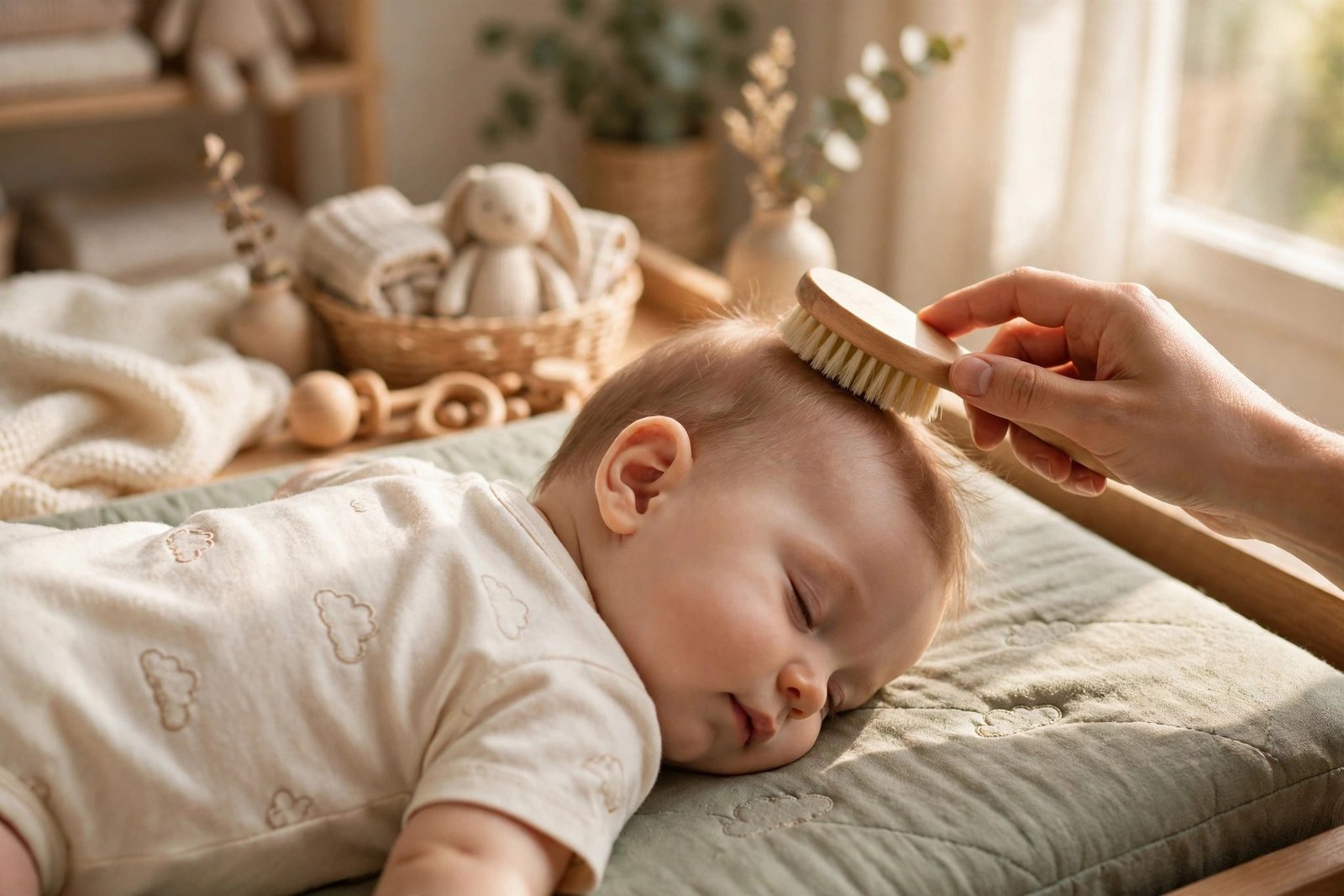
While the hair is wet and soapy, or just after washing, gently brush the scalp with a soft baby brush or wipe with a soft cloth. Only flakes that come away easily should come off. If a crust stays in place, leave it and let the next wash soften it more. There is no need to remove every flake in one bath.
Step 4: Rinse Well and Pat Dry
Rinse carefully with clean, warm water until all the shampoo and oil are gone, as residue left on the scalp can make flaking look worse. Pat dry with a soft towel. You do not need cream, lotion, or powder on the scalp afterwards unless your doctor advises it.
Step 5: Repeat Little and Often
Cradle cap improves slowly, not overnight. Repeat this gentle routine over the next few weeks and watch for steady improvement. Keeping bath time short and predictable helps, just as learning about everyday things like newborn hiccups after every feed can make small moments feel less worrying.
How Long Does Cradle Cap Last?
For most babies, cradle cap clears on its own over several weeks or a few months, often by around six to twelve months of age, though timing differs for every child. The crusts may come and go a little before they go for good. A few loose flakes on a brush or in the bath are normal while it clears.
Try not to judge progress day by day, as change can be slow. Taking a photo in the same light once a week can help you see it. If the patches are slowly getting smaller or thinner, your routine is likely working. If the area gets worse over time, ask a doctor for advice, even if your baby seems well.
Mistakes to Avoid
- Picking, scratching, or scraping crusts off with your nails or a hard comb. This can break the skin, cause bleeding, and let infection in.
- Scrubbing the scalp hard during washing. Gentle fingertip massage is enough, and sore skin will only slow healing.
- Using adult anti-dandruff shampoo, strong medicated shampoo, or medicated cream on your baby’s scalp unless a doctor or pharmacist advises it for your baby.
- Leaving a lot of oil on the scalp for many hours and not rinsing it off. A little oil, rinsed well, is the safer, simpler approach.
- Using nut-based oils if there is any concern about allergy, or using scented oils, essential oils, or home mixtures on a young baby’s skin.
- Washing the hair many times a day to try to clear it faster. Too much washing can dry the skin and make flaking look worse.
- Feeling guilty about it. Cradle cap is common, it is not caused by poor hygiene, and needing a few weeks of patience is normal.
When to See a Doctor
Most mild cradle cap can be cared for at home, but some signs mean a doctor or paediatrician should look at your baby’s skin. Book an appointment if you notice any of these red-flag signs:
- The skin looks red, hot, swollen, or clearly inflamed under or around the flakes.
- There is oozing, weeping, bleeding, broken skin, or yellow crusts that look different from the usual flakes.
- There are signs of infection, such as spreading redness, pus, a bad smell, or your baby has a fever or seems unwell.
- A rash spreads to the face, neck, body, or nappy area, or new patches keep appearing in new places.
- Your baby seems very itchy, scratches a lot, rubs the head often, or seems uncomfortable or hard to settle.
- There is hair loss together with redness or inflammation, rather than just a few loose hairs in the flakes.
- The scalp does not improve after several weeks of gentle home care, or it keeps getting worse.
- Your baby is very young, was born early, or has a weak immune system, and you are unsure about the skin.
Trust your instincts. If something does not look right to you, asking for help early is always reasonable, and a short visit can bring real peace of mind.
Frequently Asked Questions
Is cradle cap itchy or painful for my baby?
Usually not. Most babies do not seem itchy or sore, and they feed and sleep as normal. If your baby seems very itchy or upset when the head is touched, ask a doctor to check the skin.
Can I brush my baby’s hair if they have cradle cap?
Yes, gentle brushing with a soft baby brush is fine and helps loosen flakes that are ready to come away. Brush softly, never force crusts off, and stop if the skin looks pink or sore. Wash the brush regularly with warm soapy water.
Should I stop using oil if the flakes look worse?
Oil does not suit every baby. If flaking looks worse after using oil, or the scalp looks greasy and more crusty, stop the oil and go back to simple washing with mild baby shampoo and gentle brushing. If the skin looks inflamed, check with your doctor.
Will cradle cap come back after it clears?
It can come and go in the first months, and mild flakes sometimes return briefly even after the scalp looked clear. Keep up the gentle washing routine, avoid picking, and ask a doctor if it returns with redness, spreading, or discomfort.
Medical disclaimer: This article is general information only and is not medical advice. It does not replace advice from your own doctor, and only a health professional who can examine your baby can advise on your baby’s skin. If you are concerned at any point, please consult a paediatrician or another qualified health professional. For full details, please read our medical disclaimer.