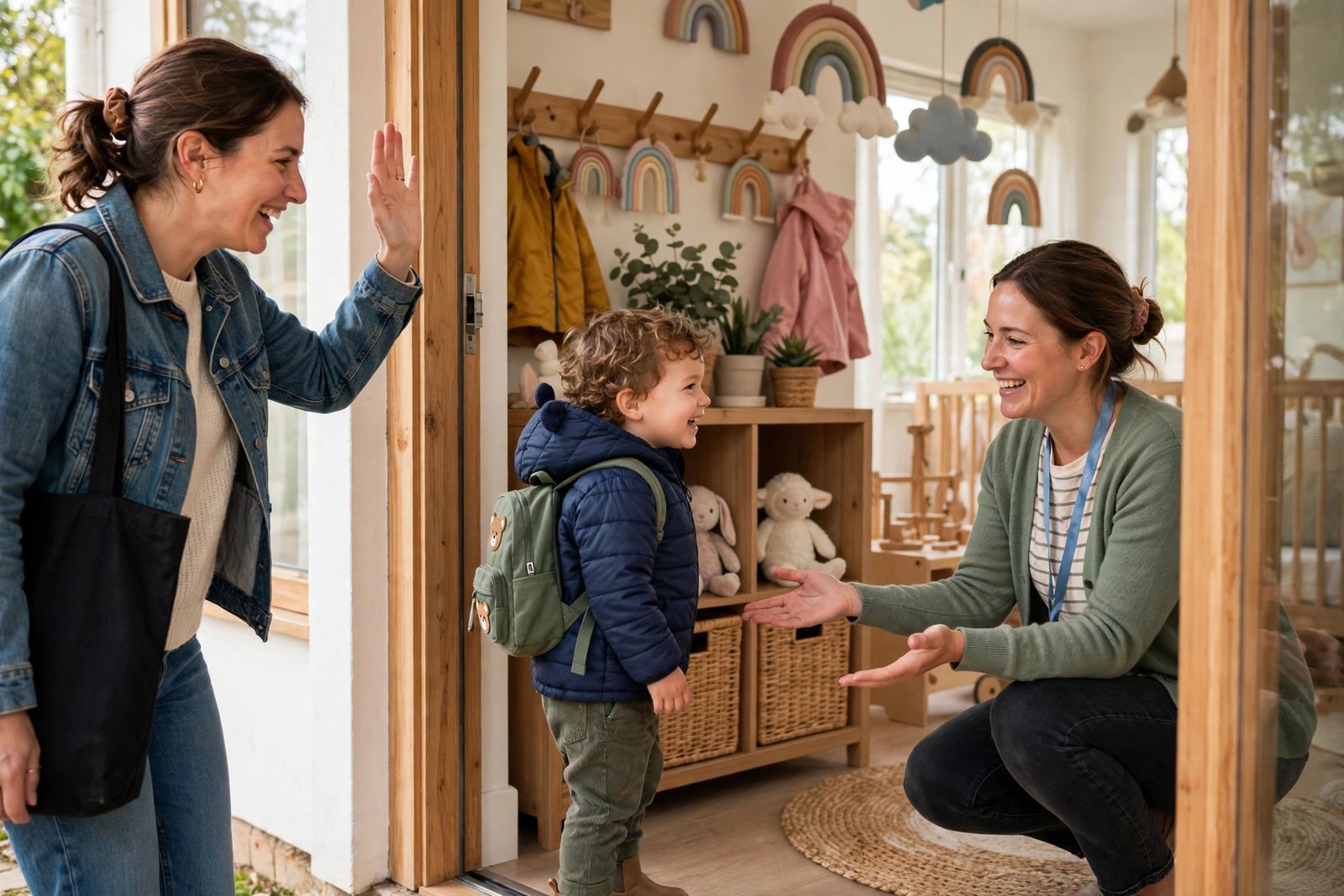
If your toddler clings to your leg at the nursery door or cries as you turn to leave, you are not alone. Separation anxiety at nursery is one of the hardest stages I went through, because you have to walk away while your little one is upset.
Crying at drop-off does not mean nursery is wrong for your child, and it does not mean you have done anything wrong. Most toddlers feel this way for a while, especially when nursery is new or after a break. With calm preparation, a short goodbye, and a warm reunion, most children learn that nursery is safe and that you always come back.
Quick Answer
Separation anxiety at drop-off is normal, because toddlers are still learning that you return even when they cannot see you. Before drop-off, keep mornings calm, talk simply about the day, and send a comfort item if allowed. During drop-off, give one hug, one kiss, and your same goodbye words, then leave cheerfully, even if there are tears. After drop-off, be on time for pick-up and talk gently about the good parts of the day. Most toddlers settle within minutes, and crying usually fades over a few weeks. Avoid sneaking away or long, repeated goodbyes.
Why Drop-Off Feels So Big for a Toddler
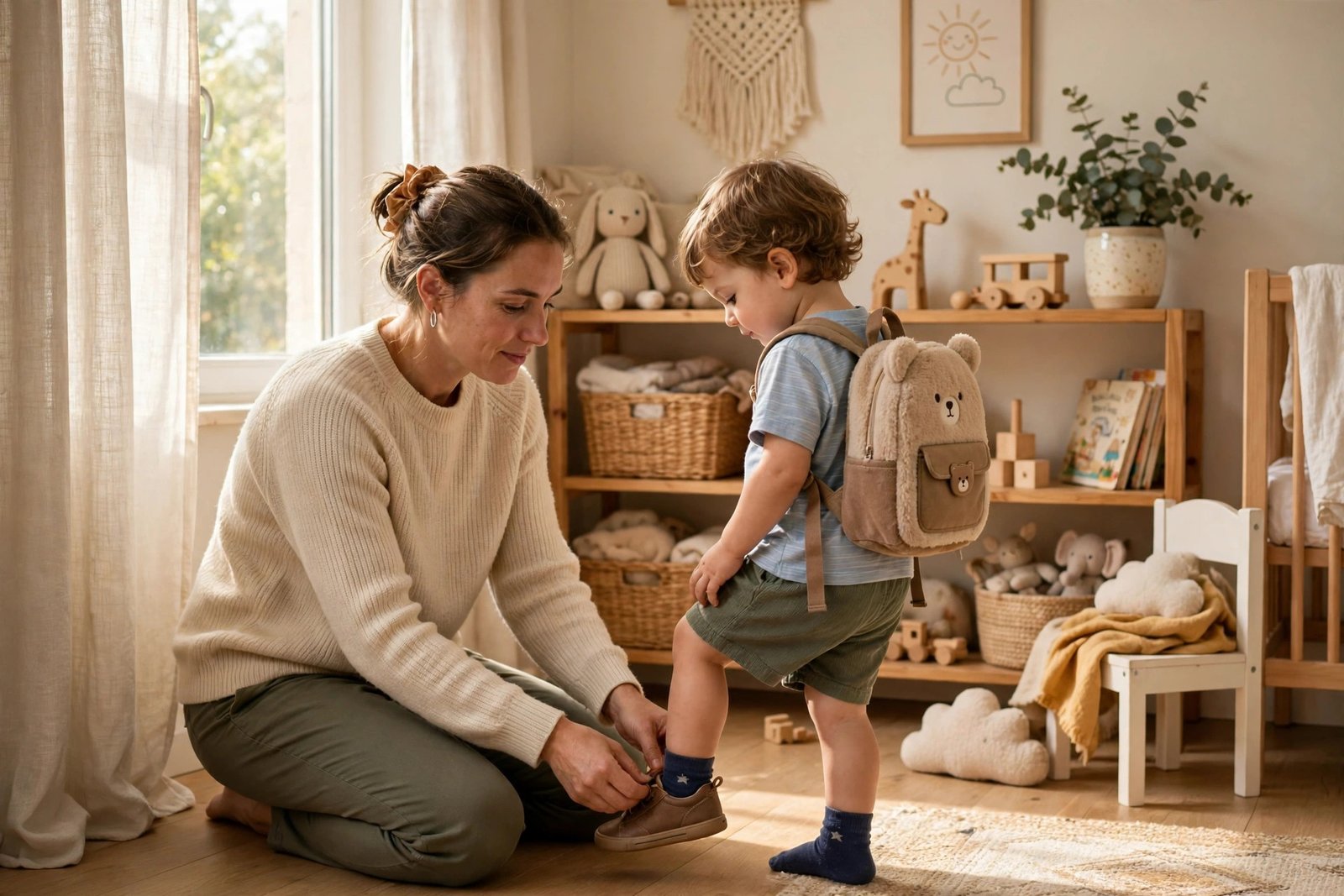
You are your toddler’s whole world. Nursery asks them to let go of you, enter a busy room, and trust other adults. That is a lot for a two or three year old.
They are still learning you always come back
Toddlers are still learning that people exist when out of sight, and that goodbyes are temporary. Every calm drop-off followed by your return at pick-up teaches that lesson by experience, repeated many times.
A busy room and big feelings
Nursery is louder and busier than home, and some toddlers need time to warm up each morning. That is temperament, not bad behaviour. Your toddler also has big feelings but few words, so worry comes out as crying or clinging. It is communication, not manipulation, much like toddler tantrums in public, where your calm response helps most.
Before Drop-Off: What Helps in the Morning
The goodbye starts at home. A rushed morning makes parting harder, while a calm, predictable start gives your toddler confidence.
Keep mornings calm and predictable
- Lay out clothes, bag, and shoes the night before, and leave enough time so you do not need to rush.
- Keep the same simple order each day: wake, cuddle, breakfast, dress, teeth, shoes, and out of the door.
- Share a few unhurried minutes together, such as a story on your lap, before you separate.
Preparing the night before changed our mornings completely. When I was calmer, my little one was calmer too.
Talk simply about the day ahead
Toddlers understand events better than times, so try: after breakfast we go to nursery, you will play and have lunch, then after your nap and snack, I will come and get you. Repeat that simple sequence on the way there, mention one thing your child enjoys, and keep your voice bright and matter-of-fact.
Send a little piece of home
Ask what comfort items nursery allows. A small soft toy, a family photo in the bag, or a familiar blanket for nap time can help. Some parents draw a tiny heart on their child’s hand and one on their own, calling it a kiss that stays all day.
If getting dressed becomes a battle, offer two simple choices, such as the red top or the blue top. That sense of control also helps when a toddler keeps saying no to everything, and it makes leaving the house smoother.

During Drop-Off: A Short, Steady Goodbye
This is the hardest part, and less is usually more. Your goal is a goodbye that is warm, brief, and always the same.
Use the same goodbye routine every day
- Help your toddler hang up their bag and coat in the same place each morning.
- Hand your child to a named, familiar staff member rather than leaving them alone.
- Give one hug and one kiss, say your same words, such as: I love you, I will be back after your snack, then smile, wave, and go.
Stay cheerful and then leave
Your face is your toddler’s guide. If you look worried, your child may think nursery really is something to fear. Smile, keep your voice light, and save your own tears for the car if you need them. Many of us have cried on the way home, and that is understandable. Your child borrows confidence from you.
If your toddler cries, going back in for one more cuddle usually restarts the goodbye and makes the next one harder. Trust the staff, and phone later to check if it helps you. Very often, the tears stop within a few minutes and play begins. Never sneak away while your child is distracted, though. It can make them more watchful on other days. A clear goodbye, even with tears, builds trust.
After Drop-Off: Pick-Up and the Rest of the Day
Pick-up completes the main lesson: you said you would come back, and you did.
Be on time and warm at pick-up
Be there when you said you would be, especially in the early weeks. Greet your toddler with a smile, get down to their level, and give them a proper cuddle. Some children run to you laughing, some cry with relief, and some ignore you for a minute. All three are normal.
Talk gently and keep evenings calm
Chat lightly about the day: what they played with, or a happy moment staff mentioned. If your child is tired and hungry, let a snack and quiet time come first. Keep evenings predictable, with food, play close to you, and an unhurried bedtime. Extra clinginess is common and is not a step backwards. Connection at home gives your child confidence to separate again tomorrow.
An overtired child will find the next drop-off harder, so keep bedtime steady. If worries appear at night too, gentle ideas for a toddler scared of the dark can help your child rest well.
Mistakes to Avoid
- Sneaking away without a goodbye, which can increase anxiety and clinging.
- Long, repeated goodbyes, or going back in after you have left.
- Showing worry at the door or asking, will you be okay, in an anxious voice.
- Promising you will stay outside all day or return in five minutes.
- Bribing with daily treats for going in without crying.
- Comparing your child with toddlers who run in happily, or calling them clingy.
- Keeping your child home after every hard morning, if you can avoid it, because long gaps make returning harder.
When to Ask for Extra Help
For most toddlers, tears fade over two to six weeks, though a wobble after holidays or illness is common. Ask for extra help sooner if something does not feel right. You know your child best.
- Your toddler is still extremely distressed after several weeks and does not settle at all during the session, according to staff.
- Anxiety spreads through the whole day, with big changes in eating, sleeping, or mood.
- Your child fears one particular place, person, or part of the nursery day, rather than simply missing you.
- Skills already learned, such as toileting or simple speech, are lost for more than a short while.
- You feel anxious or tearful about drop-off most days, and it affects your own wellbeing.
Start by talking with nursery staff or your child’s key worker. Ask how your child is ten minutes after you leave and what helps them settle. If worries continue, or you are concerned about development or your own feelings, talk to your health visitor or GP. Asking is never a failure.
Frequently Asked Questions
How long does separation anxiety at nursery usually last?
For many toddlers, the hardest crying lasts one to three weeks and then fades as the routine becomes familiar. Some settle in days, others need six weeks or more. Steady goodbyes and regular attendance usually help it pass more quickly.
Should I stay at nursery until my toddler stops crying?
Usually, no. Staying a long time makes the final goodbye harder and leaves your child unsure when you will go. A short settling visit when starting is different. After that, a brief, loving goodbye with staff taking over comfort works best for most toddlers.
Is it okay if my toddler cries at drop-off but is happy all day?
Yes, this is very common and usually a good sign. The cry is about the moment of parting, not the whole day. If staff say your child plays, eats, and joins in happily once settled, the tears will likely fade with time.
What if my toddler was fine and has suddenly started crying again?
This often happens after holidays, illness, a new sibling, a house move, or a change of room or staff. Return to basics: calm mornings, the same goodbye words, a comfort item, and on-time pick-up. The second round is usually shorter than the first.
This article shares general parenting information from everyday family experience only and is not medical advice. For the full details, please read our disclaimer.