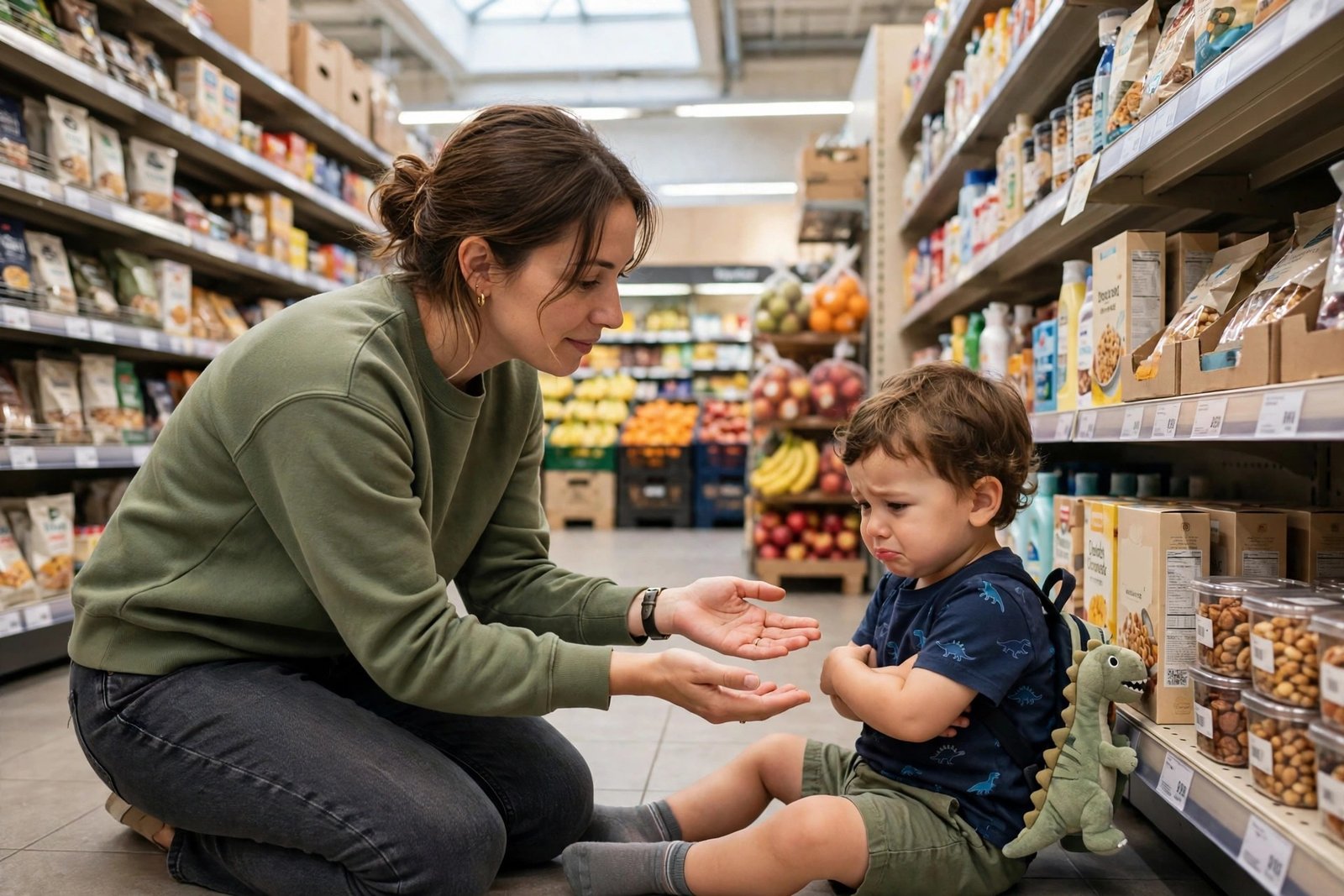
It usually happens at the worst moment. You are in the supermarket, your trolley is half full, and your toddler drops to the floor because the banana broke, the biscuit packet is the wrong colour, or it is time to leave the toy aisle. The crying starts, and you feel every eye in the shop turn towards you.
If this sounds familiar, you are not alone, and you are not a bad parent. I have stood in that aisle with a hot face and a racing heart. Almost every parent has been there.
Public tantrums feel harder than tantrums at home because you are dealing with two things at once: a small child with very big feelings, and your own worry about what others think. This guide shares what helps — preventing some tantrums, what to do and say in the moment, how to handle onlookers, and how to reconnect afterwards.
Quick Answer
Stay as calm as you can, get down to your toddler’s level, and keep your words short and kind. Make sure your child is safe, name the feeling simply — “You are cross. You wanted that toy” — and wait nearby while the feelings pass. Do not give in to the demand just to stop the noise, but do offer comfort, water, or a cuddle. If the place is very busy, move somewhere quieter. The storm will pass, usually in a few minutes.
Why Toddlers Have Tantrums in Public
Toddlers are not being naughty. Their brains are still growing, and they do not yet have the skills to handle big feelings. They also have little control over their day. Adults choose where to go, when to leave, and what goes in the trolley — and that can feel very frustrating when you are two and desperate to do things yourself.
Shops and cafés add pressure: noise, bright lights, waiting, and so many tempting things to touch. Hunger, tiredness, or feeling too hot can tip a small child over the edge quickly. The trigger may look tiny to us, like a broken cracker, but to your toddler it feels like a real loss.
If your little one is also refusing everything at home, our guide on a toddler who keeps saying no to everything explains why this determined stage is a healthy sign of growing independence, and how to respond without turning every small thing into a battle.
Prevention: Making Outings Easier
You cannot prevent every tantrum, and you do not need to. But a little planning can make outings calmer.
Pick Your Timing When You Can
Avoid long trips when your toddler is hungry, tired, or unwell if you can. A trip after lunch and a nap is usually far easier than one just before dinner. When I had to shop at a tricky time, I kept it short and stuck to a small list.
Pack a Small Rescue Kit
- A drink and a simple snack, in case hunger is building
- A favourite small toy, book, or comfort item
- Spare clothes and nappies, so a small accident does not end the trip
- Wipes, for sticky hands and quick clean-ups
Warn, Explain, and Offer Small Choices
Before you go, explain simply: “We are going to the shop for bread and milk. Then we will go to the park.” Give small, real choices — “Red cup or blue cup?” Small choices give a feeling of control, so your child is less likely to fight for it in bigger ways. Warn before leaving a fun place: “Two more slides, then we go.”
In the Moment: Simple Steps That Help
1. Pause and Breathe First
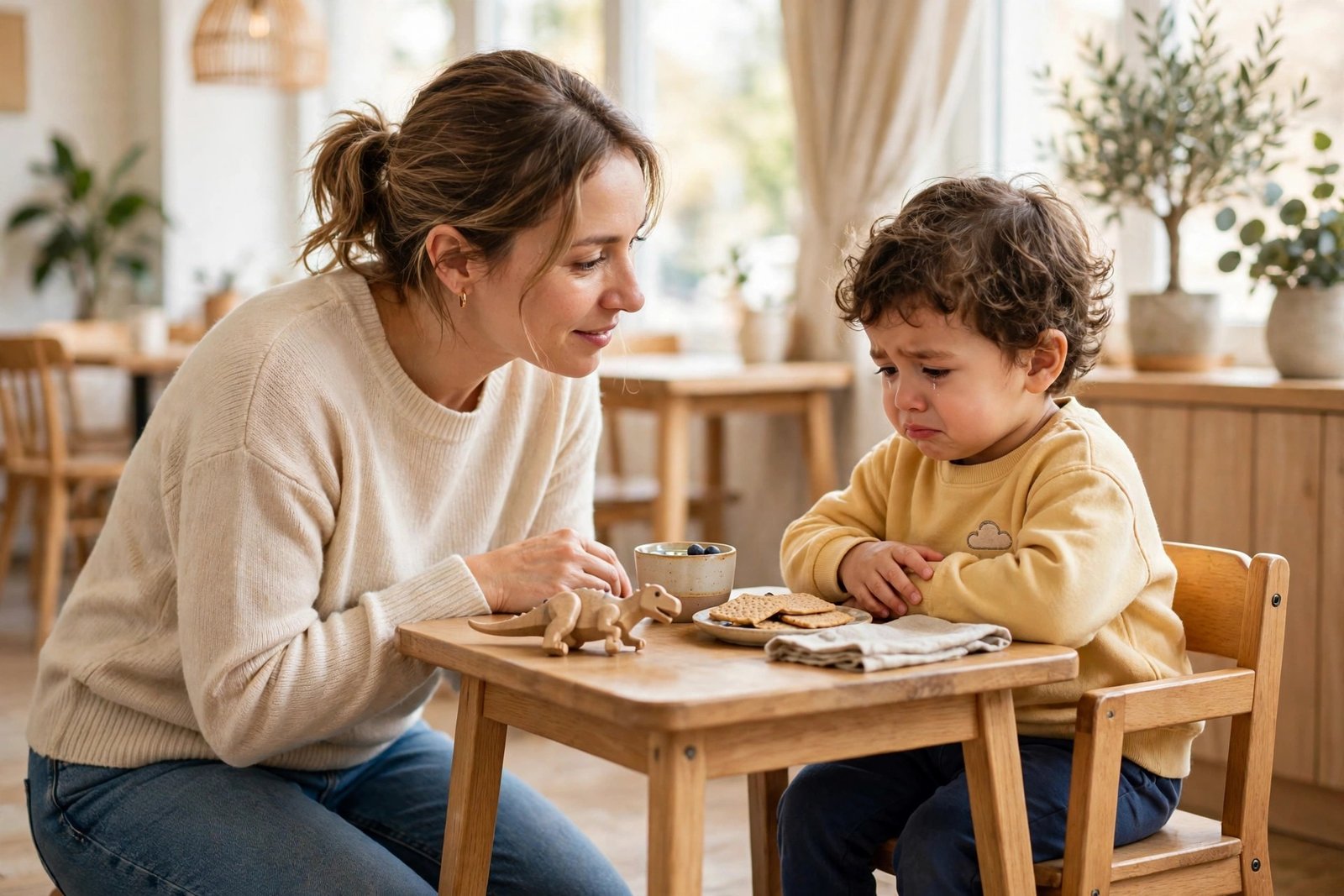
Take one slow breath before you react. Your toddler picks up on your mood, so a calmer you helps create a calmer child, even if it takes a few minutes. Remind yourself: this is a passing moment, not a judgement on your parenting.
2. Get Down to Their Level and Keep Them Safe
Kneel or crouch down close to your child’s height. Move breakable or dangerous things out of reach, and gently move your child away from doors, roads, or hot drinks if needed. Stay close. Some toddlers want a cuddle straight away; others accept one a minute later. Follow their lead.
3. Use Few Words, Said Softly
A toddler in full meltdown cannot take in long explanations. Keep your voice low and slow, and repeat one or two short phrases. Lessons and reasoning can wait until everyone is calm.
4. Hold Your Boundary Kindly
It is tempting to buy the sweet just to stop the crying in front of everyone. But that teaches your toddler that big crying in public works, making the next trip harder. You can be kind and still say no: “I know you want it. We are not buying it today.”
5. Move Somewhere Quieter if You Need To
If your child is very distressed, or the noise is making things worse, move to a quiet corner, the entrance, or outside for fresh air. Most shops will keep your trolley for a few minutes. Stepping out is not giving up — it gives your child space to settle.
What to Say During a Public Tantrum
Simple, warm words work best. Try phrases like these:
- “You are really upset. I am right here.”
- “You wanted that. It is hard when we cannot have it.”
- “It is okay to cry. I will wait with you.”
- “When you are ready, we can have a cuddle.”
- “You are safe. We will get through this together.”
Avoid threats you will not carry out, panic bargains, and calling your child naughty. Your child is having a hard time, not giving you a hard time, even when it feels personal. If you have a younger baby too, our article on why a baby cries after feeding may feel reassuring.
Handling Onlookers, Stares, and Comments
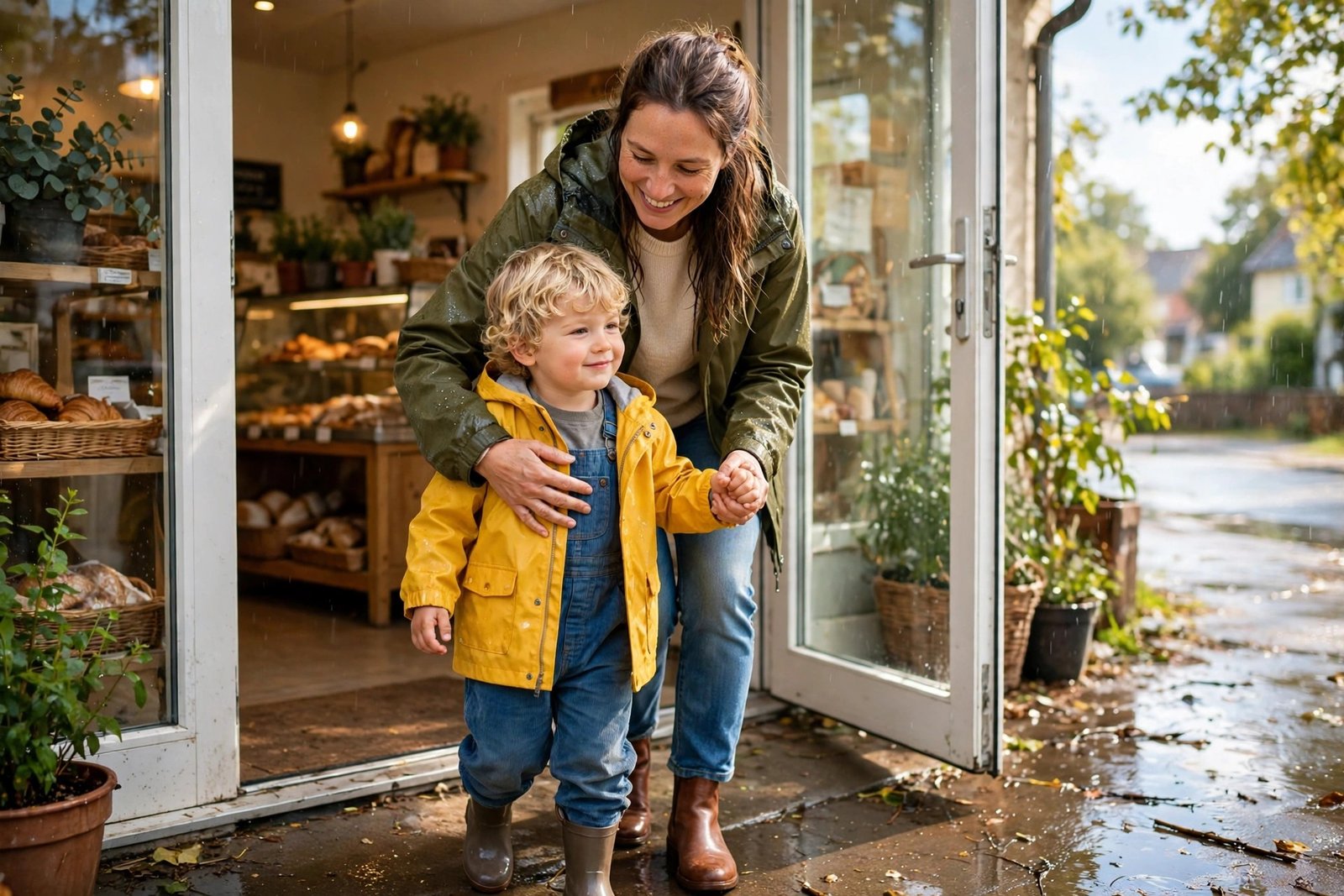
Often the hardest part is not your child. It is the staring, the tutting, and the fear that everyone thinks you cannot cope. What helped me was remembering that most people are not judging you. Many remember their own days in that aisle.
If someone stares, focus on your child, not the audience. If someone makes an unhelpful comment, you do not owe them an answer. A short, polite line usually ends it: “We are okay, thank you,” or “She is just having a hard moment.” Then turn back to your toddler. And if a kind stranger offers a smile or a tissue, accept it if it feels right. One day you will be the calm parent who smiles at someone else in the same spot.
After the Storm: Reconnect and Move On
Tantrums end, often as suddenly as they began. Your child may climb into your arms or act as if nothing happened. That is normal. Offer a cuddle, some water, and a simple line: “That was hard. Let us finish our shopping.”
Try not to lecture afterwards. A short chat later at home can help: “The shop was noisy and you got upset. Next time you can hold my hand and tell me.” Then let it go — your child needs to know your love does not wobble when feelings get big. Look after yourself too. If a younger sibling makes outings stressful, the soothing ideas in our guide on how to help a gassy baby can help.
Mistakes to Avoid
- Shouting back. If you do snap, repair it later with a sorry and a cuddle — that teaches something valuable too.
- Physical punishment, threats, or shaming words, in public or at home. They may stop behaviour through fear, but they damage trust and teach nothing about feelings.
- Giving in every time just to stop the noise, which can make public tantrums happen more often.
- Walking away and leaving your child alone in a busy place, which can feel frightening to a small child.
- Filming or laughing at your child during a tantrum. Imagine how that would feel in their place.
- Comparing your child to a calm child nearby. Every toddler has meltdowns — you just do not see everyone’s.
- Avoiding all outings out of fear. Short, regular trips help your toddler practise coping with shops, cafés, and waiting.
When to Ask for Extra Help
Most tantrums are a normal part of toddler life and ease as language grows. But sometimes extra support is wise — asking is a strength, not a failure. Talk to your health visitor or doctor if:
- Your toddler often hurts themselves in tantrums, such as head-banging that causes injury, biting themselves, or holding their breath until they faint
- There is extreme or very frequent aggression towards others that worries you and is not improving
- Tantrums are very long, happen many times a day, and your child finds it very hard to calm down even with your help
- You have worries about speech, hearing, learning, or general development alongside the behaviour
- You feel overwhelmed or unable to cope — support for you matters too
A health visitor or doctor can listen, check development, and suggest next steps. Trust your instincts — it is always worth asking.
Frequently Asked Questions
Should I just leave the shop when my toddler has a tantrum?
Stepping outside for a few minutes often helps everyone calm down. You do not have to abandon the trip — if your child settles, go back in and finish. Leaving calmly is a tool, not a punishment.
What if my toddler hits or kicks me during a tantrum?
Move gently out of range or hold their hands softly to keep everyone safe, and use few words: “I will not let you hit. I am here.” Wait for the storm to pass, reconnect with a cuddle, and talk about kind hands later, at a calm moment.
Do public tantrums mean my child is spoiled?
No. Tantrums are a normal part of toddler development, linked to big feelings, limited language, and a still-growing brain. Even loved, well-guided children have them, often in the most public place possible.
How long do the tantrum years usually last?
Tantrums are most common between ages one and three. For most children they fade as speech improves and children can say what they need, though some need a little longer.
Disclaimer: This article shares general parenting information and personal experience only, and is not medical or professional advice. Every child and family is different. If you are worried about your child’s behaviour or development, please speak to your health visitor or doctor. Read our full Disclaimer page for more information.
1 thought on “Toddler Tantrums in Public: How to Stay Calm and Handle Them Well”