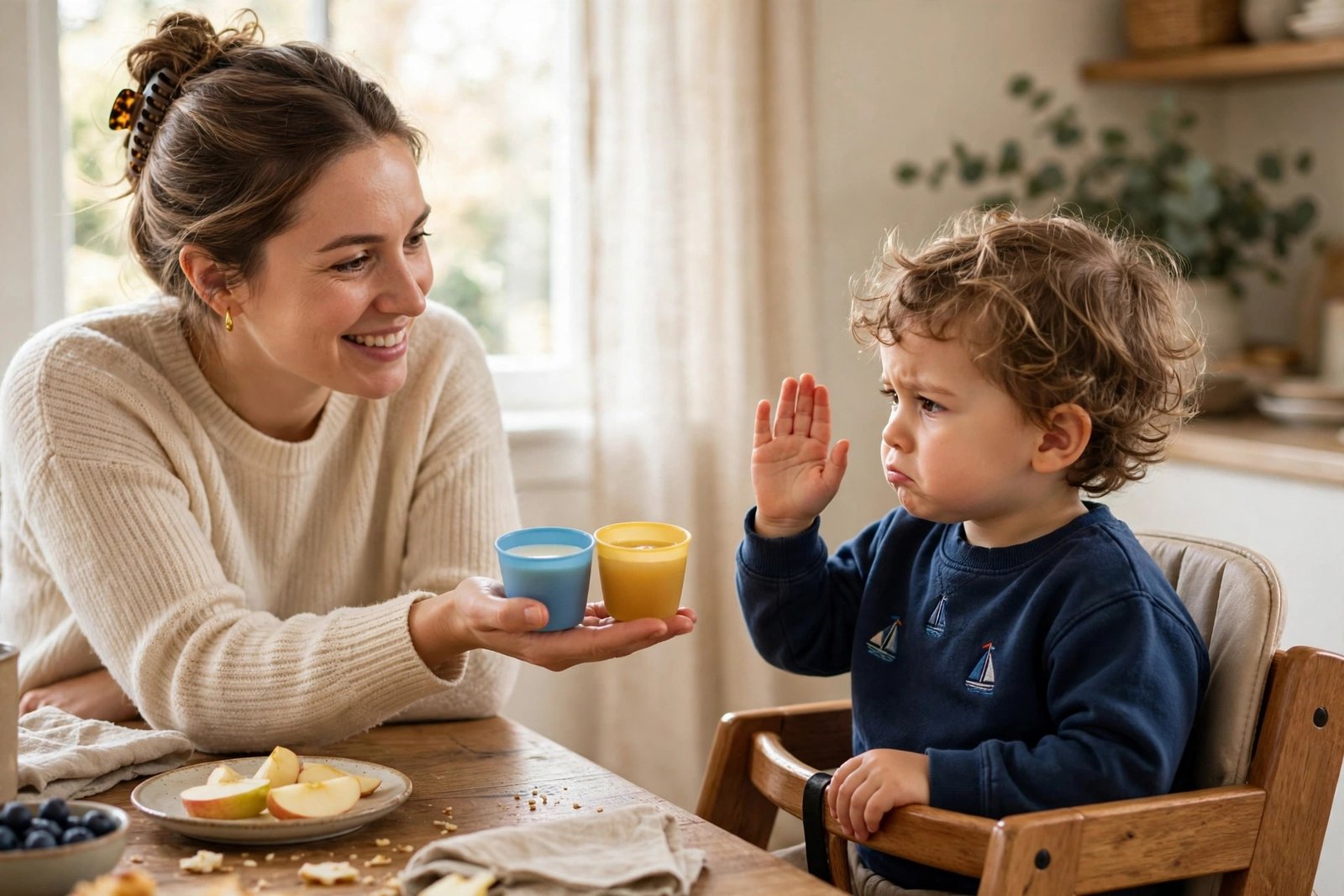
Would you like some toast? No. Shall we put your shoes on? No. Is it time for a cuddle? Even that gets a no, followed by a big grin. If your toddler keeps saying no to everything, even to things they actually like, you are living through one of the most normal, and most tiring, stages of early childhood.
I remember a morning when my little one said no to breakfast, no to getting dressed, no to going out, and then cried because we were not going out. Was this bad behaviour? Was I doing something wrong? Looking back, the answer to both was no as well.
The constant no is rarely about being naughty. Most toddlers have simply discovered they are their own person, and their words can change what happens. This guide explains why this stage happens, and which words and routines make daily life calmer.
Quick Answer
Toddlers say no to everything because they are learning independence, testing how language works, and trying to control a world that often feels big and rushed. It usually peaks between about 18 months and three years. Stay calm, accept the feeling behind the no, and offer two simple choices you are happy with, such as the red cup or the blue cup. Keep routines steady and sentences short and positive. The stage does pass, and your child is learning important skills while it lasts.
Why “No” Is a Healthy Developmental Stage
It may not feel healthy at bath time, but saying no is an important step in development. Here is what is often going on underneath.
Your toddler has discovered independence
As a baby, your child needed you to do almost everything. Now they can walk, climb, feed themselves a little, and make simple decisions. That freedom is exciting. Saying no is the quickest way to say, I have my own mind. It is often more about enjoying having a say.
“No” is an easy and powerful word
No is short, clear, and it gets a big reaction. Toddlers are still building their language, so they use the words they have most. Sometimes no means I need more time, I do not understand, I wanted something else, or I am not ready yet. One small word may be carrying many different feelings.
Your toddler is testing how the world works
Young children learn by trying things out. If I say no, does Mummy still smile? Does the shoe stay off? When your response is calm and steady, they learn you can be trusted.
Big feelings and tired bodies play a part
A hungry, tired, or overwhelmed toddler will say no much faster. So will a child who has had a busy day or a lot of instructions in a row. This is why many families also find themselves dealing with toddler tantrums in public at exactly the same age. Both are signs of a small person with big emotions and still-growing skills.
Offering Two Choices
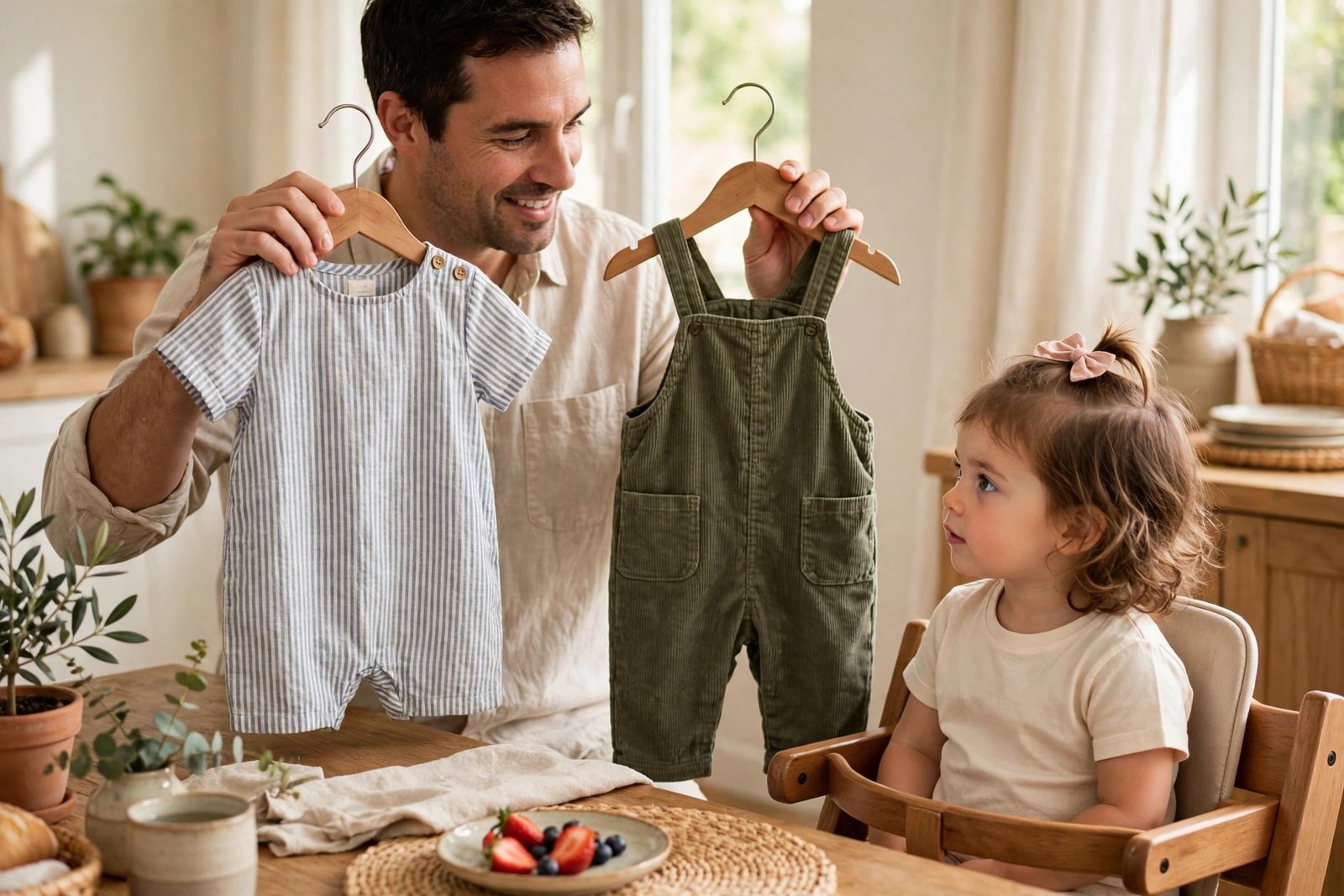
One of the kindest tools for this stage is the two-choice offer. Instead of asking an open question, you offer two options, and both are fine with you.
- Would you like the red cup or the blue cup?
- Do you want the star top or the stripe top?
- Shall we brush teeth first, or put pyjamas on first?
- Do you want to walk to the door or hop to the door?
This works because it gives your toddler real control, inside safe limits set by you. Your child feels heard, and the job still gets done.
Keep choices simple and real. Only offer things you can actually give, and keep it to two. If your toddler says no to both, choose calmly for them: You could not choose this time, so I will choose the blue cup. Then move on without a long debate.
Avoiding Power Struggles
A power struggle happens when both sides dig in and a small task turns into a contest about who wins. Nobody really wins: your toddler feels upset, you feel drained, and the shoes are still not on. The goal is to guide, not to invite a fight.
Pick your battles
Some things are not negotiable, such as holding hands near a road, sitting in the car seat, and being gentle with others. Many other things are flexible. If your toddler wants the green bowl instead of the yellow one, it is usually fine to let it go. Saving your firm no for safety and kindness gives it more meaning.
Stay close and stay calm
Get down to your child’s level, use their name, and keep your voice soft and steady. A calm parent helps a toddler borrow that calm. If your frustration rises, take a slow breath before you speak.
Give a little warning and a little time
Sudden changes are hard for toddlers. A warning such as, in two minutes we will tidy the blocks and wash hands, gives their brain time to get ready. Count to five quietly before repeating yourself. Many no answers turn into action given a few extra seconds.
If you are also caring for a younger baby, deal with the most urgent need first. Our guide on why your baby may be crying after feeding may help with those early worries too.
Wording That Works
Small changes in wording can make a big difference. Toddlers respond better to short, positive sentences than to long explanations.
Say what to do, not what to stop
- Instead of do not run, try walking feet, please.
- Instead of do not drop your cup, try keep your cup on the table.
- Instead of stop shouting, try use your quiet voice inside.
Avoid questions where “no” cannot be an answer
Shall we get in the car now? invites a no, and then you still have to get in the car. It is kinder to say, it is time to get in the car. Would you like to carry your teddy or your book? The job is decided, but your child still gets a choice inside it. Only ask a yes or no question when you truly accept either answer.
Name the feeling, then give the next step
You wanted to keep playing. It is hard to stop. Now it is lunch time. This tells your child their feelings make sense, even when the answer stays the same. Feeling understood often softens a no. Simple patterns help too: First pyjamas, then a story.
The same patience helps at feeding time, which is why many parents like gentle ideas for a baby refusing the bottle. Toddlers, like babies, do better when we guide instead of push.
Routines That Make “No” Happen Less Often
Toddlers feel safer when life follows a pattern they can predict. A simple routine will not stop every no, but it often reduces them.
- Keep the day in the same order: waking, breakfast, play, lunch, rest, tea, bath, and bed.
- Use the same short phrases for regular steps, such as shoes on, door, go.
- Talk through the day simply: After breakfast we will go to the shop.
- Build in choice moments, like picking a snack from two healthy options.
- Protect sleep and snack times, as tiredness and hunger feed the no stage.
- Leave extra time for getting ready, so you are not rushing small legs.
Mistakes to Avoid
- Asking too many questions. If everything sounds optional, your toddler will treat everything as optional too.
- Giving choices you do not mean. Offering ice cream or broccoli, then refusing the ice cream, teaches your child choices are not real.
- Long lectures. A two-year-old cannot follow a five-minute explanation. Short and kind works better.
- Changing the rule after a loud no. If a biscuit before tea becomes yes after protest, the protest will grow next time.
- Labelling your child. Calling a toddler naughty or stubborn can stick. Describe the behaviour instead: You feel cross today.
- Using fear, shame, or any form of hitting. These do not teach what to do instead, and they can damage trust.
- Expecting the same response every day. Growth is not a straight line, and a hard day is not a failure.
When to Ask for Extra Help
For most children, saying no to everything is a passing stage that needs patience, not professional help. Ask for extra support, though, if you notice any of the following.
- Your child has no words at all by around age two, or far fewer words than other children the same age.
- Your child loses skills they once had, such as words they used to say or games they used to play.
- Distress or aggression feels extreme, lasts a long time, or happens very often, and calming steps do not help.
- Your child often does not respond to their name, or you have worries about their hearing.
- You simply feel worried. A parent’s instinct is worth listening to.
In these cases, talk to a health visitor or doctor. They can check your child’s development and suggest next steps. Asking is never a waste of time.
Please note: this article shares general parenting experience and ideas only, and it is not medical or professional advice. You can read more in our disclaimer. If you are ever worried about your child’s health or development, please speak to a qualified professional who knows your child.
Frequently Asked Questions
At what age do toddlers start saying no to everything?
Many toddlers start around 18 months, and the stage often peaks between two and three years. It usually fades as language grows and your child finds more words for what they want and feel.
Should I punish my toddler for saying no?
No. Saying no is a normal part of learning independence, not bad behaviour that needs punishment. Respond calmly, keep safety limits firm, and offer simple choices.
What if my toddler says no and then does the thing anyway?
This is very common. Often the word comes out automatically, before your child has thought about the question. Give them a moment, smile, and let the action follow.
How long does the “no” stage last?
It varies. For many families the strongest phase lasts a few months. As speech and self-control grow, you will hear more real answers and fewer automatic nos.
1 thought on “Why Does My Toddler Keep Saying No to Everything? (And What to Do About It)”