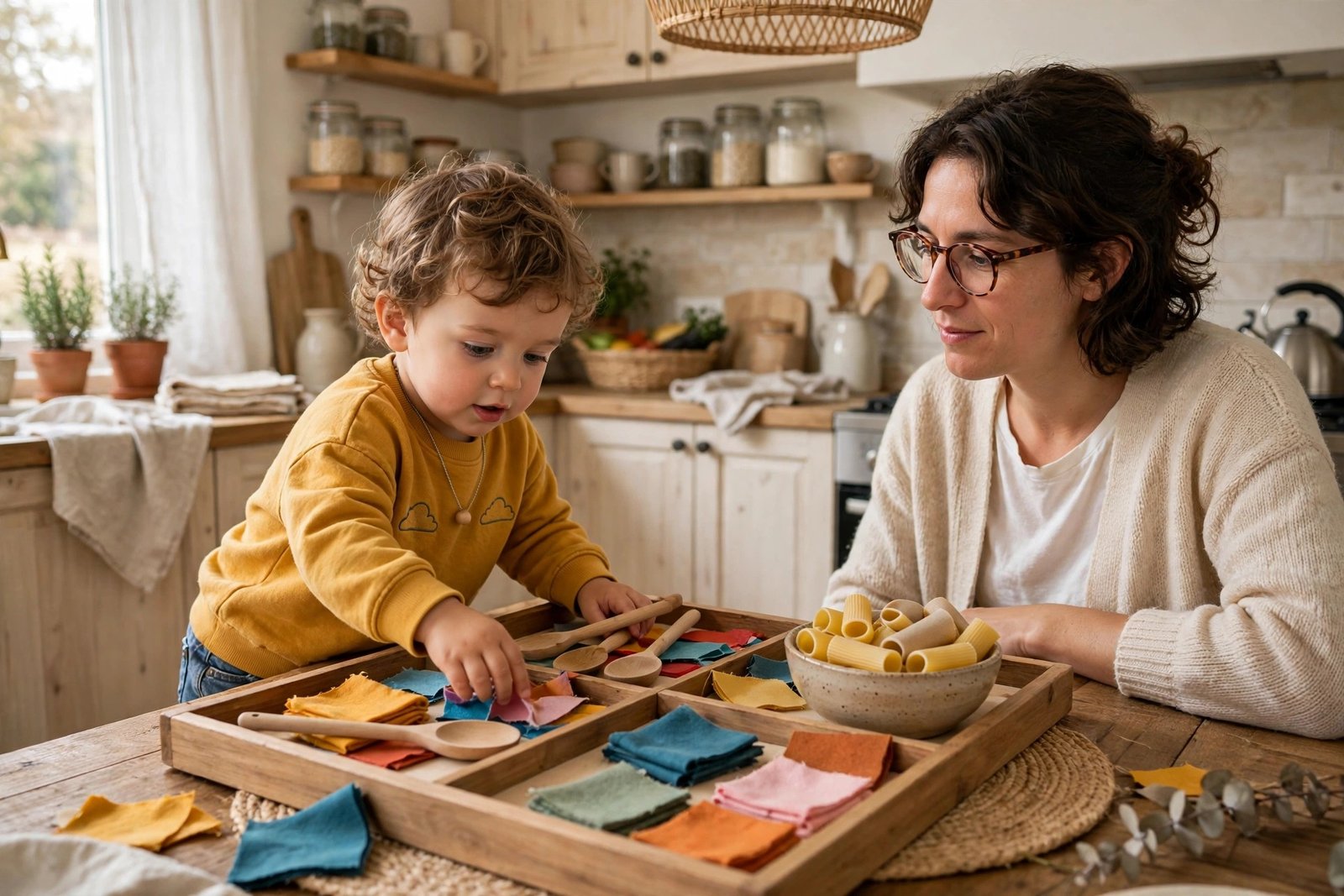
Some of my favourite play moments at home did not come from toys I bought. They came from a wooden spoon, a bowl of pasta shapes and a tea towel on the kitchen floor. If you have felt pressure to buy a special sensory kit and worried it would be used once and forgotten, you are not alone.
Sensory play is simply play that lets your child touch, listen, pour, squeeze and explore. It does not need flashing lights or expensive sets. Your kitchen drawer is already full of interesting things, as long as you choose carefully and stay close.
Quick Answer
You can make lovely sensory play at home with big, safe everyday items. Try a touch tray with wooden spoons and fabric squares, sealed sound shakers, scooping big dry pasta shapes, gentle water play in a shallow basin, crinkly foil blanket play for babies, and taste-safe options like cooked spaghetti or yoghurt paint for babies who mouth everything. Keep items big, supervise closely, avoid small loose items for under-3s, never use water beads, and empty water away straight after play.
Touch and Texture Ideas
Touch is the easiest place to start. A low tray or box works well because it keeps everything in one spot.
1. A touch and texture tray
Put four or five large items on a tray: a wooden spoon, a silicone spatula, squares of cotton, fleece and flannel, and a clean sponge. Let your child pat, squeeze and wave them. For a young baby, hold each item within reach on the floor and talk about soft, smooth or bumpy. For a toddler, add a game like finding something soft.
2. Fabric squares, scarves and texture books
Soft scarves and fabric squares are light and washable. Toddlers love pulling them out of an empty tissue box, hiding toys underneath and waving them as they dance. You can also put fabric offcuts in a ring binder as a simple texture book. Choose clean fabrics with no loose buttons or threads.
3. Cardboard box play
A box large enough to sit in becomes a boat, a house or a quiet corner. A smaller box becomes a posting game for wooden spoons or soft balls. Babies enjoy patting and peering into boxes, while toddlers will fill and empty them for ages. Remove any staples first, and keep the box on the floor.
4. Nature treasures, checked carefully
On a walk, look for big smooth stones and large pine cones. Wash them, let them dry and check them over. They feel cool, heavy and rough compared with plastic toys. Only offer items that are big, clean and not breaking into small pieces, and stay close. If an item cracks, take it away.
Scoop, Pour, Shake and Splash Ideas
Scooping, pouring and shaking often become favourites once your child can sit steadily. These activities can support hand strength and coordination, giving practice with grasping, tipping and aiming.
5. Big dry pasta to scoop and pour
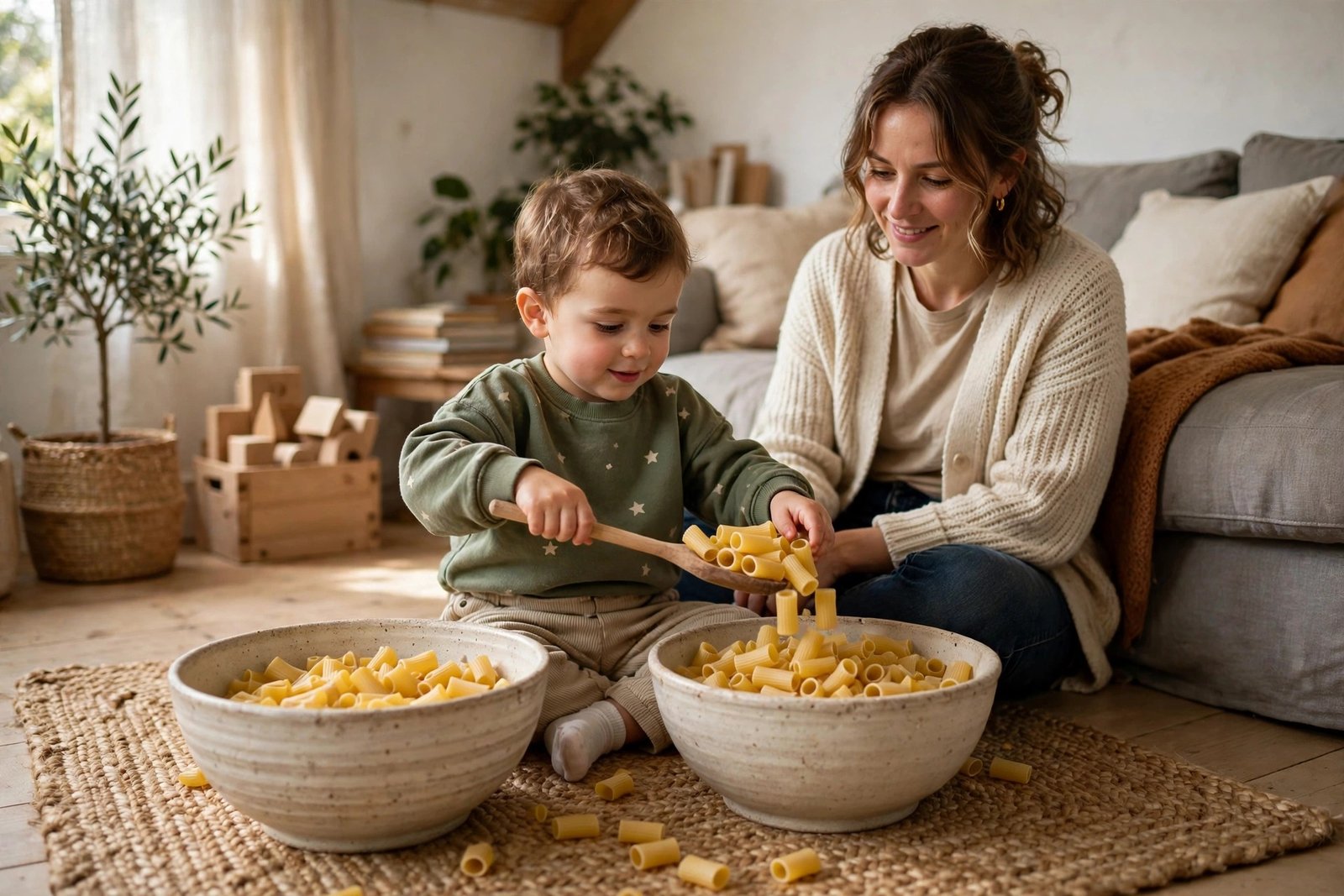
Fill a large bowl with big dry pasta shapes such as rigatoni or large shells, and give your toddler another empty bowl and a wooden spoon or big scoop. Show them how to scoop and pour, then let them take over. Use large shapes only, and tidy stray pieces away afterwards so they do not become a mouthing hazard for a younger baby in the house.
6. Sound shakers, sealed tight
Put a spoonful of rice or dry pasta inside a clean, sturdy container with a screw lid, seal it very tight, and check it before every use. Babies love to shake and listen, and toddlers like to guess which shaker is louder. These are for older babies and toddlers, always supervised. Any container that cracks or loosens should go straight in the bin. The filling stays inside — never offer loose rice, beans or lentils in open hands.
7. Water play in a shallow basin or at the sink
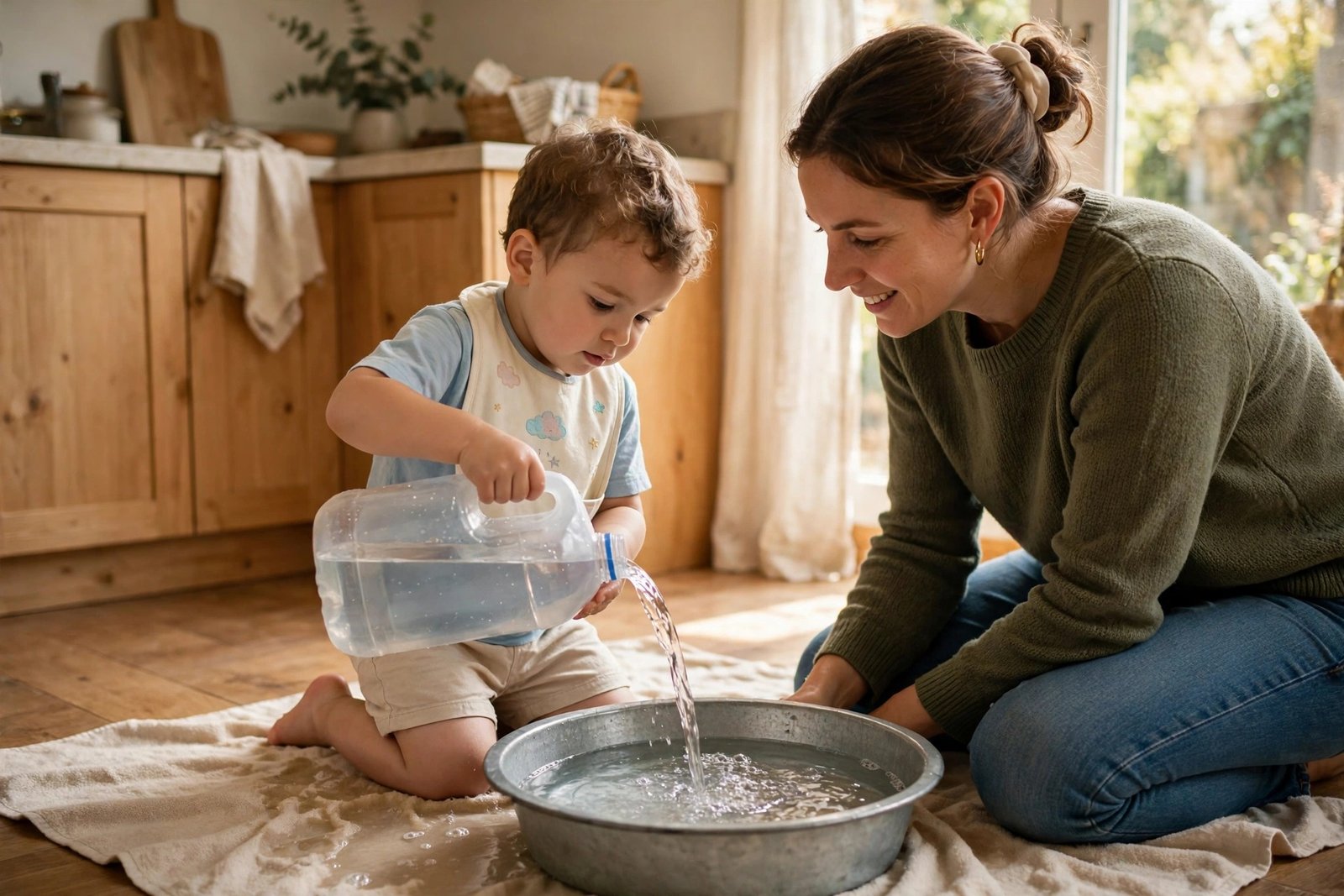
A shallow washing-up basin on a towel on the kitchen floor, with just a little water, a plastic jug and a couple of large cups, can fill a whole afternoon. Standing on a secure step at the sink with an adult right there also works well. Your child can pour, stir with a wooden spoon and watch things float or sink. Keep water shallow, stay within arm’s reach, and empty the basin as soon as you finish.
8. Frozen peas in a sealed bag to squish
For a cool, squishy texture without mess, put frozen peas inside a strong, well-sealed bag — seal it inside a second bag if you can — and let your child pat and squish it on a tray. The cold, bumpy feel fascinates babies and toddlers. Check the seal before and during play, stay close, and take the bag away if it splits. The peas stay inside the bag at all times.
Taste-Safe and Baby-Friendly Ideas
Babies explore with their mouths, so play for a mouthing baby needs extra thought. The ideas below use taste-safe food textures, but still need close supervision and an allergy check first.
9. Cooked, cooled spaghetti strands
Cook plain spaghetti, let it cool completely, and put a small pile on a clean tray or highchair. Babies and young toddlers can pull, pat and squish the slippery strands. Offer only a small amount, watch for any reaction if wheat is new to your baby, and clear leftovers away promptly.
10. Yoghurt paint
A spoonful of plain yoghurt spread on a tray makes simple, taste-safe finger paint. Your baby can smear and pat, and toddlers enjoy using a chunky brush. If you want colour, stir in a tiny amount of fruit puree. Always check for allergies first, especially dairy, and stop if you see any reaction. If food reactions worry you, it helps to read about signs of food allergies and intolerances in babies before trying food play. Playing with food textures in a relaxed way can also give toddlers gentle practice with new feels and smells, which some parents find helpful when a toddler refuses vegetables and needs time to get familiar with foods without pressure.
11. Foil blanket crinkle play for babies
An emergency foil blanket makes a brilliant crinkle mat. Lay it flat, place your baby on it for back or tummy time with you right beside them, and let them kick, pat and scrunch it. This is a floor activity only, for short, closely watched sessions. Never leave a baby alone on it, never let it cover their face, and put it away afterwards.
12. Scented water tray for toddlers
For toddlers, add large, washed herb sprigs like mint or rosemary and large flower petals to shallow water. They can swish, smell and scoop. Choose only familiar, non-toxic items you can identify with certainty, and remind your toddler this water is for playing, not drinking. If unsure about a plant, leave it out.
On wet days, rotating two or three of these ideas can fill a morning. For more inspiration, these rainy day activities for a toddler bored at home pair really well with sensory play.
Safety First: The Rules I Never Skip
Sensory play should feel relaxed, but it is never hands-off play.
- Everything is closely supervised by an adult, always. Stay close enough to reach your child straight away.
- Use the toilet-roll tube test for under-3s: if an item is small enough to fit through a toilet-roll tube, it is too small and could be a choking hazard. Choose big items instead.
- No dried beans or lentils loose for babies who mouth things. They are only ever used inside a tightly sealed bottle or bag, checked before play.
- Never use water beads. Water beads are dangerous if swallowed and should never be used as a children’s play item, even for older toddlers.
- No button batteries or small magnets in play items, ever. Check items before you offer them and remove anything with accessible button batteries or loose small magnets.
- For food-based play, check for allergies first, and for babies who mouth everything, use taste-safe options only.
- For water play, give constant supervision and never leave a child alone near water, even a shallow basin. Empty water away afterwards and turn basins upside down.
- Check every item before play for cracks, loose parts and sharp edges, wash items that will be mouthed, and never use plastic bags as a play item.
Mistakes to Avoid
- Handing over tiny items like loose beans, small pasta or little stones to a baby or young toddler who still mouths everything.
- Using water beads because they look pretty in photos — they are not safe for children’s play.
- Leaving a child alone with water, even for a moment to answer the door.
- Buying expensive sensory kits you do not need, when a bowl, a spoon and some fabric would do just as well.
- Expecting tidy play. Put a mat or towel down, use clothes that can get wet, and keep sessions short.
- Offering too much at once. Three to five choices is calmer than twenty.
- Forgetting to check sealed shakers and bags before each use.
Frequently Asked Questions
What age can babies start sensory play?
Babies can enjoy simple sensory play from very young, as long as it matches their stage and you are right beside them. Older babies who can sit and grasp enjoy touch trays, crinkle play and taste-safe textures on a highchair tray. Keep it short, keep items big and clean, and stop if your baby seems tired.
How do I keep sensory play safe for a baby who mouths everything?
Choose big items that cannot fit through a toilet-roll tube, wash everything first, and stick to taste-safe options like cooked cooled spaghetti or yoghurt for anything likely to go in the mouth. Keep loose small foods, dried beans and lentils out of reach, use them only sealed inside containers, and supervise closely the whole time. If you are unsure about an item, leave it out.
How long should a sensory play session last?
Many babies are happy for five to ten minutes, and many toddlers play for fifteen to thirty minutes if absorbed. Follow your child: if they wander off or get frustrated, pack away and try another day. Short, happy sessions repeated often can give lots of practice.
How do I keep the mess under control?
Put a large mat or old towel under the play area, use shallow trays, and keep a flannel handy. Start with dry ideas like fabric or pasta scooping if mess worries you, and save water or yoghurt paint for days when you have extra minutes to clean up.
This article shares general information and personal experience only. Always supervise sensory play closely. Read more in our full disclaimer.
4 thoughts on “Simple Sensory Play Ideas With Things You Already Have at Home”