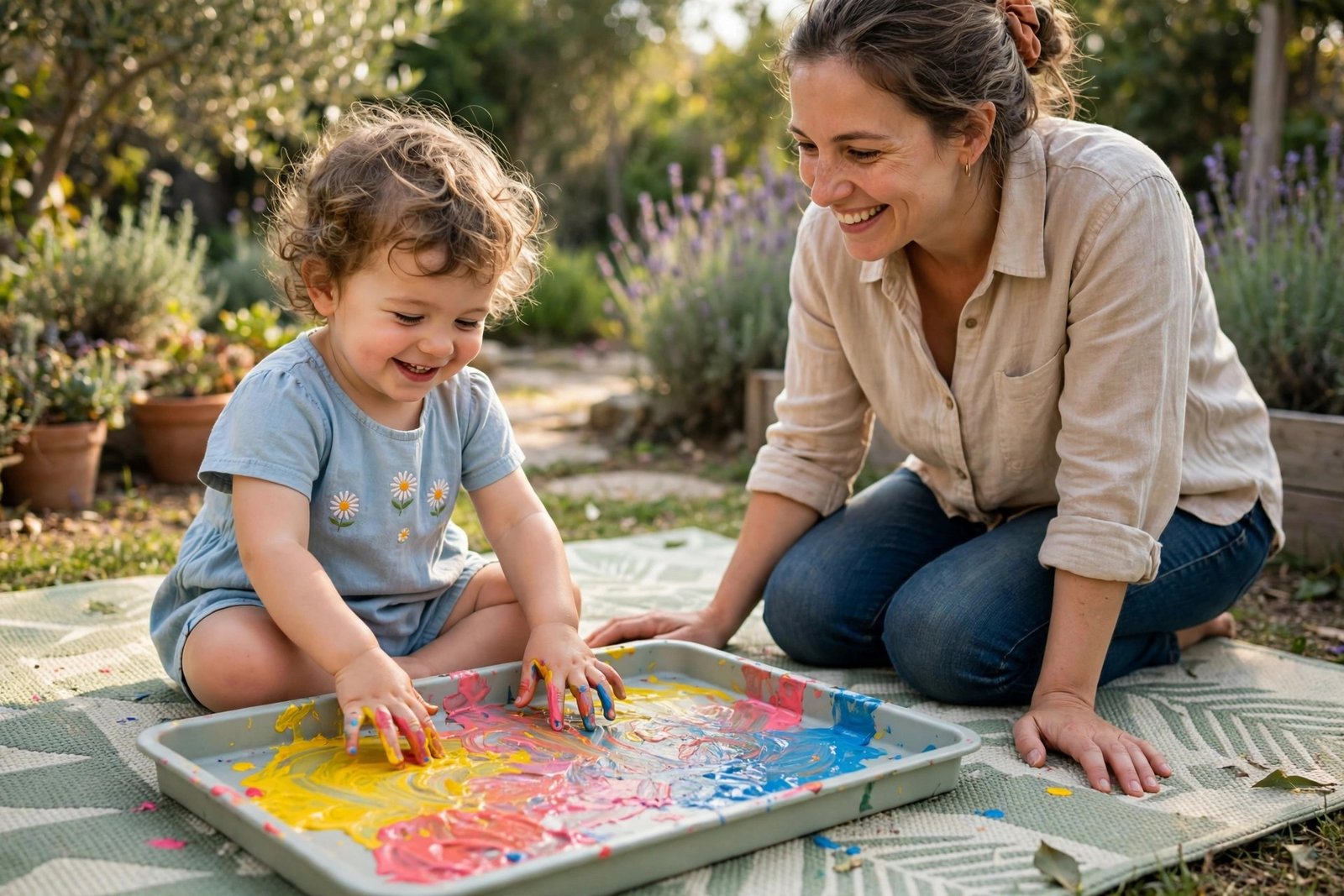
Messy play used to make me nervous. I loved the idea of it, but in our house I kept thinking about the floor, the sofa, and the clothes. I worried the clean-up would take longer than the play itself.
What changed for us was not buying special things. It was making the mess smaller, safer, and easier to stop. Once messy play had a clear place, a clear start, and a clear finish, we could enjoy it on a normal day. This guide shares the ideas that worked for us, starting with the dry, gentle ones.
Quick Answer
Keep messy play small and contained. Put it on a large tray or mat, in an empty bathtub, or outdoors. Dress your child in old clothes or an apron, and use washable paints only. Start with dry play like shredded paper or oats in a tray, or taste-safe play like cooked spaghetti and yoghurt paint for babies. Keep a towel and a bowl of water nearby, and end with a clear finish, such as straight into the bath. Always stay close and supervise.
Set the Mess Up So It Cannot Spread
Where the play happens matters more than the play itself. This simple set-up removed most of the stress in our house.
- Choose one home for the mess: a large tray, a mat, an empty bathtub, or a spot outdoors.
- Put old clothes or an apron on your child before you start.
- Start small. A little oats, water, or spaghetti is enough. You can add more.
- Keep a towel and a bowl of clean water next to you for hands and small spills.
- Decide the finish first. In our house, messy play often ends straight into the bath, so wet clothes and painted hands do not travel through the home.
When children know the mess stays on the tray, they relax, and so do you. For more gentle starting points, our guide to simple sensory play ideas at home has plenty that take only minutes to set up.
Easy Dry Messy Play to Try First
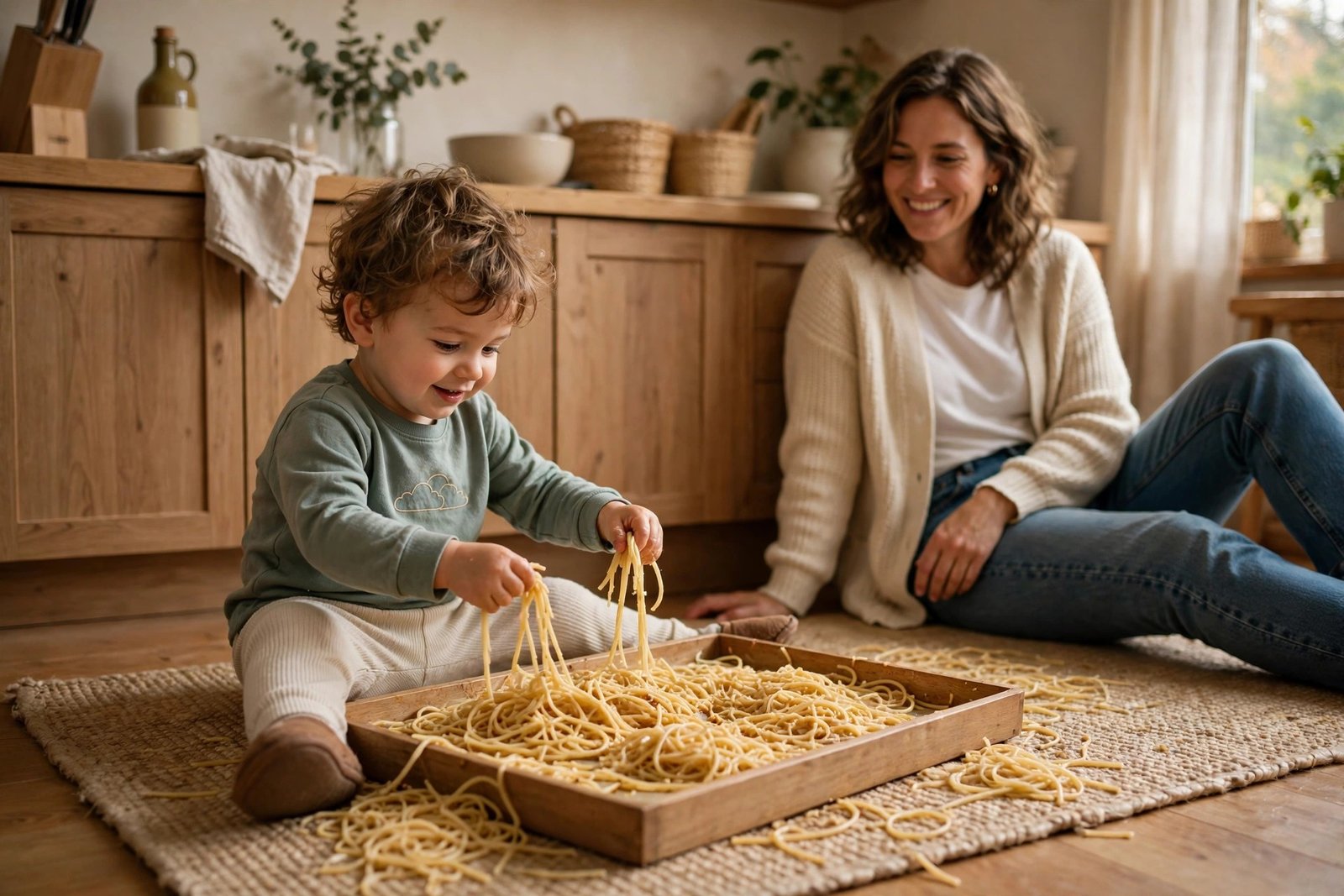
If messy play is new for you, start dry. Dry mess brushes up, does not soak clothes, and feels much less scary on a busy day.
Shredded Paper Tray
Fill a large tray or shallow box with shredded paper or tissue paper torn into strips. Hide a few big, safe toys inside, like a chunky car or a soft ball, for your child to find. Babies enjoy grabbing and shaking the paper. Toddlers enjoy burying and finding toys. Preschoolers turn it into pretend snow or animal bedding. Sit with your child, and take away paper that gets chewed into small wet pieces.
Oats Scooping Tray
Pour plain dry oats into a large tray. Add big spoons, cups, and bowls, and show your child how to scoop, pour, and fill. This gives practice with hand control and simple pretend cooking. Keep one simple rule: oats stay in the tray. Stay close, and do not let babies eat handfuls of raw oats. If your little one keeps eating lots of it, pause and try a taste-safe idea below instead.
Taste-Safe Messy Play for Babies Who Mouth Everything
Babies learn with their mouths. That is normal, but it means not every messy idea is right for them. For babies who mouth everything, we only used taste-safe options, and we stayed right beside them.
Before any food-based play, do an allergy check first. Let your child taste a tiny amount of the food as food, on a different day if you can, and watch for a reaction. If your child has a known allergy, or you are unsure, skip that food. Food play is not a good way to test a new food for the first time.
Cooked Spaghetti Play
Cook plain spaghetti until soft, let it cool fully, and put a small pile on a tray or clean mat. Babies love pulling the strands, waving them, and squishing them between their fingers. Keep it in a soft pile, stay close, and throw it away when play ends. Like food at the table, cook it fresh each time and do not reuse it the next day.
Yoghurt Paint
Plain yoghurt makes a lovely first paint. Spoon a little onto a tray, a highchair tray, or thick paper in the empty bathtub. Your baby can spread it with hands and fingers and make marks. It washes off easily, and a small taste is not a worry in the way normal paint would be. Check for a milk allergy first, use plain yoghurt with no added bits, and let it sit out for a few minutes if fridge-cold feels too cold.
We skip shaving foam completely. It is not taste-safe, and babies will try to taste it. For older toddlers who no longer mouth everything, a whipped alternative is better. Yoghurt works well, and whipped chickpea water, the liquid from a tin of chickpeas whipped until fluffy, can give a foamy feel. Use these only with supervision, and wash hands afterwards.
Wet and Washable Ideas for Toddlers and Preschoolers
Water Play in a Shallow Bowl or the Bath
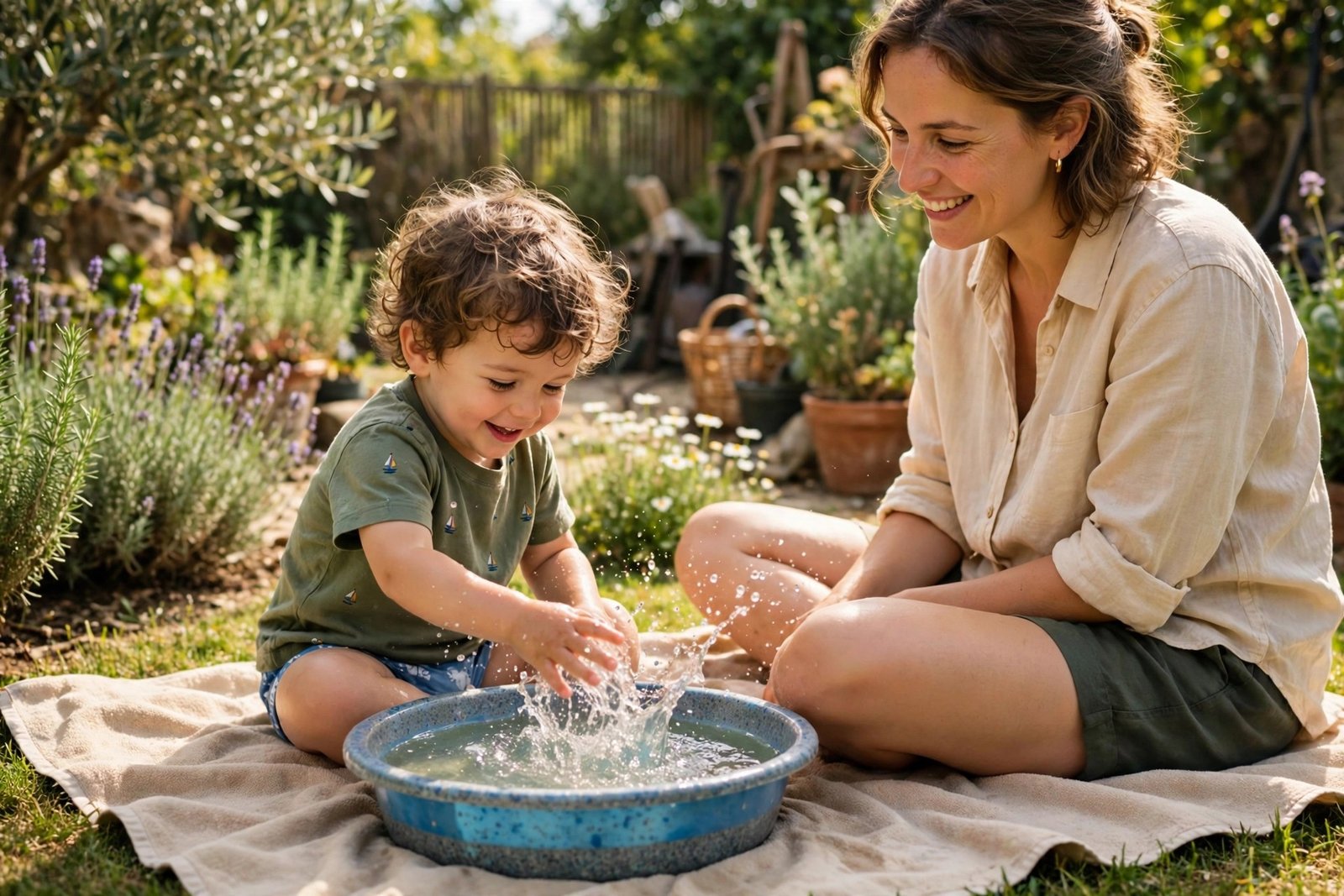
Fill a washing-up bowl or the bathtub with a shallow amount of water. Add cups, jugs, big spoons, and bath toys. Children love pouring, filling, emptying, and watching things float or sink. It also links well with our article on fine motor activities with kitchen items, because scooping and pouring give little hands lots of gentle practice.
Keep the water shallow, stay with your child the whole time, and empty it straight afterwards. Never leave a child alone near water, not even for a moment.
Washable Paint on Big Paper
Choose washable paints only. That one choice removes most of the worry. Tape big paper to the floor, a tray, or an outdoor table. Let your child paint with hands, big brushes, or sponges. Start with two colours, not the whole box. Fewer colours means less waste and an easier clean-up. When play ends, wash hands in the bowl of water you kept nearby.
A Simple Plan for Rainy Days
Messy play saved many long afternoons for us. One tray activity after lunch changed the mood of the whole house. We pair it with the calm ideas in our list of toddler bored at home rainy day activities, so the day moves between busy play and quiet rest.
Safety Rules We Never Skip
Messy play can support exploring, pouring, and squeezing, and it gives practice with new textures and tools. It only feels relaxed when the safety rules are clear.
- Stay close and supervise. Messy play is not a time to leave the room.
- Follow the big-item rule for under-3s. Anything that fits through a toilet-roll tube is a choking hazard for children under 3. Keep small loose items away from under-3s completely.
- Never use water beads, ever. We do not buy them and we do not use them. They are dangerous if swallowed, and they are never used in our house.
- Skip shaving foam. Choose yoghurt for babies, and supervised whipped alternatives like yoghurt or whipped chickpea water for older toddlers.
- For water play, keep it shallow, stay with your child, empty it straight afterwards, and never leave a child alone near water.
- Check food play for allergies first, keep oats in the tray, and do not let babies eat handfuls of raw oats.
- Stop if your child is tired, upset, or keeps eating things that are not food. Try again another day.
If you are worried about choking, swallowing, or an allergic reaction, seek medical help straight away and follow local emergency advice.
Mistakes to Avoid
- Starting too big. A whole bag of oats or a full sink of water makes a big clean-up. Start small.
- Playing in the wrong place. Messy play on a carpet or sofa almost always ends in stress. Use a tray, mat, empty bathtub, or outdoors.
- Using paints that are not washable. Check the label first. Washable paints only saved us many tears.
- Giving small loose items to under-3s. Use the toilet-roll tube check every time you add something new.
- Reaching for water beads or shaving foam because they look fun online. The safer options here work just as well.
- Forgetting the finish. No towel, no bowl of water, and no plan for what happens next turns fun into chaos.
- Letting play go on too long. Ten happy minutes is a success. Short and happy beats long and tired.
Frequently Asked Questions
What age can babies start messy play?
Many babies enjoy simple messy play once they can sit with support and reach for things. Start with taste-safe options like yoghurt paint or cooled cooked spaghetti on a highchair tray, stay beside them, and keep it short. If your baby dislikes a texture, stop and try again another week.
How do I keep messy play from ruining clothes and floors?
Play on a tray or mat, in an empty bathtub, or outdoors. Use old clothes or an apron, washable paints only, and keep a towel and a bowl of water nearby. Starting small helps most. In our house, ending straight into the bath stopped wet, painted clothes travelling around the home.
What is the safest first messy play idea?
Shredded paper in a large tray is a calm first try because it is dry and brushes up easily. For babies who mouth everything, yoghurt paint or cooled cooked spaghetti is better, after an allergy check first. Stay close, and keep small loose items away from under-3s.
Are water beads and shaving foam okay if I watch my child?
No. We do not use them at all, even with supervision. Water beads are dangerous if swallowed, and shaving foam is not taste-safe for children who put hands in their mouths. Oats, paper, spaghetti, yoghurt, water, and washable paint give plenty of messy fun without those risks.
This article shares what worked for our family and is for general information only. It is not medical or professional advice. Please read our full disclaimer and speak to a health professional if you have concerns about your child.