
There was a stage in our house when the afternoons felt very long. The nap was getting shorter, my toddler was tired but would not sleep, and I was tired too. I found myself handing over a screen just to get twenty quiet minutes to make dinner or sit down. It worked for a moment, but afterwards my little one was often more restless, not less.
That is when we slowly started quiet time. Just a short, calm part of the afternoon where my toddler played or rested in a safe space, with no screens, while I stayed nearby. Some days it lasted five minutes. Over time, though, it became one of the gentlest parts of our day.
If you are in that in-between stage, especially if you are thinking about dropping the last nap and wondering what will fill that gap, this is for you. Below is what worked for us, ideas you probably already have at home, and honest notes on what to do when your toddler wants no part of it.
Quick Answer
Screen-free quiet time is a short daily rest where a toddler plays calmly or rests in a safe, childproofed space with simple things like board books, soft toys, and chunky puzzles, while you stay nearby. Start with just a few minutes, build up slowly, keep the door open or use a safety gate, and stop if your child is upset. An audio story or gentle music is fine as an extra, but no screens are needed.
What Quiet Time Is — and What It Is Not
Quiet time, in our house, is simply a pause. After lunch, when energy dips, my toddler goes to a cosy corner or their room with a small basket of quiet things. There is no pressure to sleep. Looking at books, cuddling a stuffed animal, doing a puzzle, or lying on a cushion and daydreaming all count.
It helps to be clear about what quiet time is not:
- It is not punishment. It is never used because a child has been naughty, and it should never feel like being sent away.
- It is not nap time in disguise. Sleep is welcome if it comes, but it is not forced.
- It is not time behind a locked door. Your child should always be able to see or call you.
- It is not screen time with a nicer name. The point is a break from screens and flashing images.
- It is not supposed to be silent. Talking to toys, humming, and turning pages noisily are all normal.
When I stopped expecting silence or sleep, quiet time became much easier for both of us.
Why We Moved Away From Screens at Rest Time
Screens are tempting at tired moments, and I used them myself. But I noticed the rest did not seem to land. My toddler would watch, then bounce back louder and harder to settle. When we set clearer toddler screen time limits in our house, quiet time became what we did instead in that tired afternoon slot, and the mood afterwards was calmer.
Every family makes their own choices. This is simply another option — one that gives little brains a chance to slow down and find something to do on their own.
How to Start Quiet Time, Step by Step
What worked for us was starting much smaller than I first imagined. I had pictured a peaceful hour. Reality began with about five minutes and lots of popping back to check on me. That is normal. Here is the gentle way we built it up:
- Pick the same time each day, ideally after lunch or the old nap time, when your toddler is tired but not yet overtired.
- Keep the routine the same: toilet or nappy change, a drink, a cuddle and a short book together, then quiet time starts.
- Set up one safe, familiar space, such as a corner of their bedroom or a cosy spot in the living room.
- Offer two or three quiet activities, not a whole toy box. Too much choice feels exciting rather than calm.
- Say kindly what will happen: you will be nearby, the door stays open or the gate stays on, and you will come back when the timer or song ends.
- Start with a few minutes and end while it is still going well. Success builds trust.
- Finish with connection: a cuddle, a snack together, and a simple thank you for resting.
Think of the first week or two as practice. Toddlers learn new rhythms by repeating them.
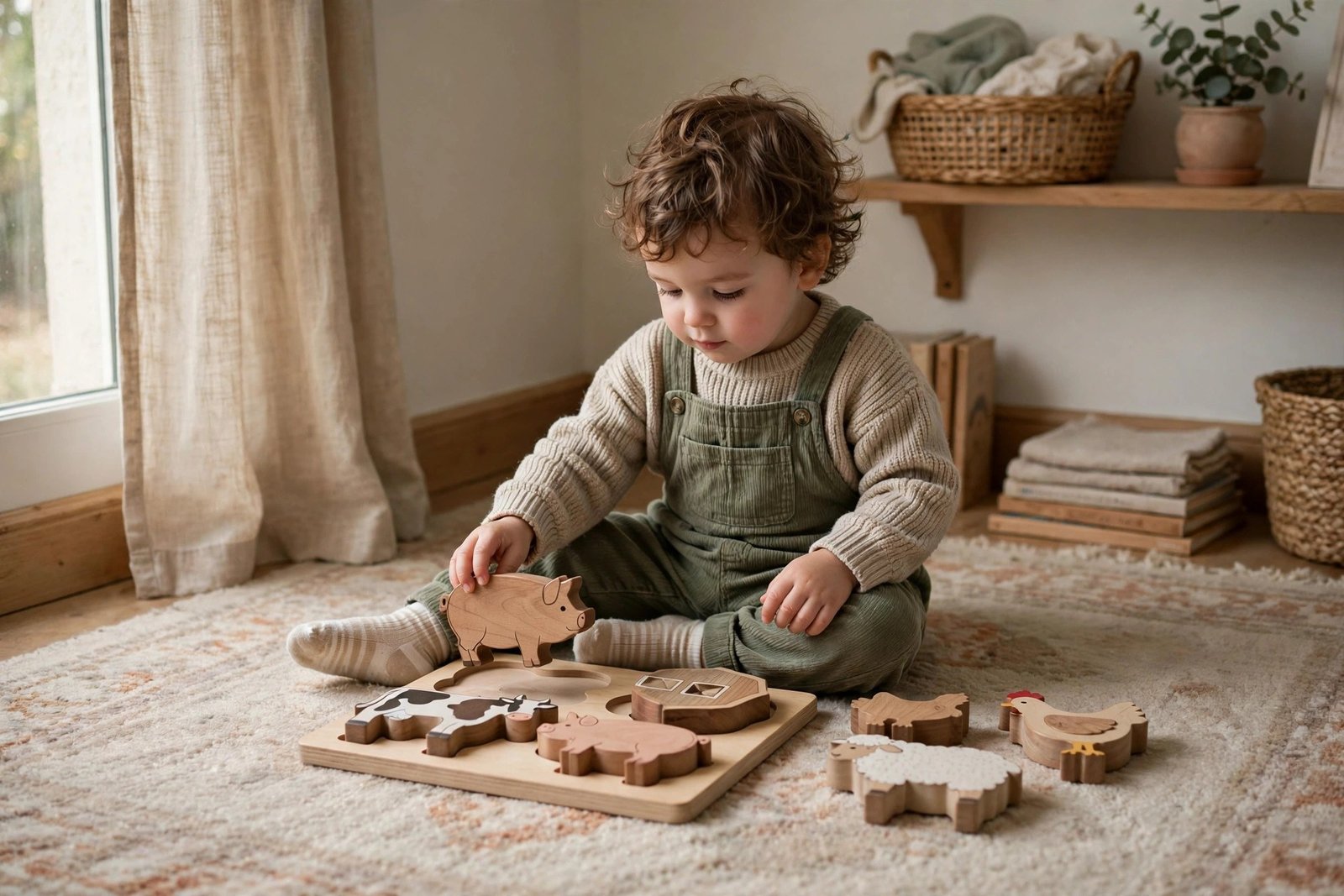
Screen-Free Quiet Time Activities for Toddlers
You do not need special toys. The best quiet time things in our house were plain and familiar. I keep a small basket that only comes out for quiet time, and swap a few items every few days.
- Board books and picture books with sturdy pages little hands can turn alone.
- Chunky puzzles. Expect pieces to be carried and lined up as well as placed correctly.
- Soft toys and dolls. A teddy to tuck in or read to is a whole quiet world in itself.
- Stacking cups or nesting boxes, to build, knock softly, and build again.
- Large crayons and paper, or a simple sticker book with a few colours.
- A cushion nest or small blanket fort. Sometimes the space itself is the activity.
- An audio story or gentle music. This optional extra keeps the time screen-free while giving restless ears something soft to follow.
- Pretend rest play, like tucking toys into a shoebox bed and patting them to sleep.
Rotate rather than add. When I put out fewer things, my toddler settled faster.
Realistic Durations by Age
Hold these numbers loosely. Every child is different, and a happy five minutes is worth more than a miserable twenty:
- Around 18 months to 2 years: start with 3 to 5 minutes, building towards 10 to 15 minutes over weeks, not days.
- Around 2 to 2 and a half years: 10 to 20 minutes is a kind, realistic aim for many toddlers.
- Around 2 and a half to 3 years: 20 to 30 minutes may work on good days, with shorter days mixed in.
- Around 3 years and older: some children manage 30 to 45 minutes once the nap has gone, but many still need less.
If your toddler falls asleep during quiet time, that is completely fine. Let them sleep. This is especially true when quiet time replaces the nap — the rest is the point, whether it comes as sleep or quiet play.
The same patient practice you use to build independent play during the day will slowly show up here too.
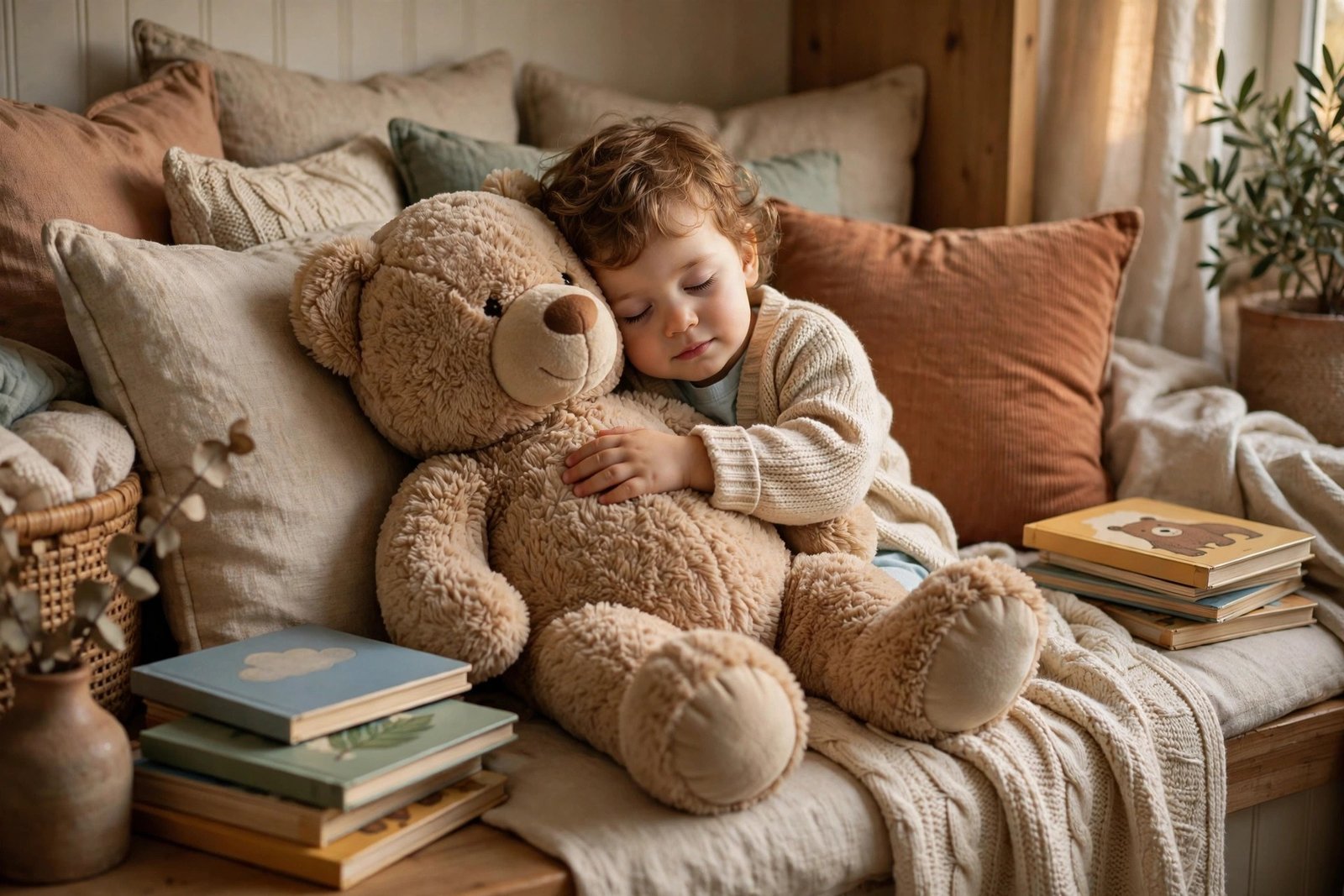
Troubleshooting When a Toddler Resists
Most toddlers resist at first. Mine stood at the gate and shouted for me, and asked for snacks just eaten. These things helped us most:
- Shorten it. If twenty minutes brings tears, try five. A short success today makes tomorrow easier.
- Check the basics first. Hunger, a wet nappy, or being overtired can undo the calmest plan.
- Stay boring and kind. Pop-ins should be brief and reassuring, not a new game.
- Change one thing, not everything. A different book, a new cushion, or starting ten minutes earlier can fix a wobbly routine.
- Use a simple cue. Three gentle songs or a sand timer gives a toddler something concrete to wait for.
- Expect setbacks after illness or travel. Drop back to a shorter time and rebuild. That is not starting over.
If your child is truly distressed — crying hard or not settling at all — stop. Comfort them and try again another day. Quiet time is rest, not punishment, and it only works when a child feels safe. Some days we skipped it and went for a walk instead.
Safety: Keeping Quiet Time Safe
- Quiet time happens in a safe, childproofed space, with you nearby in the home, able to hear your child easily.
- Never lock a child in a room. Keep the door open, or use a safety gate instead, so your toddler can see out and call you.
- Choose safe items only: board books, soft toys, and chunky puzzles. Remove anything broken, sharp, or with small loose parts.
- Use the toilet-roll tube test. If a toy or part of a toy fits through a toilet-roll tube, it is a choking hazard and does not belong in quiet time.
- Check cords, heavy items that could topple, and furniture that needs fixing to the wall.
- Keep food out of quiet time unless you are right there. Water in a spill-proof cup is fine.
Mistakes to Avoid
- Starting too long. Aiming for an hour on day one almost always ends in tears.
- Using quiet time as a punishment. A toddler will fear it instead of resting in it.
- Locking the door, or leaving a child somewhere they feel trapped.
- Filling the basket with exciting new toys. Novelty wakes toddlers up. Familiar is the goal.
- Giving up after two hard days. The first week is practice for both of you.
- Expecting every day to look the same. Teeth, moods, and growth spurts change things.
- Comparing with another child. Some take to quiet time quickly, some take months. Both are normal.
Frequently Asked Questions
What if my toddler will only last two minutes?
Then two minutes is your starting point, and it counts. End on that small success, praise the effort, and add a minute every few days. In our house the jump to ten minutes took weeks.
Can quiet time really replace the nap?
For many families, yes. It gives a tired body and brain a daily rest when naps fade. Some days your child may still fall asleep during it, and that is completely fine. If your toddler is very overtired by bedtime, bring the nap back on some days or move quiet time earlier.
Is an audio story cheating if quiet time is screen-free?
Not in our house. Screen-free means no tablet, phone, or television. An audio story or gentle music can help a toddler settle, as long as it stays calm. If it winds your child up instead, simple quiet is better.
What should I do while my toddler has quiet time?
Stay nearby, rest if you can, and keep your own activity calm. I often sit with tea and a book in the next room. Knowing you are close and relaxed seems to help little ones relax too.
This article shares my personal experience as a mum and is for general information only, not professional advice. For the full details, please read our disclaimer.
1 thought on “Screen-Free Quiet Time Activities for Toddlers”