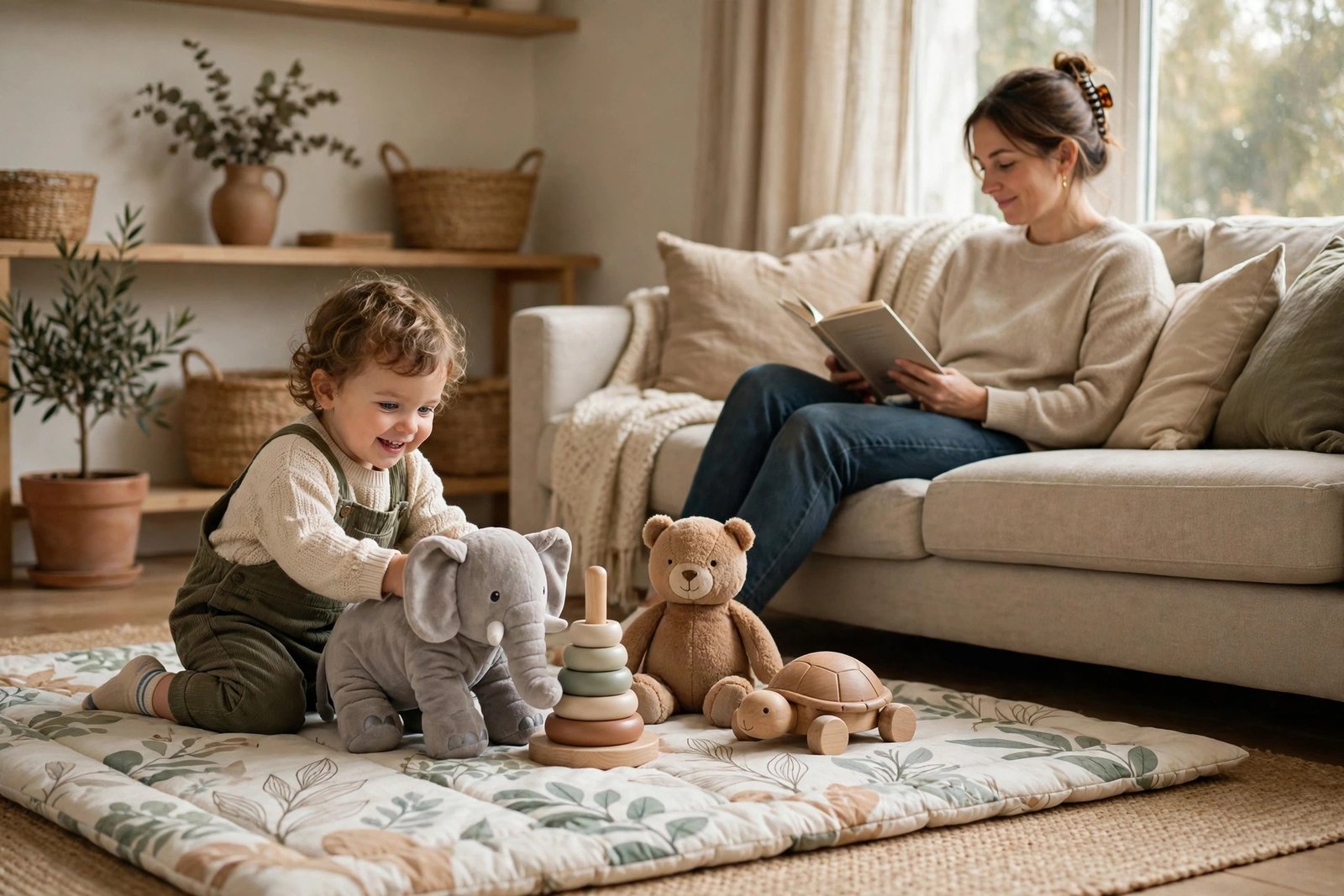
If your child follows you from room to room, asks you to play every few minutes, and feels lost the moment you sit down with a cup of tea, you are not alone. In our house, I used to feel guilty even thinking about not joining in. I worried that wanting a few minutes to cook or simply breathe meant I was not doing enough.
What helped was learning that independent play is not about leaving a child to cope alone. It is a gentle skill you build together, in a safe space, while you stay nearby. It grows slowly, and it works best when your child trusts that you will come back when they need you. This is what worked for us. Some days it will last two minutes. That is completely normal.
Quick Answer
Start tiny in a childproofed space while you stay nearby and within earshot. Offer a small choice of familiar, open-ended toys, sit close at first without directing the play, and respond warmly when your child checks in. Begin with just a few minutes, finish while it is still going well, and build up gradually. Coming back when they call is not spoiling independent play — it is what makes it possible.
Why Independent Play Matters
Independent play is simply time when a child chooses what to do and how to do it, without an adult leading. That might be stacking cups, pushing a car along the sofa, or making a tower just to knock it down.
For children, these small moments are rich. They follow their own ideas, try things their way, and work out little problems for themselves, like how to balance one block on another. They practise concentrating for a little longer each time, and they learn that being absorbed in play, with you close by, feels safe.
For parents, the gift is real too. A few minutes of independent play can be the difference between cooking dinner calmly and cooking it with a toddler clinging to your leg.
It is not the same as being left alone
This matters, so I will say it plainly. Independent play for babies and young children always happens with a parent nearby, listening and able to step in straight away. It is not about closing a door and hoping for the best. Your quiet presence from the next chair is the safety net underneath it all.
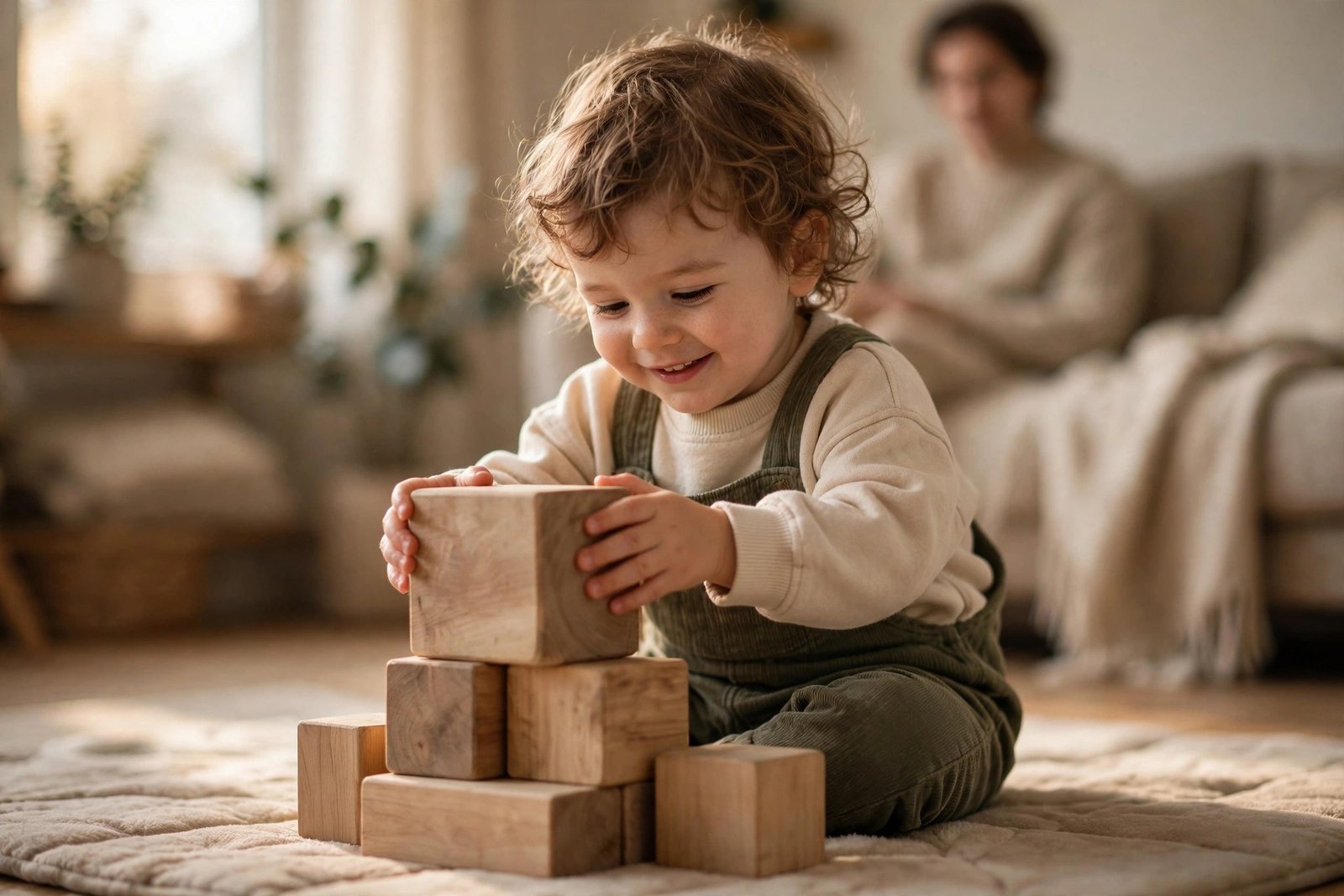
How to Start, Step by Step
Step 1: Set up a small, safe yes space
Start with the space, not the toys. Choose one corner where your child can play freely without you saying no every few seconds. In our house that was a corner of the living room with a soft mat.
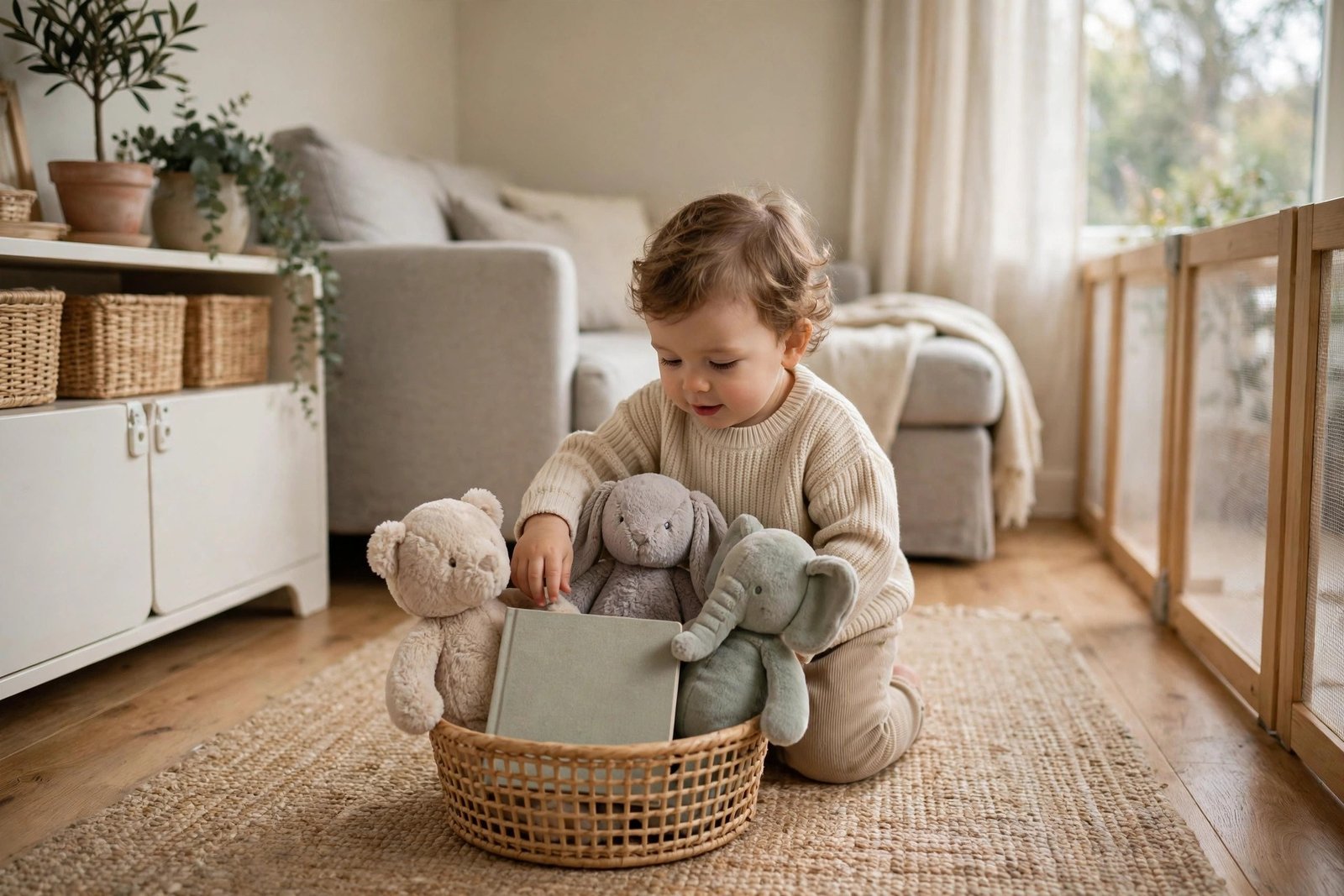
Check it carefully first. Anchor tall furniture to the wall, move small objects that could be choking hazards, and use safety gates where you need them, especially near stairs.
Step 2: Offer less, not more
A big pile of toys can feel overwhelming. Try putting out just three or four familiar things: blocks, a ball, cups for stacking, or a simple puzzle. Simple, open-ended toys tend to hold attention longer.
If your toy box has taken over the room, it helps to put some away for a while. That is the idea behind toy rotation when there are too many toys — fewer choices out at once often means deeper, calmer play.
Step 3: Play together first, then step back a little
Spend a few minutes playing together first. Follow your child’s lead and enjoy it. Then, when they are settled, quietly step back. Sit nearby with your own small job, like folding washing, where they can see and hear you.
Try not to direct or correct too often. If they are happily putting the round block in the wrong hole, let them explore it. Stepping in too quickly can break their focus.
Step 4: Start with a few minutes and end on a good note
Two or three good minutes is a real win for a young toddler. If your child becomes upset, go to them, comfort them, and try again another time. Finishing while things are still calm helps your child link this time with a good feeling. Over days and weeks, those minutes often stretch on their own.
Step 5: Name what you are doing
A simple, warm script helped us so much. I would say, I am going to sit here and fold these clothes while you play with your blocks. I can see you, and if you need me, just call and I will come. Then I did exactly that. When my little one looked up, I smiled and said, I am right here.
That checking in is not a failure. It is your child making sure their safe base is still there. Answer it warmly every time.
Realistic Expectations by Age
Every child is different, and tiredness, hunger, and mood all change things day to day. These are gentle ranges from our experience, not targets to chase.
- Babies under 12 months: often just a minute or two of looking, kicking, or reaching on a mat while you are right beside them. They need you very close.
- Around 12 to 18 months: perhaps 3 to 5 minutes with a simple toy, with lots of looking up to check you are there.
- Around 18 months to 2 years: sometimes 5 to 10 minutes, especially with stacking, posting shapes, or scribbling.
- Around 2 to 3 years: sometimes 10 to 15 minutes on a good day, often less when tired.
- Around 3 to 4 years: sometimes 15 to 20 minutes for pretend play, building, or drawing, still with you nearby.
If your child manages less than this, please do not worry. A shorter time does not mean you have done anything wrong. Some children are more cautious, some are going through a clingy phase, and some simply prefer company. Keep it tiny, keep it kind, and let it grow at their pace.
On long, stuck-at-home days it helps to have fresh ideas ready to offer first, before you step back. We keep a short list of our favourite toddler activities for rainy days at home for exactly those moments.
The Guilt Part, and What to Do With It
Let us talk about the guilt, because for many mums it is the biggest barrier of all. You sit down for five minutes and a voice says you should be playing or doing something more. I know that voice well.
Here is what I remind myself. Children do not need us to be their entertainers all day to feel loved and secure. They need warm, responsive care over the whole day — cuddles, chats, shared play, and everyday care like meals and stories. A few minutes of playing happily nearby while you cook is not taking anything away from them.
Independent play is just one small piece of the day. Many families, including ours, balance it with time together and with calm, screen-free quiet time activities later in the day. A screen is not the enemy, and most families use one sometimes. It is simply not the method we are building here, because the goal is play your child leads themselves.
If guilt creeps in, start so small that it feels easy, stay where you can see each other, and notice what your child actually does. Often they are perfectly content.
Safety First: The Non-Negotiables
Independent play only works when safety comes first, every single time.
- Only use a space you have childproofed carefully: furniture anchored, no small or sharp hazards within reach, cords and cleaning products out of the way.
- Stay nearby and within earshot for the whole time, and check in often. Never leave a baby or young toddler alone and out of sight to play.
- Choose toys that suit your child’s age, with no small parts for little ones who still put things in their mouths.
- Stop straight away if your child is upset, unwell, or in any difficulty, and go to them.
- Use safety gates where needed, and re-check the space regularly, because children reach further surprisingly quickly.
Mistakes to Avoid
- Starting too big. Expecting 20 minutes on day one usually ends in tears. A few happy minutes is the goal at first.
- Sneaking away. Slipping out without a word can make a child more anxious next time. A calm explanation builds more trust.
- Only trying when you are desperate. Practise a little when you are not in a hurry, not only when you are stressed.
- Offering too many toys, or toys that do everything for them. Simple toys your child has to explore often hold attention longer.
- Jumping in too quickly. Fixing every problem stops your child from trying their own solution. Help only when they ask or are getting frustrated.
- Comparing with other children. A friend’s child playing alone for half an hour tells you nothing about your child.
When to Check In
Most clingy phases and slow starts are a normal part of growing up, and they usually pass with time and reassurance. If your child seems very distressed by any short separation, even with you nearby, or if you find yourself worrying about their development or attachment, it is completely fine to have a chat with your health visitor or GP. That is not overreacting — it is simply using the support that is there for parents.
Frequently Asked Questions
What if my child cries every time I step back?
Go to them, comfort them, and keep the attempt much smaller next time. Try staying seated right beside them while they play, without leading, before you move even a chair away. For some children this stage takes weeks, and that is okay.
How many times a day should we practise?
Once or twice a day is plenty, at times when your child is fed, rested, and generally content. Little and often works better than one long session, and skipping a difficult day entirely is fine.
What are the best toys for independent play?
Simple, open-ended things usually work best: blocks, stacking cups, balls, large crayons and paper, and safe everyday objects like wooden spoons and pans. You do not need to buy anything new.
Is it okay if my child just watches me instead of playing?
Yes, completely. Watching you cook, fold washing, or tidy is interesting and comforting for young children, and many drift between watching and playing. You can gently offer a toy nearby without any pressure.
This article shares my personal experience as a mum and general information only, and it is not professional advice. For the full details, please read our disclaimer.
2 thoughts on “How to Build Independent Play (Without Feeling Guilty)”