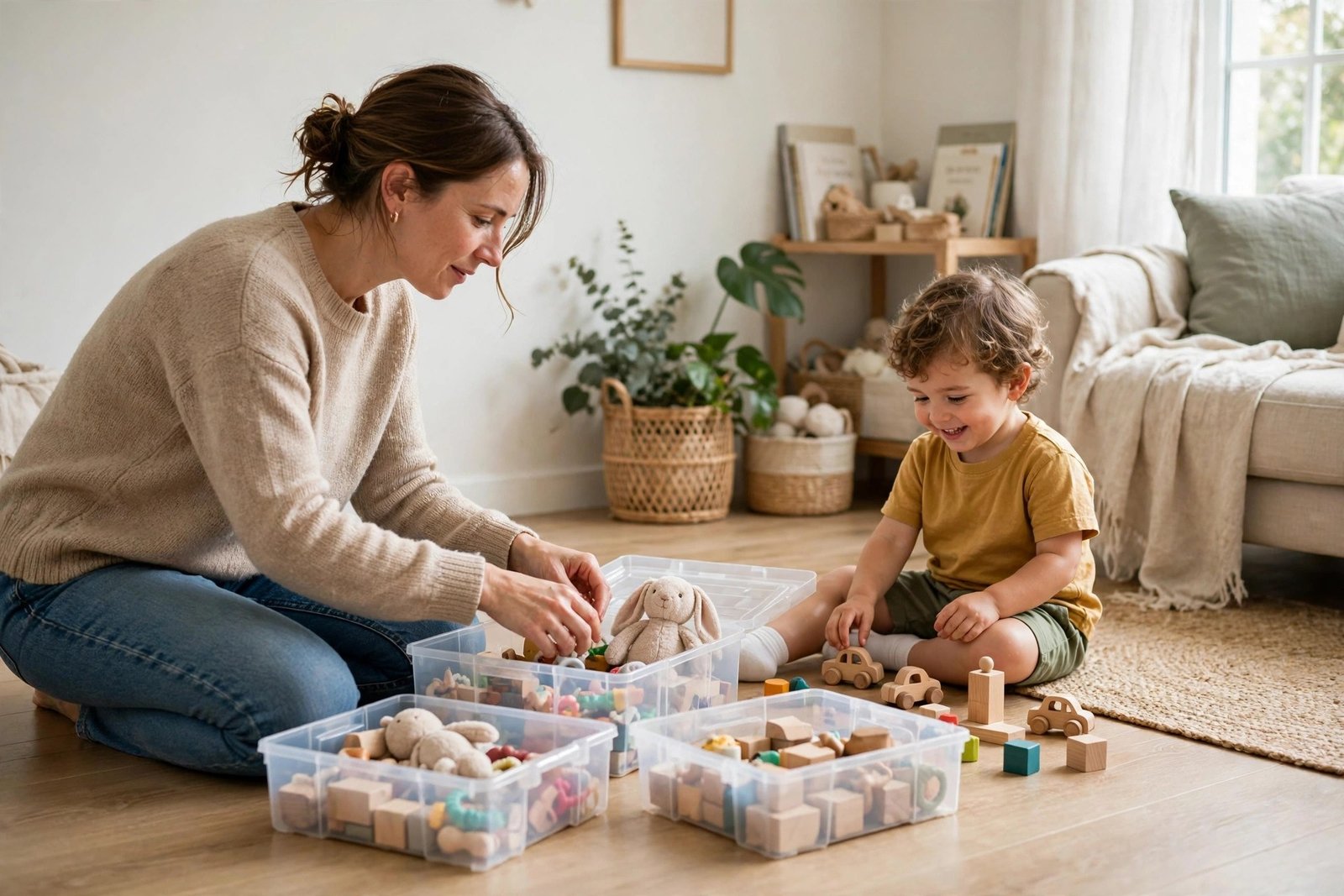
If your floor is covered in toys but your child still says they are bored, you are not alone. That was our house for a long time. We had baskets full of toys, boxes under the sofa, and small pieces in every corner. My child would pull everything out, look at it all for a minute, and then ask me what to do.
Then a friend told me about toy rotation, and it changed how our days feel. The idea is simple. You keep only a small number of toys out, and you store the rest away. Every week or two, you swap them. The toys are not new, but they feel fresh again, and the room feels calm enough to play in.
Here is the gentle system that worked for us. You do not need special boxes or a big clear-out to begin.
Quick Answer
Keep a small, chosen set of toys out — a mix for building, pretend play, puzzles, creating, and moving — and store the rest in a few boxes out of your child’s reach. Swap the sets every one to two weeks, or sooner if interest drops. Comfort items, like a beloved teddy or blanket, always stay out. They are never part of the rotation.
Why Fewer Toys Out at Once Can Help
When every toy is out at once, choosing can feel hard for a small child. There is so much to look at that nothing holds their attention for long. In our house, play often became dumping and scattering, rather than real playing.
With fewer toys out, my child played with each thing for longer. A set of blocks became a tower, then a garage, then a zoo. The same toys, given more space, led to deeper play. Many families find the same, and tidying takes minutes, because there is less to put away.
A smaller choice can help children start play on their own too. If you are working on that, our guide on how to build independent play shares gentle steps that pair well with a rotation.
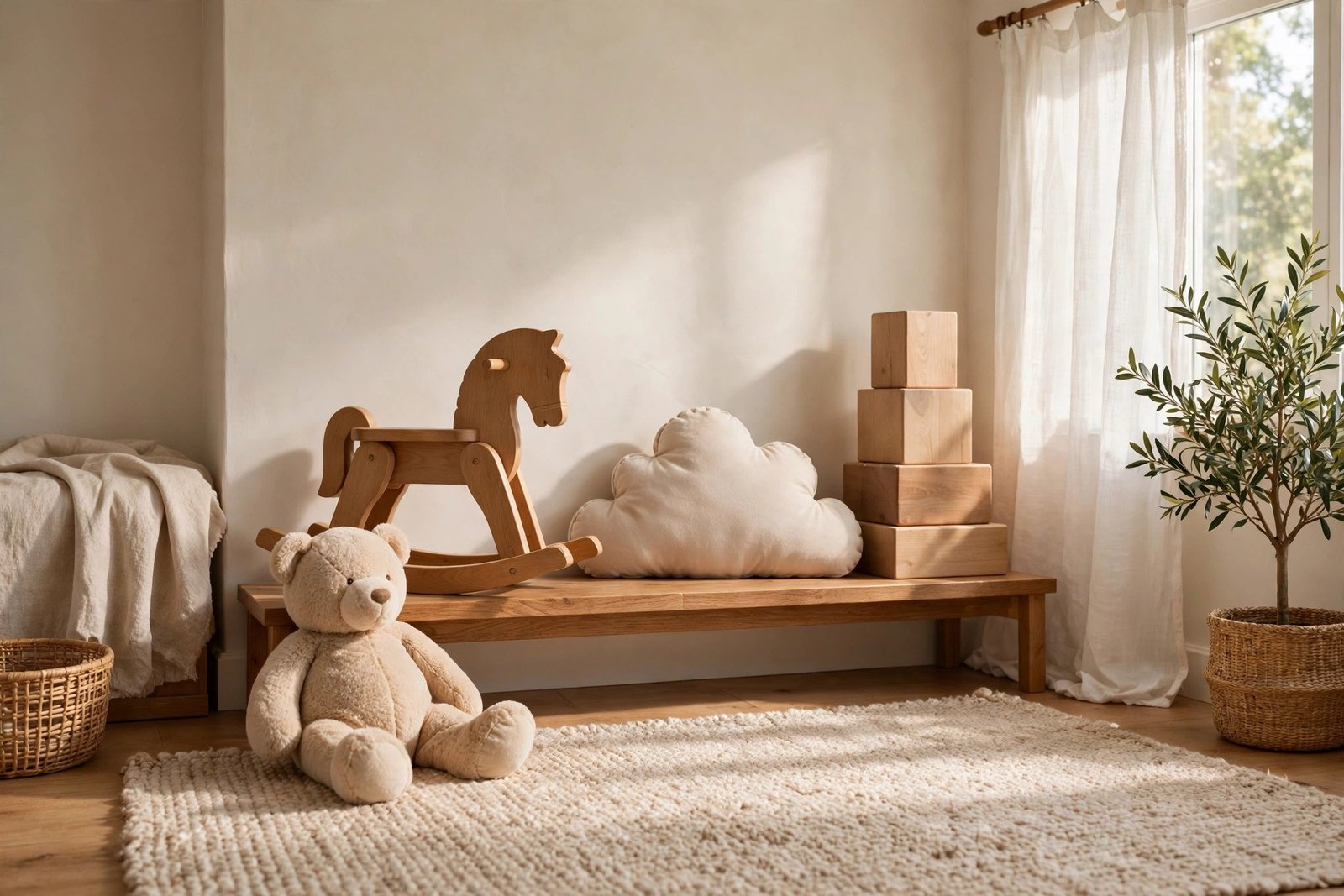
How to Sort the Toys You Already Have
The first sort is the biggest job, but you only do it once. I did ours during nap time, with a cup of tea.
Gather Everything Together First
Collect toys from the living room, bedroom, car, and other hiding spots. Seeing it all together can feel like a lot, but please do not feel bad about it. Toys arrive through birthdays, gifts from loving relatives, and small treats over the years. This is normal family life, not something to feel ashamed about.
Make Four Simple Piles
- Keep out now: loved toys that are played with often.
- Store for later: toys in good condition that are not needed this week.
- Pass on: outgrown toys, duplicates, and toys that are always ignored.
- Recycle or throw away: broken toys and toys missing key pieces.
For the pass-on pile, choose toys that are intact, clean, and safe, and donate them or pass them to a younger child. Where it is age-appropriate, let your child help choose a toy to give away. In our house, talking about a toy making another child happy made letting go much easier.
As you sort, think about what your child really plays with. One child may love puzzles, while another only wants vehicles. Follow your own child’s interests, not a list from the internet.
The Simple Rotation System, Step by Step
This takes me about fifteen minutes on a Sunday evening, and that is all the effort it needs.
Step 1: Choose a Small Set to Keep Out
Pick roughly eight to twelve toys or play items, depending on your child’s age and your space. Try to include a mix:
- Something to build with, like blocks or a stacking toy.
- Something for pretend play, like dolls, vehicles, or toy kitchen items.
- Something quiet, like a puzzle, books, or a matching game.
- Something creative, like crayons, paper, or play dough.
- Something for movement, like a ball or a push-along toy.
You can add one simple hands-on extra from our list of simple sensory play ideas at home, using things you already have in the kitchen.
Step 2: Pack the Rest Into a Few Boxes
Put the remaining toys into two, three, or four boxes, loosely grouped so each box holds a ready-made future set. I write the contents on a piece of tape on each box, so I remember what is inside. The boxes do not need to be perfect, just roughly balanced.
Step 3: Store the Boxes Away
Put the boxes somewhere your child cannot reach or open, like a high cupboard or a spare room. Out of sight really helps. When my child could see the stored toys, we had daily requests for them.
Step 4: Swap, Then Watch What Happens
On swap day, put the current toys into an empty box and bring out the next one. I do this when my child is asleep or out, so the new set feels like a small surprise. Then I watch what gets chosen first. That tells me what to include next time.
What to Keep Out All the Time
Some things should never be rotated away. In our house, these stay out permanently:
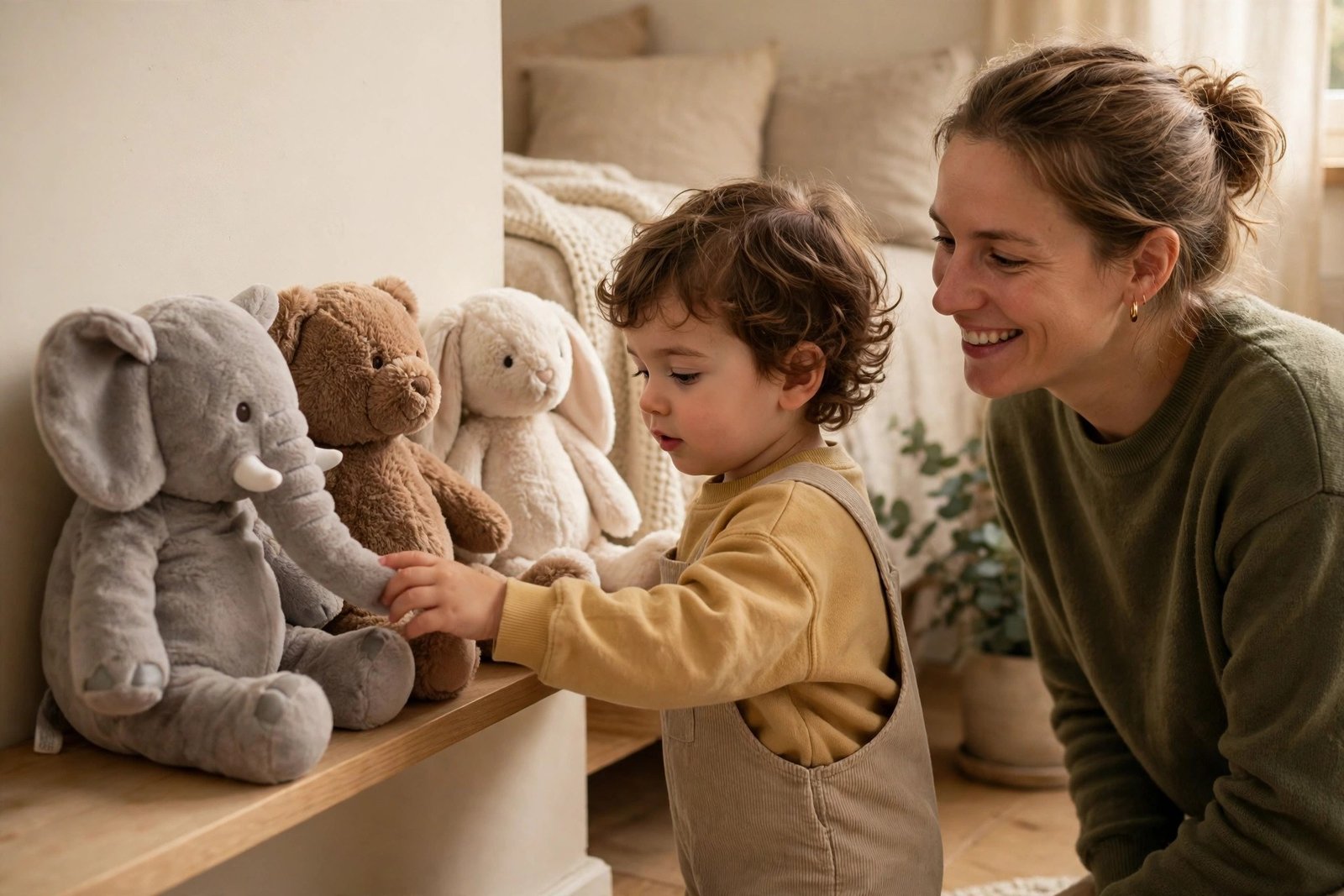
- Comfort items, always. A beloved teddy, blanket, or special soft toy is a source of comfort and security, not just a toy. These are never stored away, not even for one night.
- A small basket of favourite books.
- Basic art supplies, like paper and crayons, because they are used almost every day.
- One or two true favourites your child plays with daily and would genuinely miss.
If you are unsure about an item, keep it out. The rotation should make life calmer, never upsetting.
How Often Should You Swap the Toys?
For many families, swapping every one to two weeks works well. Weekly swaps can suit younger toddlers, whose interests change quickly. Fortnightly swaps can suit older toddlers and preschoolers, who build longer games over several days.
Let your child guide you. If play is still going strong, leave the set out a few more days. If toys are ignored or just scattered, swap sooner. On long wet weeks, a fresh box helped us a lot, alongside our favourite toddler bored at home rainy day activities for slow afternoons.
Involving Your Child in the Rotation
Older toddlers and preschoolers often enjoy helping, and it can stop the rotation feeling like their toys are being taken away.
- Let your child choose between two boxes for the next set, rather than choosing from everything.
- Ask which toy from the current set should stay out another week because it is still being enjoyed.
- Let them help carry unbreakable toys to the box and say goodbye for now, knowing the toys will come back.
- Talk about stored toys as resting or having a little holiday, which makes the idea feel friendly.
With younger toddlers, it is usually kinder and easier to swap quietly while they sleep. You know your child best, so choose what feels right for them.
A Short Safety Note
A rotation means storing toys and bringing them back out, so a few checks matter every time:
- Store boxes out of toddler reach. Never use heavy boxes a small child could pull down on themselves. Choose light boxes, kept in a closed cupboard or somewhere your child cannot climb to.
- Never store toys in plastic bags. Plastic bags are a suffocation risk for young children and should never be used for toy storage or left where a child can find them.
- Before re-offering stored toys, check for damage, broken or sharp parts, and loose pieces, and remove anything that is no longer safe.
- Check battery compartments. Toys with button batteries should only come back out if the compartment closes firmly and cannot be opened by little fingers. If in doubt, leave the toy out of the rotation.
- Wipe stored toys clean before giving them back, especially for babies and toddlers who still put toys in their mouths.
Mistakes to Avoid
- Rotating away a comfort item. Comfort toys and blankets stay out always, no exceptions.
- Putting out too many toys in each set. If tidying still takes forever, try removing a few items and see if play improves.
- Making the system complicated. Fancy labels and strict rules usually fade fast. A few boxes and a regular swap day are enough.
- Swapping too often. Changing toys every day removes the chance for deeper play and makes hard work for you.
- Feeling guilty while you sort. Having lots of toys does not make anyone a bad parent. This is about calmer play, not judging your home.
- Ignoring what you notice. A toy ignored in three rotations in a row may simply be outgrown, which is useful, gentle information for your next pass-on pile.
If a full sort feels like too much today, start small. Quietly remove just five or six toys tonight and build the system slowly, one box at a time.
Frequently Asked Questions
What if my child asks for a toy that is stored away?
This happens to us sometimes, and it is fine to say yes occasionally. I usually say the toy is resting and will come back soon. If my child is truly upset, I simply get it out. The rotation serves your family, not the other way round.
How many toys should be in each rotation set?
Around eight to twelve items suits many toddlers and preschoolers, but there is no perfect number. Small spaces may need fewer, and siblings may need a few more. Start small, watch how your child plays, and adjust.
What if we live in a small home with no storage space?
Many families manage with very little space. One box on top of a wardrobe, under a bed, or in a linen cupboard can be enough. The system works at any size, as long as some toys rest out of sight.
Will a toy rotation work for siblings of different ages?
It can, with a little planning. Keep shared favourites and comfort items out for everyone, and include something for each child in every set. Keep toys with small parts stored away while a baby or young toddler is playing, and bring them out only when you can supervise closely.
This article shares my personal experience as a parent and general information only. It is not professional advice, and every family is different, so please use your own judgement and speak to a qualified professional if you have concerns about your child’s play or development. You can read more in our disclaimer.
1 thought on “Too Many Toys: How to Set Up a Simple Toy Rotation”