
If your happy baby has suddenly become drooly, chewy, and hard to settle, you may be wondering if a first tooth is on its way. Teething is one of those stages that almost every parent worries about, usually in the middle of the night, with a grizzly baby in their arms. I have been there too, rocking, patting, and second-guessing whether it really was teeth or something else entirely.
The truth is that teething pain is real, but it is also blamed for almost everything in the first two years. Some fussiness, sore gums, and a strong urge to chew are very typical. High fever, diarrhoea, and serious illness are not. This guide will help you spot the signs that truly fit teething, soothe your baby safely at home, and know clearly when to get medical advice instead.
Quick Answer
Teething pain usually means sore, red, or swollen gums, lots of drooling, chewing on hands and toys, mild fussiness, and sometimes slightly disturbed sleep or feeds for a few days around when a tooth cuts through. Soothe it safely with a clean finger to chew on, a chilled but not frozen solid teething ring, a chilled washcloth, extra cuddles, and gentle care for wet, drooly skin. Do not use amber teething necklaces, teething gels with benzocaine, or homeopathic teething tablets. Check with a pharmacist or doctor before any medicine, and use only age-correct paracetamol or ibuprofen exactly as the label or your clinician directs. A fever over 38 degrees Celsius, diarrhoea, or ear pulling should not be blamed on teething, so see a doctor for those.

How to Tell It Is Teething
Most babies cut their first tooth between about 4 and 7 months, although earlier and later are both normal. The bottom front teeth usually come first, followed by the top front teeth. Discomfort builds for a few days as the tooth moves under the gum, is worst just before it appears, and eases once the sharp edge comes through.
Signs That Fit Teething
These signs, seen together for a short time, are the ones that most reliably point to teething:
- Sore, red, or slightly swollen gums, sometimes with a small white spot where a tooth is about to appear
- Much more drooling than usual, often with a mild rash around the mouth, chin, and neck from wet skin
- Chewing and biting on everything, including hands, toys, and the side of the cot
- Rubbing cheeks or gums, and being a little more clingy or grizzly than usual
- Slightly disturbed sleep, or going off feeds a little because sucking presses on sore gums
- A very mild temperature below 38 degrees Celsius in some babies, for a short time only
No single sign proves it is teething. Look at the pattern: a baby who is well overall, with sore gums and lots of chewing, for a few unsettled days. If your baby seems unwell in a bigger way, or fussiness goes on with no tooth in sight, look for another cause.
What Teething Does Not Usually Cause
This matters, because blaming everything on teeth can delay care for a real illness. Teething should not explain away a fever over 38 degrees Celsius, diarrhoea, vomiting, a body rash, a bad cough, or refusing all feeds. Many teething babies tug at their ears because gum pain can feel close to the ear, but ear pulling with fever, crying when lying flat, or discharge can point to an ear infection and needs a doctor.
Teething drool can make stools a little looser, but true diarrhoea or blood in the stool is not just teething. If your little one is straining or passing hard stools, my guide on baby constipation can help you tell what needs advice. A baby who is unwell deserves to be checked, whatever the teeth are doing.
Safe Ways to Soothe Teething Pain
You do not need special products. In my experience, the simplest comforts work best, and they are the safest too. Try one at a time and see what your baby prefers.
A Clean Finger to Chew On
Wash your hands well, then let your baby chew and gum your clean finger. The gentle pressure often feels wonderful on a sore spot, and you can gently rub the gum for a minute or two. If a sharp new tooth starts biting hard, move on to a ring or cloth instead.
A Chilled Teething Ring or Washcloth
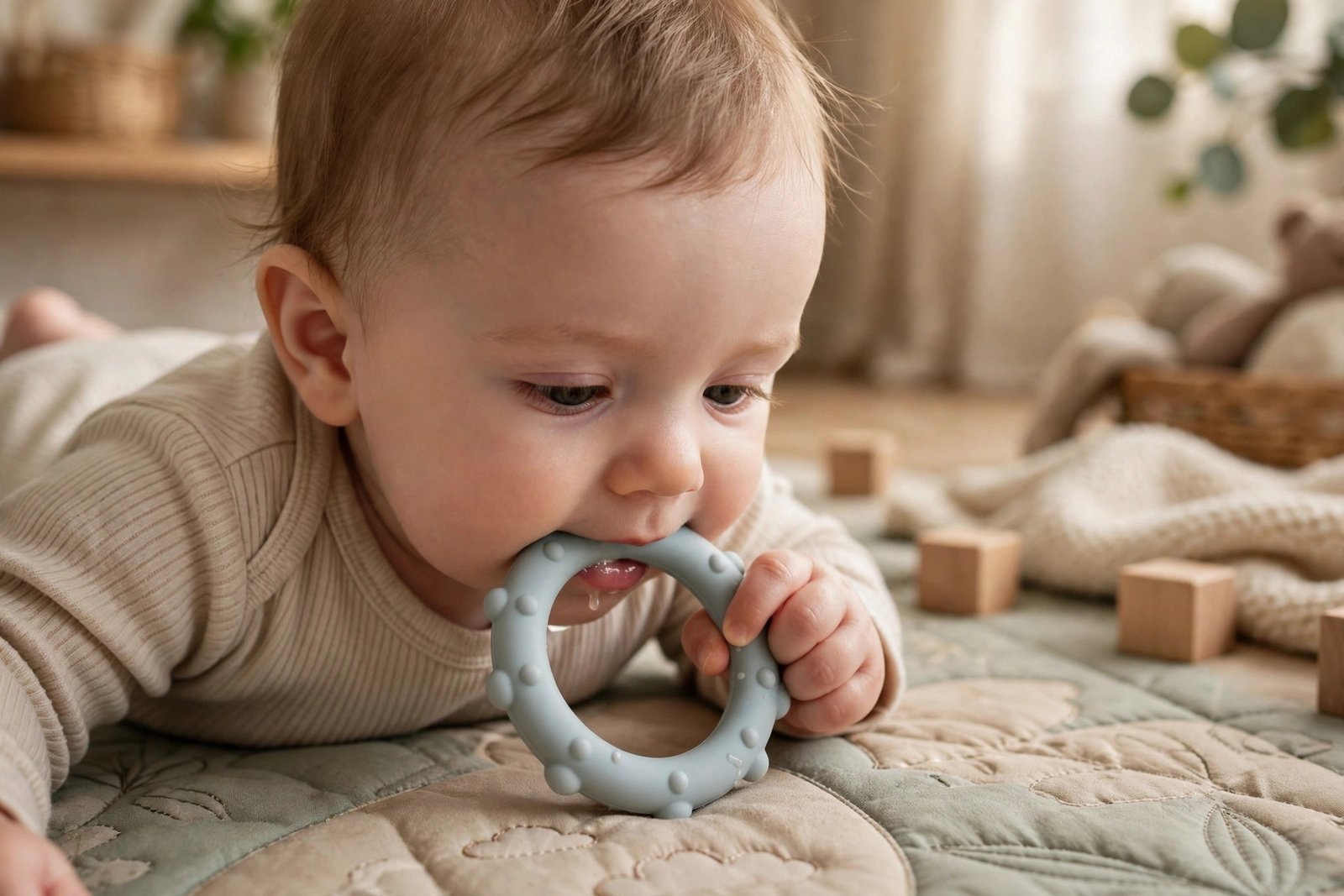
Offer a solid teething ring chilled in the fridge. It should feel cool and firm, not frozen solid, as a rock-hard frozen ring can bruise tender gums. A clean washcloth works just as well: wet one corner, wring it out, chill it in the fridge, and let your baby chew the cool corner while you hold the cloth. Stay with your baby while they chew anything, and check rings regularly for cracks.
Extra Cuddles, Feeding Comfort, and Drool Care
Sometimes the best soother is simply you. Extra cuddles, rocking, singing, and a calm feed can settle a teething baby more than any toy. Some babies feed a little less for a day or two when their gums ache. If feeds have become a struggle, you may find it helps to read about baby refusing the bottle and the gentle, no-pressure ways to offer milk. Pat drool away often, change wet tops and bibs, and use a plain barrier cream on sore chin and neck skin if your pharmacist suggests one.
Teething, Crying, and Sleep: What Helps at Night
Teething discomfort often feels worse at night, when there are fewer distractions. A calm, predictable bedtime routine helps: a warm bath, a feed, a cuddle, and a familiar song or story. Dress your baby for sleep as usual, without extra layers just because they are grizzly.
A baby who settles with chewing, cuddling, or a gum rub is very likely sore from teeth. A baby who cries hard during and after every feed, arches their back, or brings milk up repeatedly may have something else going on, and my notes on why your baby may be crying after feeding walk through those other causes. If the cry sounds different or you feel worried, that feeling is worth listening to.
Mistakes to Avoid
- Using amber teething necklaces or any necklace, bracelet, or cord around your baby’s neck or wrist. These are a strangulation and choking risk if the cord tightens or beads break off, and there is no good proof they ease pain. Keep necklaces off your baby completely.
- Using teething gels that contain benzocaine. Benzocaine has been linked to a rare but serious blood problem in young children, so do not use it on babies and toddlers unless a clinician specifically tells you to.
- Giving homeopathic teething tablets or gels. These products have been linked to safety concerns and uneven ingredients, so they are not a safe shortcut for sore gums.
- Giving any medicine without checking first. Always check with a pharmacist or doctor before any medicine, and use only age-correct paracetamol or ibuprofen exactly as the label or your clinician directs, for the shortest time needed. Never guess a dose or use another child’s medicine.
- Offering a teething ring frozen solid, frozen food for a young baby to gnaw unsupervised, or hard foods that could break into pieces and cause choking.
- Dipping dummies or teethers in honey or sweet drinks. Honey is unsafe for babies under 12 months, and sweet coatings harm new teeth.
- Blaming fever, diarrhoea, or ear pulling on teething and waiting at home when your baby actually needs to be seen.
When to See a Doctor
Please contact your doctor, health visitor, or local urgent care service promptly if you notice any of these signs:
- A fever over 38 degrees Celsius, or any fever in a baby under 3 months old
- Diarrhoea, repeated vomiting, blood in the stool, or signs of dehydration such as few wet nappies, no tears, a dry mouth, or a sunken soft spot
- Ear pulling with fever, discharge from the ear, or crying that is worse when lying flat
- Refusing all feeds, taking far less milk than usual over a full day, or unusual sleepiness, floppiness, or difficulty waking
- A rash with fever, trouble breathing, swelling of the lips or face, or a cry that sounds weak, high-pitched, or very different from usual
- Gum pain with a swollen face, a broken or injured tooth, or bleeding in the mouth that does not stop
- Fussiness and pain that go on for many days with no improvement and no tooth appearing
Trust your instincts. You do not need to be certain it is serious before you ask for help. A quick check that ends in reassurance is always worthwhile, and no good clinician minds a worried parent calling.
Frequently Asked Questions
How long does teething pain last for each tooth?
Discomfort is usually worst for about 2 to 3 days around the time a tooth cuts through, and a week of on-and-off fussiness per tooth is common. If pain seems constant for much longer with no new tooth, ask your doctor to check for another cause.
Can teething cause a fever?
Teething can come with a very mild temperature below 38 degrees Celsius, but it does not cause a true high fever. A fever over 38 degrees Celsius, especially with diarrhoea, ear pulling, or a rash, should not be blamed on teething. See a doctor to find the real cause.
What can I give my baby for teething pain?
Start with non-medicine comfort: a clean finger to chew, a chilled ring or washcloth, and extra cuddles. If your baby is still clearly in pain, check with a pharmacist or doctor first. Only age-correct paracetamol or ibuprofen, exactly as the label or your clinician directs, should be used. Avoid benzocaine gels and homeopathic teething tablets.
My baby is drooling a lot and has a rash on the chin. Is that normal?
Yes, heavy drooling is very common, and constant wetness often makes the chin and neck red and sore. Pat the skin dry gently and often, change wet bibs and tops, and use a plain barrier cream if needed. If the rash spreads, blisters, or comes with a fever, have it checked.
This article is general information only, based on everyday parenting experience, and it is not medical advice. It does not replace care from your own doctor. Please consult a paediatrician or qualified health professional about your baby’s health or teething concerns. You can also read our full disclaimer.