
If bedtime in your house starts at seven and your toddler is still wide awake, chatting, and asking for things at eight, you are not alone. I have sat on the landing, tired and frustrated, wondering why a simple goodnight could take over an hour. You are not doing bedtime wrong, and your child is not being difficult on purpose.
When bedtime stretched on and on for us, the fix was not a brand-new method. It was looking honestly at the whole day, then making our evening routine shorter, calmer, and clearer. Nothing changed in one night, and I will not promise it will for you. Small, steady changes made our goodnights much shorter over a week or two.
Quick Answer
If bedtime takes over an hour, check the basics first: is your toddler undertired from a late or long nap, or overtired from a long, busy day? Is the routine itself too long or too exciting? Then tighten the routine to about 30 to 45 minutes with a calm, clear end. Meet needs like a drink, the toilet, and a cuddle before the final goodnight, keep any exits and returns calm and boring, and keep the morning wake time consistent. That steady pattern helps most toddlers settle faster over time.
Why Bedtime Takes So Long
Bedtime rarely drags for just one reason. Working through this list, one cause at a time, helped me more than changing everything at once.
Your toddler is undertired
If your toddler napped late in the afternoon or slept for a long time in the day, there may simply not be enough sleepiness left by bedtime. She is not fighting you. Her body is not ready. This is very common when a child is close to dropping the last nap, when some days include a nap and some do not.
Your toddler is overtired
The opposite problem looks similar. A toddler who missed a nap, had a very busy day, or stayed up too late can become wired, silly, or tearful instead of sleepy. Overtired children often find it harder to switch off, so bedtime gets longer, not shorter.
The routine is too long or too stimulating
A routine that grows little by little can quietly pass an hour: a long bath, rough play, extra songs, one more book, then another. Bright lights, screens, and exciting games close to bedtime can also keep a small body and mind buzzing when you need things to slow down.
Curtain calls keep adding minutes
One more drink. One more story. One more hug. A lost teddy, an itchy sock, a sudden need for the toilet. These small requests are often called curtain calls. Each one is only a minute or two, but together they can add half an hour, and they usually mean your toddler wants you close a little longer.

Fears of the dark and big feelings
Imaginations grow quickly at this age, and the dark can feel very different to a toddler than it does to us. Shadows, noises, and being alone can all feel big. If this sounds familiar, our guide for a toddler scared of the dark shares gentle ideas that helped us.
Hunger, thirst, or a small discomfort
Sometimes the reason is simple and real. A toddler may be hungry after a small dinner, thirsty, too hot or cold, or bothered by wet pyjamas or a sore tooth. Always check these first. A small, calm snack or drink before the routine is better than repeated trips later.
The room is too light
Light tells the body it is still daytime. A bright hallway light, early summer evenings, or a glowing screen in the room can all make sleep harder to start. A dim, warm light for the routine and a darker room for sleep give a clearer signal.
How to Shorten Bedtime, Step by Step
You do not need to fix every cause at once. Pick the one or two that sound most like your evenings and start there.
Tighten the routine to 30 to 45 minutes
Choose a short list of steps and do them in the same order each night, for example: toilet, pyjamas, teeth, one or two short stories, a song, lights out. Set a gentle start time so the routine ends when your toddler is actually sleepy. A clear, calm end matters: the same final words, the same goodnight, every night.
Try a simple visual routine chart
Toddlers cannot tell the time, but many love pictures. A simple chart with drawings or photos of each step — bath, pyjamas, teeth, book, bed — lets your child tick off what is done and see what comes next. We kept ours to five or six steps. It ended many arguments about what happens next, because the chart, not me, was in charge.
Meet needs before the final goodnight
Just before lights out, run through the usual requests together: drink offered, toilet tried, teddy found, one last cuddle given. Then say, kindly and clearly, that those jobs are done and it is sleep time now. This will not stop every request, but it removed most of ours.
Keep exits and returns calm and boring
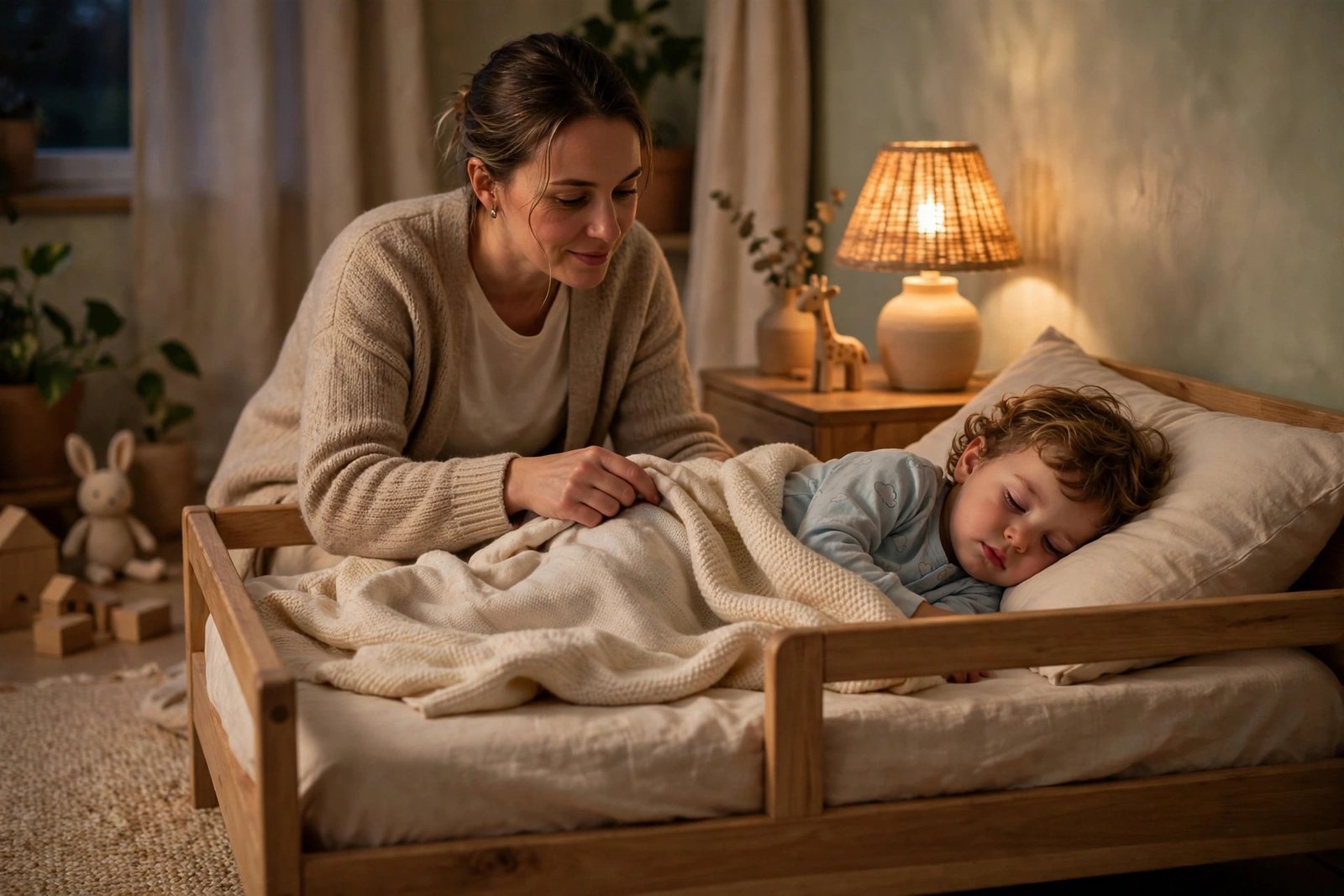
If your toddler gets up or keeps calling out, first check quickly: toilet, drink, pain, illness, or real fear? If she is scared or unwell, comfort her properly. If she is fine and simply visiting, walk her back with the same few quiet words, tuck her in once, and leave. No extra stories, chats, or play. If your little one is also getting out of bed again and again, that guide shares the calm return routine we used. No punishment, no shouting, just the same boring return.
Keep the morning wake time consistent
Bedtime starts in the morning. A consistent wake time, at roughly the same time each day, helps sleepiness build at a similar time each evening. Daylight and active play in the day help too. Weekends can flex a little, but big lie-ins often push the next bedtime later.
Bedtime Safety Basics
However long bedtime takes, the room needs to be safe for a toddler who may get up alone in the night.
- Choose a low toddler bed, close to the floor, so climbing or rolling out is a small drop.
- Anchor wardrobes, drawers, and bookshelves firmly to the wall so they cannot tip if climbed.
- Keep blind and curtain cords tied up high and out of reach, or fitted with a safety cleat.
- Remove medicines, creams, coins, and small objects that could be swallowed.
- Keep the floor path to the door clear and soft, with no hard or sharp toys left out.
- Use a warm, dim night-light only if your child likes one, placed safely away from bedding.
- Fit a stair gate at the top of the stairs or the bedroom door if night wandering is a worry.
Please hear this clearly: never lock the bedroom door. Locking a toddler in can frighten her and is dangerous in an emergency. You should never lock the door to make a child stay in bed. A stair gate is different, because your child can still call you and you can reach her quickly. There is no place for punishment or shouting in this plan either — calm and safe always comes first.
Mistakes to Avoid
- Letting the routine grow longer each week, with extra books, songs, and games added one by one.
- Starting bedtime too early when your toddler is undertired, or too late when she is already overtired.
- Making returns fun with long chats, snacks, screens, or more stories, which reward staying awake.
- Meeting every curtain call with something new, instead of covering needs before the final goodnight.
- Using punishment, shouting, or threats, or ever locking the bedroom door.
- Changing the plan every night, which makes it harder for your toddler to learn what to expect.
- Expecting bedtime to shrink in one night. For us, it shortened gradually over one to two weeks.
I made several of these mistakes, especially adding just one more story because it felt kinder than saying no. A shorter, kinder routine turned out to be the gentler option for all of us.
When to Ask for Help
Most long bedtimes are a normal, tiring stage and improve with time and a steady routine. But please speak to your family doctor, health visitor, or pediatrician if something worries you. Book an appointment if your child snores loudly, seems to pause breathing during sleep, gasps or snores heavily most nights, or has very restless sleep night after night.
Also ask for help if your child seems unwell, has pain or a fever, is unusually sleepy in the day, or if bedtime struggles are leaving you feeling unable to cope. Asking for help is good care, for your child and for you. You do not need to wait until you are at breaking point.
Frequently Asked Questions
How long should a toddler bedtime routine be?
For most toddlers, about 30 to 45 minutes works well. That is long enough for the toilet, pyjamas, teeth, one or two short stories, and a calm goodnight, without so much time that your child gets a second wind. If your routine is longer, shorten it slowly over a few nights.
Should I cut my toddler’s nap if bedtime takes an hour?
Not straight away. First try ending the nap a little earlier or waking your toddler a little sooner, and watch bedtime for a few days. Some toddlers still need their nap, and cutting it fully can make them overtired. Change one thing at a time so you can see what helps.
What do I say when my toddler keeps calling out?
Keep it short, kind, and the same each time. Check real needs first, then use a few calm words such as: it is sleep time, I love you, see you in the morning. Then leave. Long talks, new deals, and extra stories usually make the calling out last longer the next night.
Will a visual routine chart really help?
It helps many toddlers, because they can see what is done and what is next instead of guessing or negotiating. Keep it simple, practise it in the day, and let your child point to each step. It is a gentle guide, not a test, and it works best alongside a shorter, steady routine.
This article shares my personal experience as a parent and general information only. It is not medical advice, and it does not promise that any method will guarantee a sleep outcome for your child. If you are worried about your child’s sleep, health, or safety, please speak to a qualified professional. Read our full disclaimer for more details.