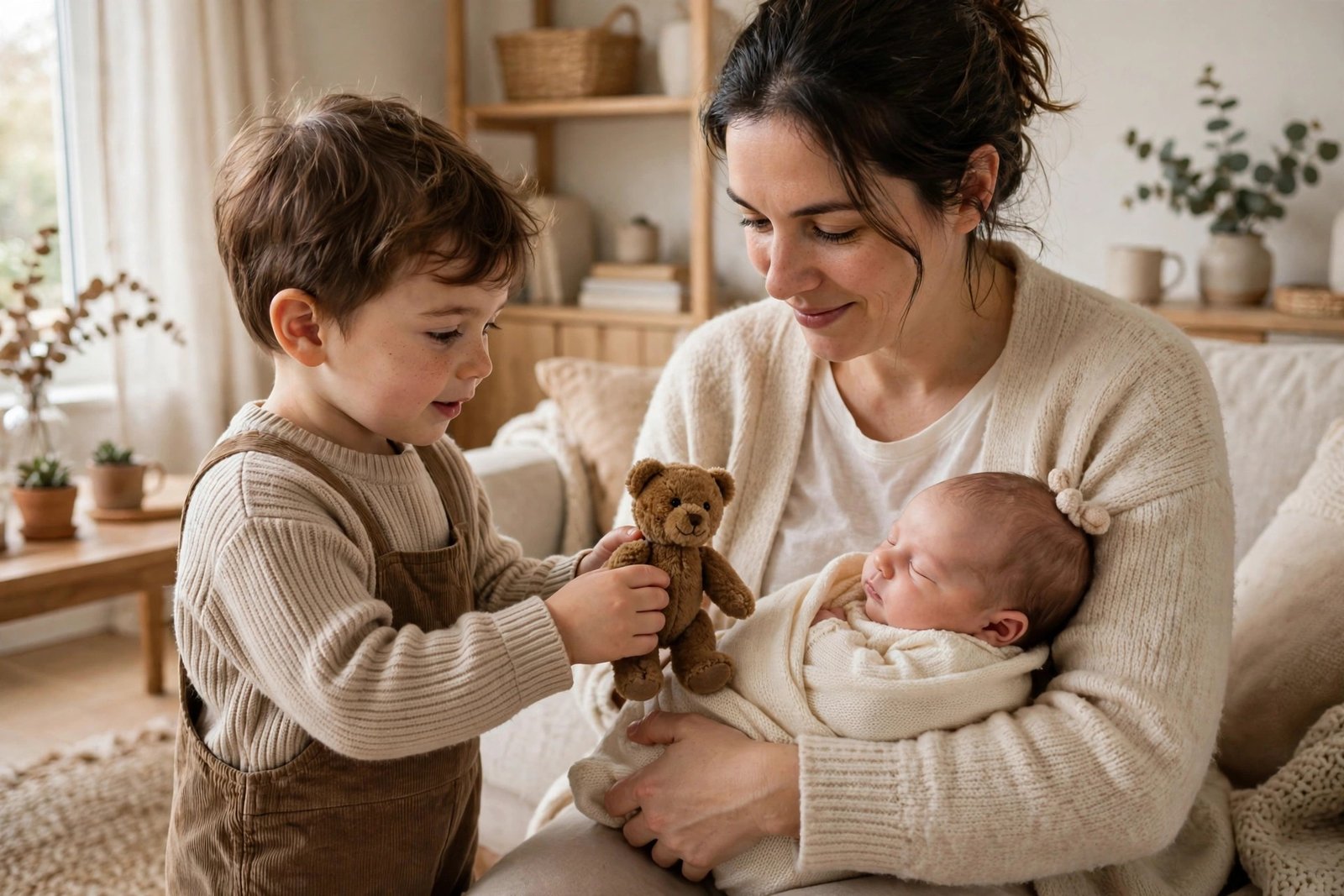
When you bring a new baby home, you hope your toddler will be excited. So it can feel heartbreaking when they cry more, cling to you, or push the baby away. I remember feeling guilty whichever baby I was holding.
Jealousy towards a new baby is normal. It does not mean your toddler is naughty or that your bond is broken. With patience, short special time just for them, and clear, gentle safety rules, most toddlers slowly learn there is still plenty of love.
Quick Answer
Toddler jealousy of a new baby is normal because your toddler suddenly shares your time, lap, and routine. Expect some clinginess, babyish behaviour, or small steps backwards with sleep, feeding, or toileting. Help by preparing your toddler before the birth, keeping routines steady, giving short one-to-one time every day, and letting them help with simple, safe jobs. Never leave your toddler alone with the baby, teach gentle hands, and respond to regression with comfort, not shame. If your toddler keeps trying to hurt the baby, or distress does not ease after some weeks, talk to your health visitor or doctor.
Why Jealousy and Regression Are Normal
Your toddler is not giving you a hard time. They are having a hard time.
Your attention has suddenly shifted
Now a tiny baby needs feeding, changing, and holding for much of the day and night. Your toddler can see your time is shared, but cannot yet understand why, or that your love has not shrunk.
Routines and home feel different
Visitors arrive, sleep is broken, mealtimes move, and a parent may be away for the birth. Toddlers feel safe when life is predictable, so even happy changes can leave them wobbly. Regression is often their way of asking for the closeness they see the baby getting.
Common Signs Your Toddler Is Struggling
Jealousy rarely sounds like a child saying, I feel jealous. It shows up in behaviour, often in more than one of these ways.
- Clinginess: following you everywhere, crying when you pick up the baby, or wanting to be carried.
- Babyish behaviour: asking for a bottle or dummy again, using baby talk, or wanting to be rocked like the baby.
- Sleep and feeding regression: waking more at night, or refusing foods they ate happily before.
- Acting out: more tears and meltdowns over small things, especially when you are holding the baby.
- Trying to hurt the baby: poking, squeezing too hard, hitting, or pushing. This needs a calm, firm response and close supervision, every time.
Big feelings often spill out as behaviour. Respond in a similar calm way to toddler hitting and biting: stop the hurt, keep everyone safe, and name the feeling simply.
Preparing Your Toddler Before the Birth
A little gentle preparation helps. Keep it simple and honest, and do not promise everything will stay the same.
Talk about the baby in simple words
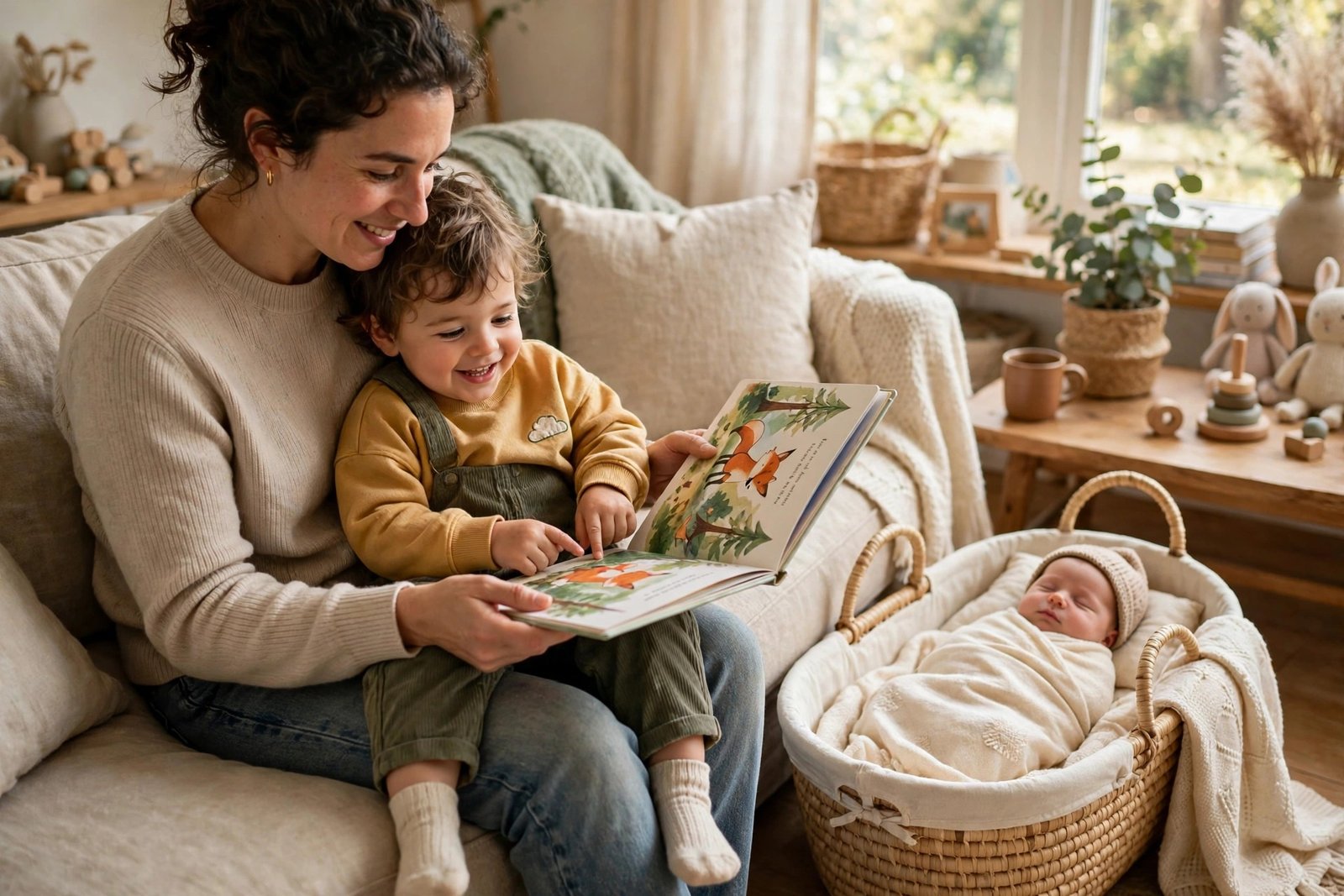
Tell your toddler a baby is growing in your tummy who will come and live in your house. Read picture books about new babies together, look at photos of your toddler as a baby, and talk about what babies do: sleep, cry, feed, and need lots of holding.
Involve them and practise with a doll
Let your toddler help choose a small item for the baby, such as a soft blanket. Practise with a doll or teddy: hold it gently, sing to it, and put it down for a sleep. Play gives your toddler a safe way to copy care.
Keep routines as steady as you can
Keep bedtime, meals, and childcare as familiar as possible around the birth. If a change must happen, such as moving to a big bed, do it well before the baby arrives, or wait until things settle.
The First Meeting and the Early Weeks
The first meeting does not need to be perfect. A calm few minutes matters more than photos.
Make the first meeting relaxed
If you can, have your hands free to cuddle your toddler first, with the baby in a cot or held by another adult. Let your toddler come close in their own time. Some are thrilled, some ignore the baby, and some cry. All are okay.
A little gift from the baby
Many families give the toddler a small gift, said to be from the baby, such as a colouring book or teddy. It is a kind way to mark the day as something that includes them too.
Let your toddler help with simple, safe jobs
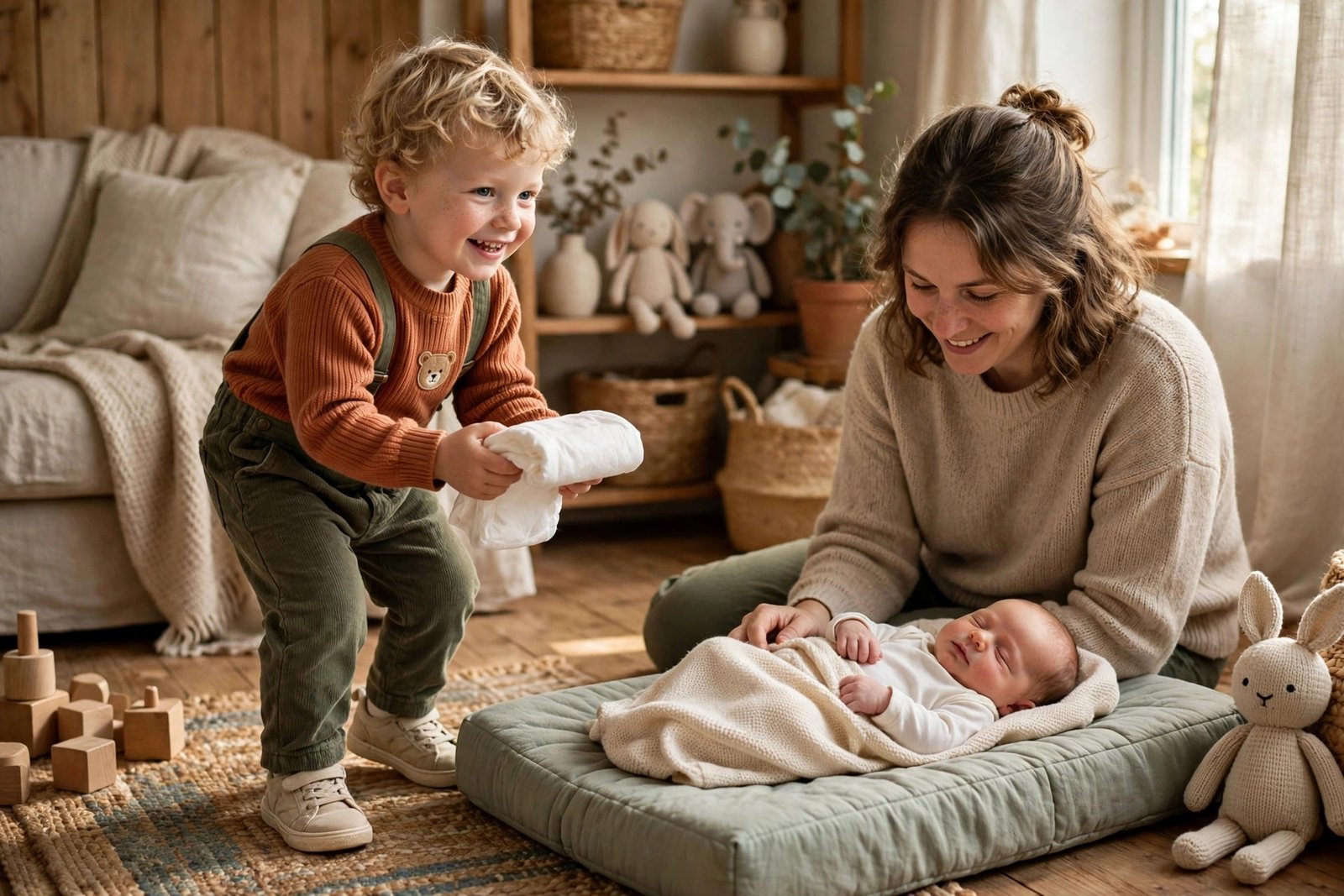
Safe jobs include fetching a clean nappy or wipes, choosing the baby’s socks, or singing during a nappy change. Thank them warmly. Never give a toddler jobs that involve holding, carrying, or feeding the baby, and never leave them alone with the baby.
Protecting One-to-One Time With Your Toddler
Your toddler does not need huge days out. They need to feel they still have a special place with you every day.
Short daily special time
Try for ten to fifteen minutes a day when the baby is asleep or safely with another adult, and your toddler chooses: a puzzle, play dough, or a favourite book on your lap. Put your phone away and follow their lead. Even five focused minutes helps.
Involve your toddler while you feed the baby
Feeding times can feel worst for jealousy, because your hands are busy. Keep a small box of toys, books, or a snack that only comes out at feeding time, and invite your toddler to sit close for a story while the baby feeds. If big feelings spill over elsewhere too, the calm ideas for toddler tantrums in public can help at home as well.
Handling Regression With Patience
Regression means your toddler goes backwards for a while in skills they had already learned. It is common, and usually passes as they feel secure again.
Comfort first, no shaming
If your toddler wants to be carried like a baby, asks for an old cup, or wets themselves after weeks of dry days, respond kindly. Give the cuddle, clean up without fuss, and avoid comments like, you are too big for that. Shame makes a worried child regress more.
Do not rush them to be a big kid
Your toddler needs permission to still be little. Let them have their comfort toy, their usual bedtime story, and their place on your lap when the baby is safely in a cot. If toileting slips, stay patient. The approach that helps with potty training refusal helps here too: no pressure, no punishment, and quiet praise when things go well.
Keeping the Baby Safe
Even a kind toddler is impulsive, strong for their size, and unable to judge risk.
Supervision, always
Never leave your toddler alone with the baby, even if the baby is asleep and your toddler has been gentle all day. If you need to step into another room, take one child with you or place the baby in a safe place first.
Teach gentle hands
Practise stroking a teddy softly, then guide your toddler’s hand to stroke the baby’s foot gently, with you right there. Praise every gentle touch: you stroked so softly. If a touch is rough, move their hand away and say, that hurts. We use gentle hands.
Have a safe place to put the baby down
Keep a cot, Moses basket, or playpen where you can place the baby safely when your toddler needs you urgently. A baby crying safely for a minute is better than a rushed moment where someone gets hurt.
Mistakes to Avoid
- Forcing affection or kisses. Never make your toddler hug or kiss the baby. Offer a wave or a high five instead, and let affection grow in its own time.
- Blaming the baby for everything. Avoid saying, I cannot play, the baby needs me, all day long. Try, I will play after this feed, and keep that promise.
- Making other big changes at the same time. Starting nursery, changing rooms, or stopping a dummy in the same week as the birth adds too much change at once.
- Leaving them unsupervised. Never leave your toddler alone with the baby, even briefly, and never let your toddler carry or sleep next to the baby.
- Comparing or labelling. Do not call your toddler jealous or naughty in front of others. Say instead, you are missing Mummy time. That helps them feel understood.
When to Ask for Extra Help
Most jealousy softens over weeks. Ask for extra help sooner if any of these sound familiar.
- Your toddler repeatedly tries to hurt the baby, despite close supervision and calm, clear boundaries.
- A big regression, such as with sleep, eating, speech, or toileting, does not ease after some weeks, or keeps getting worse.
- Your toddler seems extremely distressed most of the day, for many days, and cannot be comforted.
- You feel overwhelmed, tearful, or unable to cope, or you are worried about your own mood.
Talk to your health visitor or doctor and explain exactly what is happening. They can check how both children are doing and support you too. Asking for help is good parenting, not a failure.
Frequently Asked Questions
How long does toddler jealousy of a new baby usually last?
For many families, the hardest part lasts a few weeks to a few months. Wobbles often return when the baby starts crawling or taking toys. Steady routines and daily special time help each wobble pass more quickly.
Is it normal for my toddler to want to be a baby again?
Yes. Asking for a bottle, baby talk, or wanting to be carried are very common. Your toddler sees the baby getting close care and wants to check they can still have it too. Give comfort without fuss, and it usually fades.
What should I do if my toddler tries to hurt the baby?
Stay close, move your toddler’s hand away calmly, and say, I will not let you hurt the baby. Comfort the feeling without allowing the action, then increase supervision. If it keeps happening, talk to your health visitor or doctor.
Should I buy my toddler presents so they do not feel left out?
One small gift from the baby is a sweet gesture, but daily presents are not needed. What helps most costs nothing: predictable routines, safe little jobs, warm praise, and daily time with you.
This article shares general parenting information from everyday family experience only and is not medical advice. For the full details, please read our disclaimer.