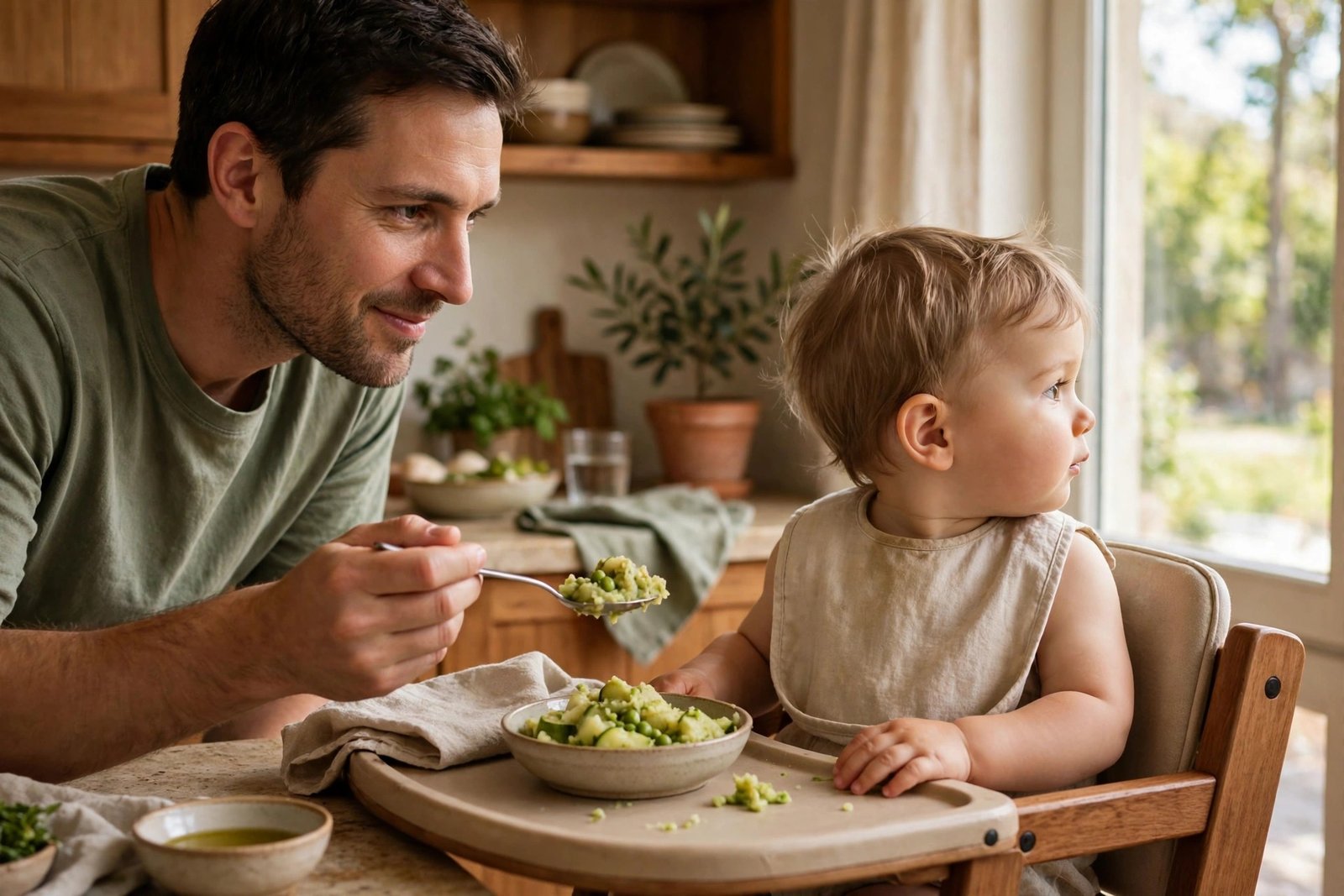
You have made a little bowl of something soft and good. You tie the bib, smile, and lift the spoon — and your baby turns her head away, closes her mouth tight, and pushes the spoon aside. If this happens in your kitchen, you are not alone, and you have not done anything wrong.
Refusing solids is very common early in weaning. Eating is a brand new skill, with new tastes and textures. Some days she will be keen. Some days she will want only milk. A patience-first approach keeps mealtimes happy while she learns.
Quick Answer
If your baby refuses solids and turns away from the spoon, pause, stay calm, and end the meal kindly. Never force-feed. Offer tiny tastes when she is alert and calm — not straight after a big milk feed, and not when she is very hungry and frustrated. Milk stays her main nutrition through the first year. Keep serving small tastes of refused foods, because a new food can take 10 to 15 tries, or more, to be accepted, and let her explore with her hands and a preloaded spoon. Talk to your doctor or health visitor if she loses weight, her growth falters, she refuses milk too, she seems dehydrated, or she has trouble swallowing.
Why Do Babies Refuse Solids? Common Reasons
There is usually a simple reason behind a turned head, and finding it helps far more than pushing harder. Our guide on when to start weaning your baby can help you check readiness again, without any rush.
Not Quite Ready Yet
A baby who cannot sit well with support, who loses most food out of her mouth, or who shows no interest may simply need more time. Waiting a few days is not going backwards. Readiness matters more than an exact date.
Teething, Illness, or Tiredness
Sore gums can make any spoon unwelcome, and a tired baby or one with a cold often refuses food she normally accepts. Our notes on teething pain may help on grumpy days. Then, milk, rest, and comfort are enough. Solids can wait.
Too Full of Milk, or Hungry and Frustrated
Straight after a big milk feed, your baby may be too full to care. But if she is very hungry, she may want the fast comfort of milk, not a slow spoon she has not mastered. A middle point often works best: alert, not sleepy, and not crying with hunger.
The Texture or Taste Is New
A lumpy texture or a strange taste can cause a quick refusal. That face often just means, this is new and I am not sure yet. Small tastes on other days help her learn.
She Wants to Feed Herself
Some babies refuse the spoon because they want control. They grab the bowl and turn away until they can touch the food. That independence is a good sign. Letting her explore can turn a battle back into curiosity.
Earlier Pressure Has Made Mealtimes Stressful
If meals have become tense, with coaxing and worried faces, a baby can link the highchair with stress. The fix is a calm reset: short, happy meals with no expectations for a while.
The Patience-First Approach
Patience-first does not mean doing nothing. You keep offering, keep the mood light, and trust that learning to eat takes time, like learning to roll or crawl.
- Never force-feed. If she turns away, closes her mouth, arches, or cries, the meal is over. That is her way of saying no.
- Skip pressure games. A playful spoon aeroplane is fine if she is laughing, but never use games to slip food in when she is distressed.
- Keep mealtimes short — ten to fifteen minutes early on — and end calmly, with a smile.
- Offer, do not push. Put a little food in front of her, eat something yourself, and let her decide.
- Stay relaxed. Babies read our faces, and a calm parent helps a baby feel safe to try.
It helped me to lower the goal: not a full bowl, just a peaceful ten minutes. Some days that was one lick of a spoon. That counted.
Repeated Gentle Exposure Really Works
Do not give up on a food after two or three tries. A new food can take 10 to 15 tries, sometimes more, before a baby accepts it. A try does not mean a swallowed mouthful. Looking, touching, smelling, and tasting a tiny bit all count.
Keep servings tiny — a teaspoon or two of the new food, alongside foods she already likes. Serve refused broccoli again next week in a different form: soft trees for holding, mashed with potato, or in a little omelette. A food refused at a tired evening meal may be accepted at lunch. She is not picky. She is learning, one small taste at a time.
Timing and Milk: Getting the Balance Right
This brought me real relief: milk stays the main source of nutrition through the first year. Early solids are mostly practice, so the amount eaten matters far less than most of us fear.
Please do not cut milk feeds to make her hungry enough to eat. That usually backfires — a very hungry baby gets upset and less able to try, and she still needs her milk. Keep milk feeds normal, and offer solids at a calm time between them. Some families give a small milk feed first to take the edge off hunger, then try solids later. Start with one small meal a day if that feels right, and build up slowly.
Let Your Baby Lead: Hands, Spoons, and Lovely Mess
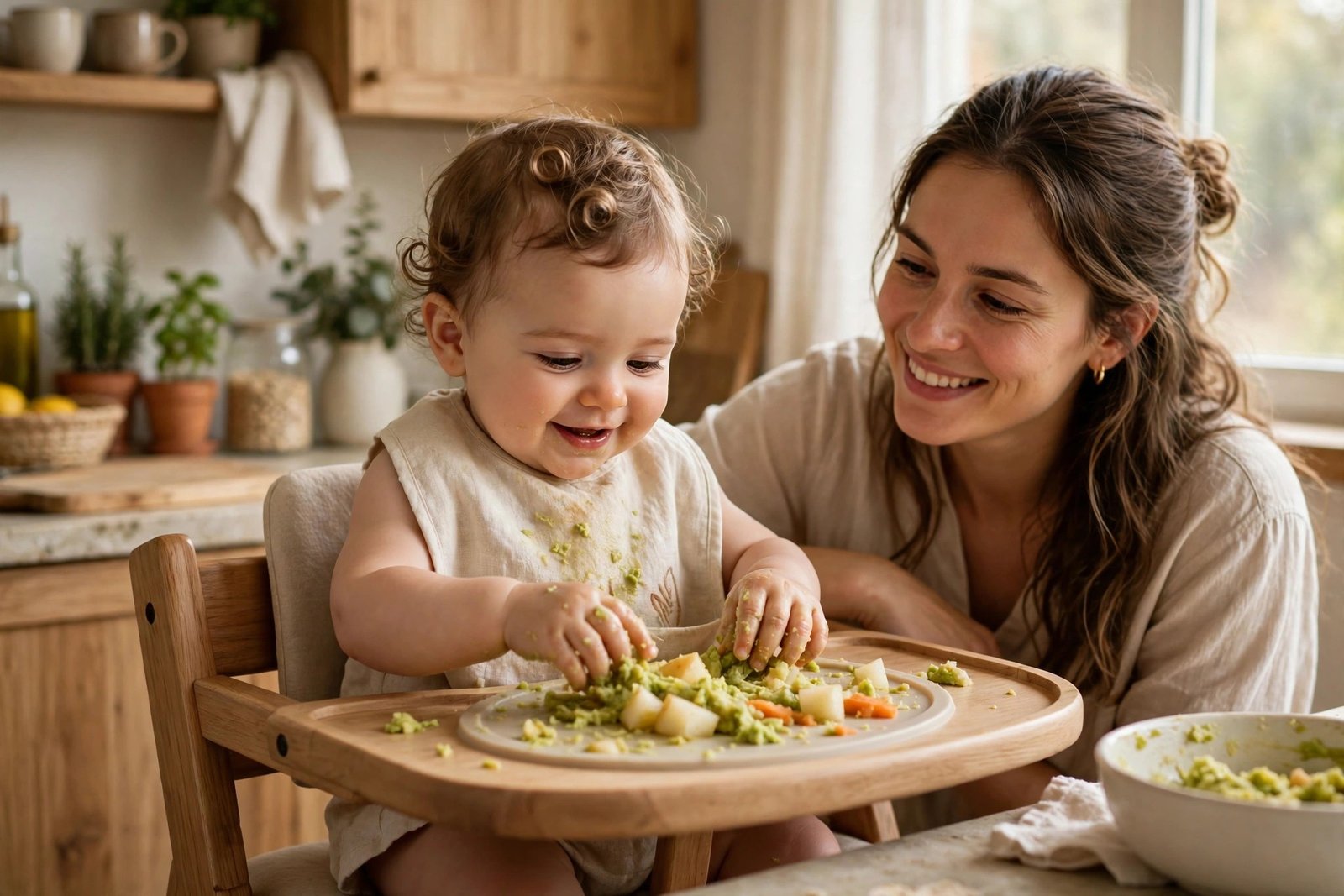
Many spoon-refusers change completely when they can feed themselves. Try preloaded spoons: dip a spoon in thick puree or mash, then hand it to her or rest it on the tray. She may wave it and chew the handle at first.
Soft finger foods give the same control: soft cooked vegetable sticks, soft fruit pieces, or strips of toast, while you watch closely. If lumps are new for you both, our guide to baby gagging on lumps and finger foods explains what gagging can look like and how it differs from choking.
And the mess? Mess is learning. Squashing and dropping teach texture. A mat and a big bib save your sanity.
Iron and Nutrition: A Calm Reassurance
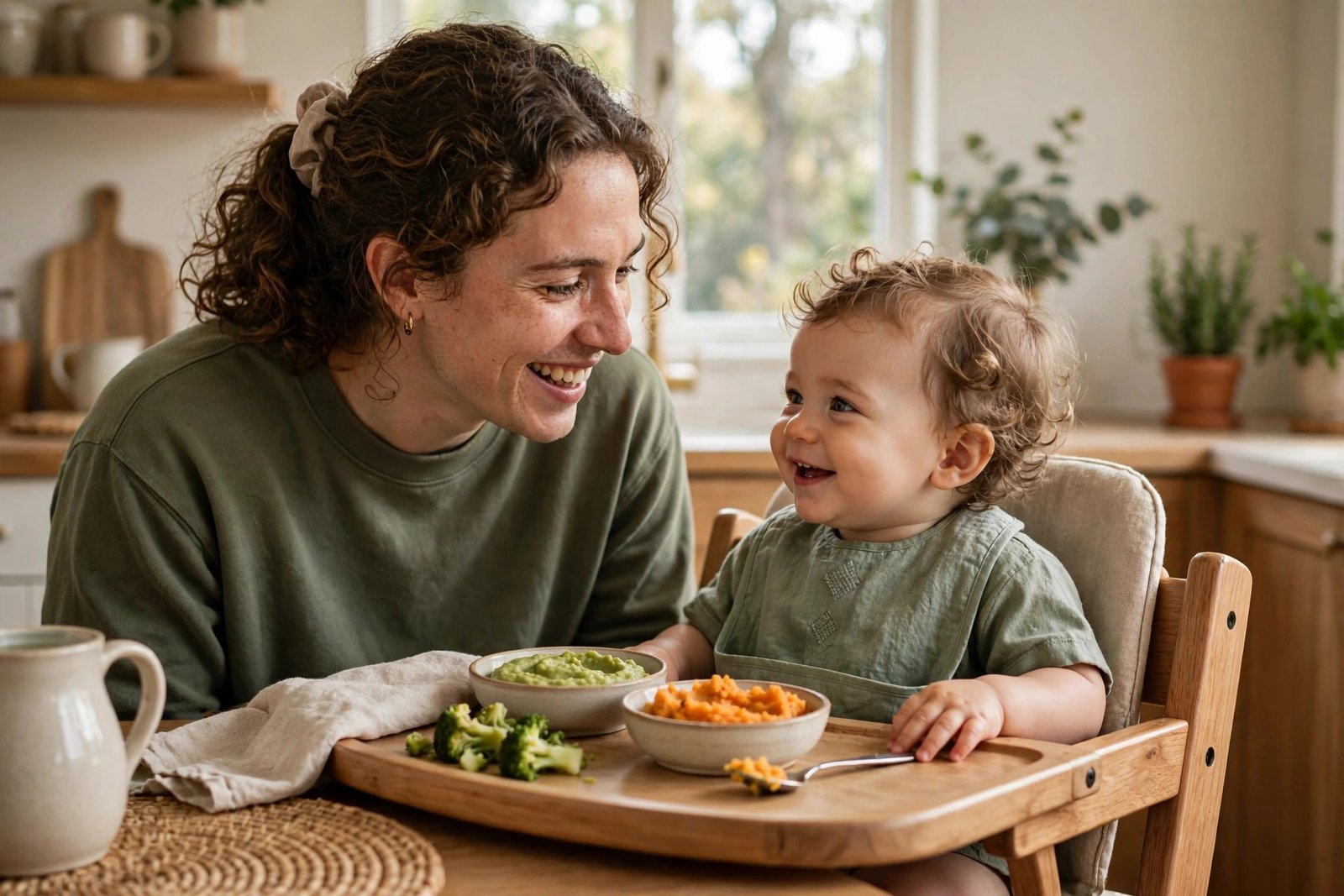
It is natural to worry about iron when very little goes in. Early on, milk plus small tastes cover a lot. As weaning goes on, include iron-rich foods among the offers, without panic.
- Meat, soft and minced or shredded, in a safe texture.
- Lentils and beans, cooked soft and mashed, or in a thick soup.
- Eggs, well cooked, as omelette strips or mashed hard-boiled egg.
- Fortified cereals, mixed with her usual milk.
Rotate them through the week in tiny portions, next to foods she likes. Even a taste counts, and milk still does much of the work.
Watch Growth, Not Single Meals
One refused lunch tells you almost nothing. What matters is the pattern over weeks: is she growing along her usual pattern, is she alert and content between feeds, and is she having wet and dirty nappies as expected? Those signs beat counting spoonfuls. Most babies have hungry and light days — teething or poor sleep can lower appetite for a while. If the overall pattern is steady, this is usually just a phase.
Mistakes to Avoid
- Force-feeding: holding her head still, prising her mouth open, or sneaking the spoon in while she cries. This can frighten her and make refusal worse.
- Hiding food in a liked food as a habit: mixing vegetables into a sauce is normal cooking, but tricking her again and again can break trust and stops her learning the real taste.
- Screens as distraction feeding: a video may get mouthfuls in, but she is not learning tastes, fullness, or skills.
- Comparing with other babies: the baby next door eating three meals says nothing about yours.
- Giving up after two or three tries: far too soon. Keep serving tiny tastes for weeks first.
When to See a Doctor
Most refusing phases pass on their own. But talk to your doctor or health visitor promptly if you notice any of these, and trust your own worry too.
- Weight loss, or growth that is faltering compared with her usual pattern.
- Refusing milk as well as solids, or feeding much less than usual.
- Signs of dehydration: far fewer wet nappies, no tears, a dry mouth, or unusual sleepiness.
- Swallowing difficulty, or regular coughing, spluttering, or choking sounds during feeds.
- Refusal with illness or fever, vomiting, or a rash, or your baby seeming unwell.
- No improvement after several weeks, and you are still worried.
A health professional can check growth and swallowing, or simply reassure you if all is well.
Frequently Asked Questions
How long can a baby refuse solids before I should worry?
Many babies refuse on and off for days or weeks early on, especially with teething or illness. If she takes milk, grows along her usual pattern, and has wet and dirty nappies, a short phase is usually fine. If it lasts several weeks, she loses weight, or she refuses milk too, talk to your doctor or health visitor.
Should I stop milk feeds so my baby is hungrier for solids?
No. Milk stays the main nutrition through the first year, and cutting feeds to force hunger usually makes babies upset and less willing to try. Keep milk normal and offer solids when she is alert — not straight after a big feed, and not starving.
My baby only wants to eat with her hands, not a spoon. Is that okay?
Yes, and it is often a big step forward. Offer preloaded spoons she can hold, plus soft finger foods she can pick up safely while you watch. Exploring with hands builds skills and confidence, and spoon skills come with practice.
How many times should I offer a food my baby refused?
Keep offering. A new food can take 10 to 15 tries, or more, to be accepted. Serve a tiny taste alongside liked foods, and stay relaxed if she only looks or touches. Those exposures count.
This article is for general information and parent-to-parent encouragement only, and it is not medical advice. Every baby develops and feeds at her own pace. If you are worried about your baby’s feeding, growth, or health, please talk to your doctor, health visitor, or another qualified health professional. Please read our full disclaimer for more information.
1 thought on “Baby Refusing Solids and Turning Away From the Spoon: Patience-First Fixes”