
When you bring your newborn home, that little cord stump on the tummy can look strange and a bit worrying. Every nappy change makes you wonder if you are touching it too much, too little, or in the wrong way. I felt nervous whenever clothes brushed over it, even though caring for it turned out to be one of the simplest jobs of those first weeks.
The good news is that the stump needs very little from you. It dries out on its own and falls off, and your main job is to keep it clean, keep it dry, and leave it alone. Most problems come from doing too much — covering it, soaking it, or trying home remedies on it. Below is how to clean it if it gets dirty, what normal healing looks like, and the warning signs that need a doctor the same day.
Quick Answer
Keep the stump clean and dry, and let air reach it. Fold the top of the nappy or diaper down, below the stump, so it stays uncovered and urine does not soak it. Wash your hands before you touch the stump. Give sponge baths only until the stump falls off, usually within 1 to 3 weeks. If it gets soiled, clean it gently with clean water and pat it completely dry. Never pull or twist it off, even if it hangs by a thread, and do not put alcohol, antiseptics, powders, or home remedies on it unless a clinician advises you to. A little dried blood or a small amount of discharge at the base as it separates is usually normal. Contact a doctor the same day if you see spreading redness, swelling, pus-like or foul-smelling discharge, bleeding that does not stop, or if your newborn has a fever, feeds poorly, or seems unusually sleepy.
What the Cord Stump Is and When It Falls Off
During pregnancy, the umbilical cord carried food and oxygen to your baby. After birth, the cord is clamped and cut, and a short stump is left behind. The stump has no nerves, so cleaning around it does not hurt your baby, even if your baby cries because of a cold cloth or being undressed.
At first the stump looks soft, yellowish, and a little shiny. Over the next few days it dries, hardens, and darkens, turning brown and then almost black, and it shrinks and wrinkles. This can look alarming, but a dark, dry stump is a healing stump.
The usual timeline
- Days 1 to 3: The stump starts to dry and may look slightly moist at the base at first.
- Days 4 to 7: It becomes darker, harder, and smaller as it dries out.
- Weeks 1 to 3: The stump usually falls off on its own, often during a nappy change or while dressing your baby.
- After it falls off: A small raw spot or tiny scab may remain for a few days while the skin underneath finishes healing.
Some stumps fall off in five days, others take the full three weeks, and both can be normal. If yours is still there after three weeks, mention it at your next check.
How to Care for the Stump Day by Day
Daily care is about protecting the stump from moisture and friction, not scrubbing it. Think dry, uncovered, and undisturbed.
Wash your hands first
Always wash your hands with soap and water before handling the stump area, and again after nappy changes. Newborns pick up germs easily, and clean hands are the simplest way to lower the risk of infection.
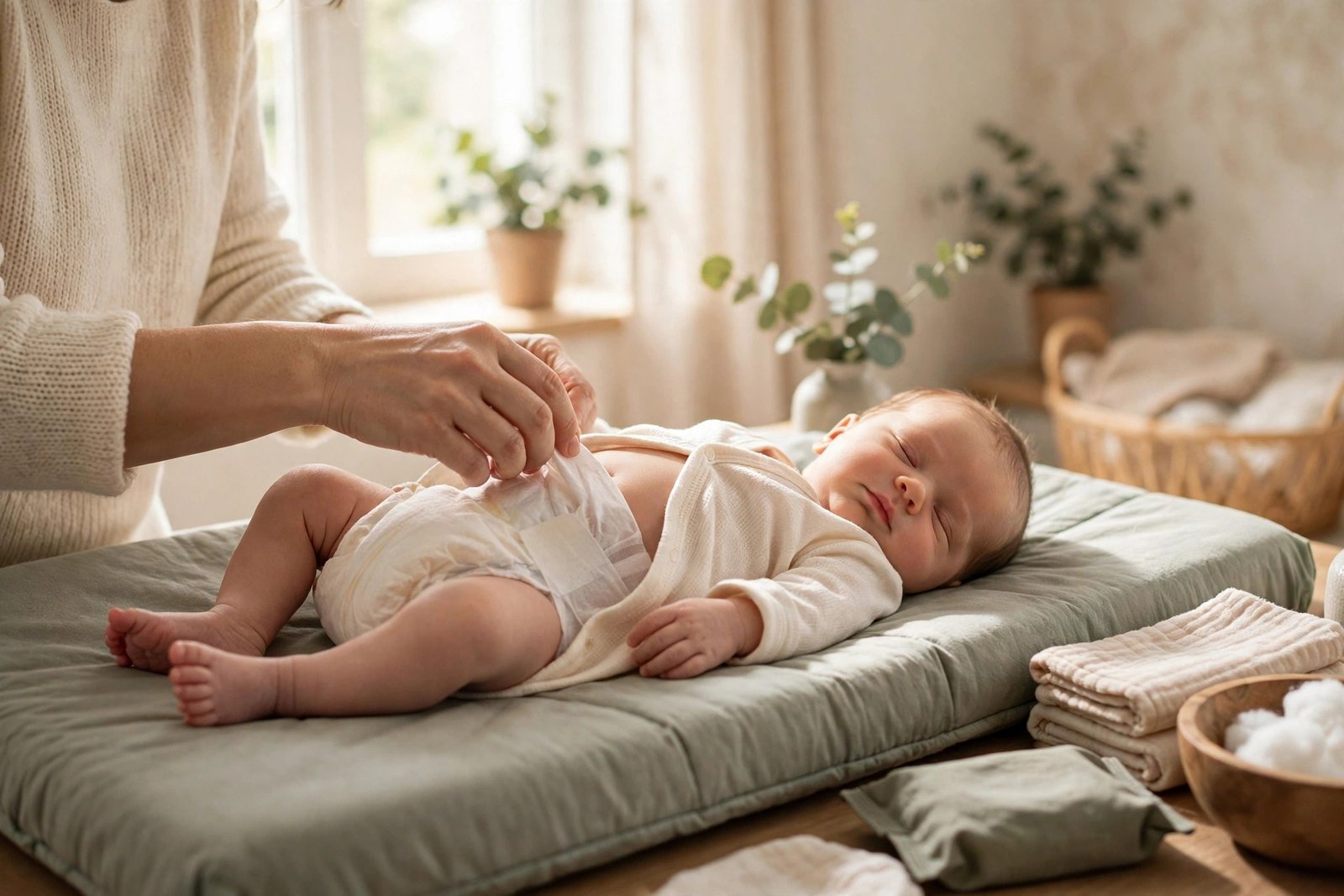
Fold the nappy down below the stump
Fold the front of the nappy or diaper down so its top edge sits below the stump, not over it. Keeping the stump uncovered lets air flow around it, which helps it dry and fall off sooner. It also stops urine from soaking the stump.
Choose loose, soft clothing too, rather than tight waistbands that rub. If the nappy area becomes sore, our guide to a baby diaper rash that won’t go away explains gentle ways to calm it. Change wet nappies promptly, and check the folded edge has not crept back up over the stump.
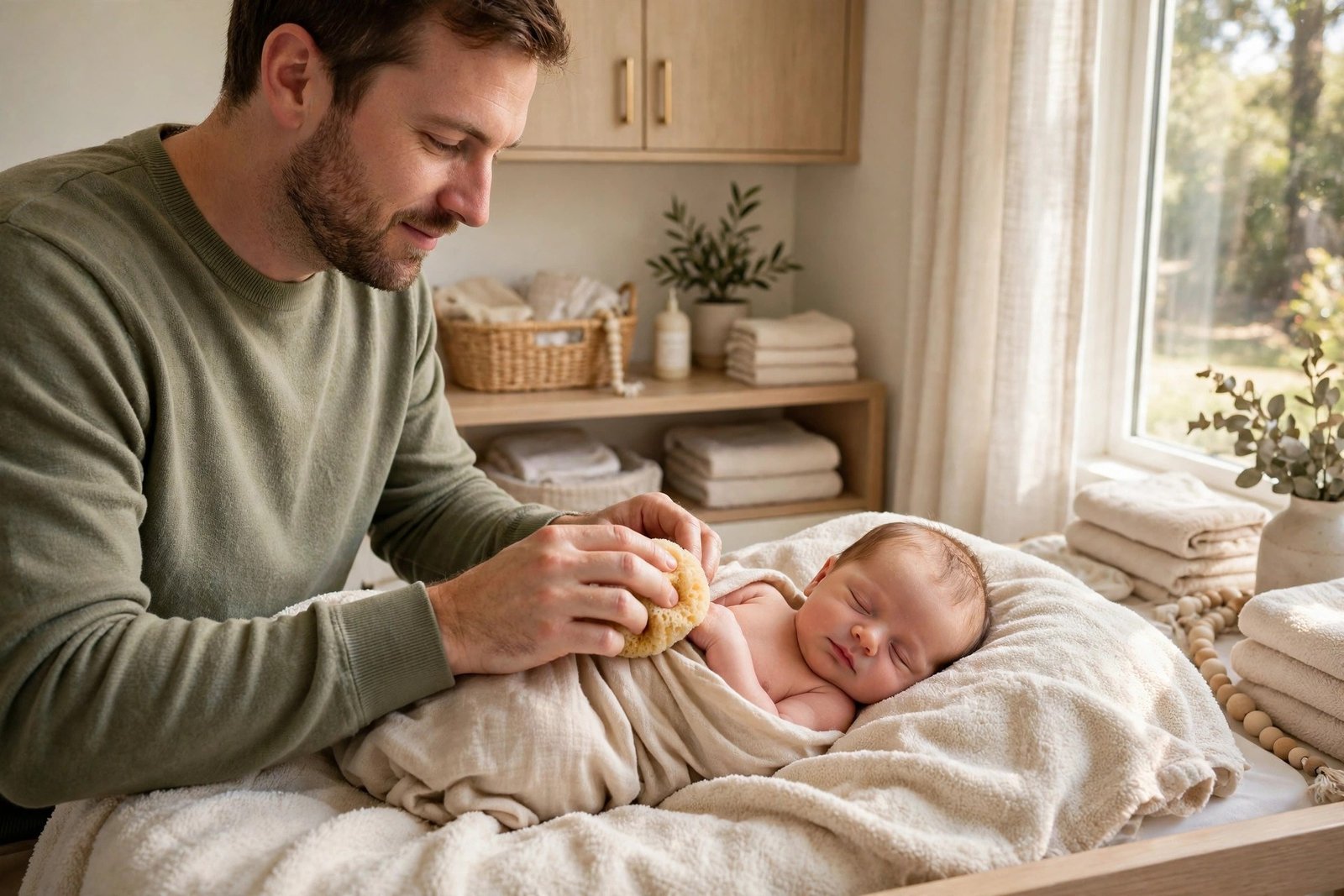
Give sponge baths until the stump falls off
Until the stump has fallen off and the area looks healed, give sponge baths instead of soaking baths. Lay your baby on a soft towel, wash gently with warm water and a soft cloth, and keep the stump area dry. A quick top-and-tail wash is plenty on most days.
Once the stump is off and the belly button looks dry and closed, you can start short baths in shallow warm water, patting the area dry afterwards. If you notice flaky patches on the scalp at bath time, our guide to cradle cap care at home shows what helps.
How to Clean the Stump If It Gets Dirty
Sometimes a leaky nappy reaches the stump. Do not panic, and do not reach for antiseptic. Clean water is enough in almost every case.
- Wash and dry your own hands first.
- Soak a clean, soft cloth, gauze, or cotton pad in clean warm water and wring it out.
- Gently wipe around the base of the stump and the skin folds nearby, removing any stuck stool or urine. Use a clean part of the cloth for each wipe.
- If dried material is stuck, hold the damp cloth against it briefly to soften it rather than rubbing or picking.
- Pat the whole area completely dry with a clean dry cloth or pad. Moisture left behind is what you want to avoid.
- Fold the fresh nappy down below the stump again and dress your baby in something loose.
Only clean the stump when it actually gets soiled, not on a schedule. The less it is handled, the better it heals.
What Is Normal, and What Is Not
As the stump separates from the skin, a few small changes are expected.
Usually normal
- A little dried blood on the stump, the nappy, or clothing, especially just before or just after it falls off.
- A small amount of clear, cloudy, or slightly yellow discharge at the base as it separates.
- A tiny raw-looking spot or small scab left behind after the stump drops, which heals within days.
Not normal — needs advice
- Redness that spreads outward onto the skin of the tummy around the stump.
- Swelling, warmth, or the area looking puffy.
- Thick, pus-like discharge, or a strong foul smell coming from the area.
- Active bleeding — fresh blood that keeps coming rather than a small dried spot.
- Your baby seeming unwell in any way, which matters more than how the stump looks.
A good rule I used: a dry stump that looks a little messy at the base is usually fine, but a wet, smelly stump on red, spreading skin is not. When in doubt, call and describe what you see.
When to See a Doctor
Infections can move fast in newborns, so treat the signs below as same-day, urgent reasons to contact a doctor or urgent care. Do not wait until morning.
- Redness spreading on the skin around the stump, or red streaks moving outward.
- Swelling around the base of the stump or on the tummy nearby.
- Foul-smelling discharge, or discharge that looks like pus — thick, yellow, or green.
- Active bleeding that does not stop after a few minutes of gentle pressure with a clean cloth, or repeated bleeding.
- Fever in a newborn — a temperature of 38°C (100.4°F) or higher in a baby under three months always needs urgent medical advice.
- Your baby is feeding poorly, refusing feeds, or is hard to wake and unusually sleepy.
- Your baby seems unusually irritable or just not like themselves.
- The stump has not fallen off after three weeks.
Trust your instincts — if something feels wrong, get checked the same day. For everyday worries that are usually harmless, our guide to newborn hiccups after every feed may reassure you, but never delay help for a red-flag sign.
Mistakes to Avoid
- Pulling or twisting the stump off: Never pull it, even when it hangs by a thin thread and looks ready. Let it drop on its own so the skin underneath is not torn open.
- Applying home antiseptics, alcohol, or remedies: Do not put alcohol, antiseptic creams, powders, oils, or any home remedy on the stump unless a clinician advises it. Clean water is enough.
- Soaking it in bath water: Skip tub baths until the stump is off. Sitting in water keeps the stump wet and slows drying.
- Covering it tightly: Avoid tight nappy edges, snug waistbands, and thick dressings over the stump. Air is its friend; trapped moisture is not.
- Picking at dried blood or discharge: A little dried blood at the base is normal. Picking can open the skin and let germs in.
- Cleaning it too often: Wiping a clean, dry stump several times a day only adds irritation. Clean only when soiled.
- Waiting on red-flag signs: Spreading redness, pus, fever, or a sleepy, poorly feeding newborn should never be watched at home overnight. Call the same day.
Frequently Asked Questions
How long does the cord stump take to fall off?
For most babies it falls off within 1 to 3 weeks, and both a few days and a little longer are usually normal. If it is still attached after three weeks, ask your clinician to take a look.
Does cleaning the stump hurt my baby?
No. The stump has no nerves, so gently cleaning it does not cause pain. If your baby cries, it is usually because of being undressed or the cool cloth — not because the stump hurts.
What should I do when the stump falls off?
Throw the stump away and check the belly button. A tiny raw spot, small scab, or a little dried blood is normal and heals within a few days. Keep the area clean and dry, and start tub baths only once it looks dry and closed.
Can I dress my baby normally while the stump is there?
Yes, just choose soft, loose clothing that does not rub or press on the stump. Cotton vests and sleepsuits are ideal. Avoid tight waistbands and rough seams over the tummy.
Disclaimer: This article is general information only and is not medical advice. If you are worried about your baby’s cord stump or health at any point, please consult your paediatrician or another qualified health professional promptly. Read more in our full medical disclaimer.