
If your toddler has suddenly started crying at bedtime, clinging to you at the door, or calling out in the night because the room feels scary, you are not alone. This is a very common bedtime worry, and it can feel hard when everyone is tired.
A fear of the dark often appears out of nowhere. A child who slept happily last month may now beg you to stay or climb out of bed again and again. It does not mean you have done anything wrong, and your toddler is not being naughty. With a calm routine, a room that feels safe, and the same gentle response every night, most toddlers learn that their bed is a safe place and that you always come back.
Quick Answer
Fear of the dark is normal for toddlers because their imagination is growing fast while they are still learning that you exist even when they cannot see you. Help with a calm, predictable bedtime routine, a warm dim nightlight, a safe comfort toy or blanket, and a brief, boring, consistent response to night wakings. Stay kind, return your toddler to their own bed, and praise small brave steps in the morning. Avoid teasing, punishment, or forcing your child to stay in a pitch-black room.
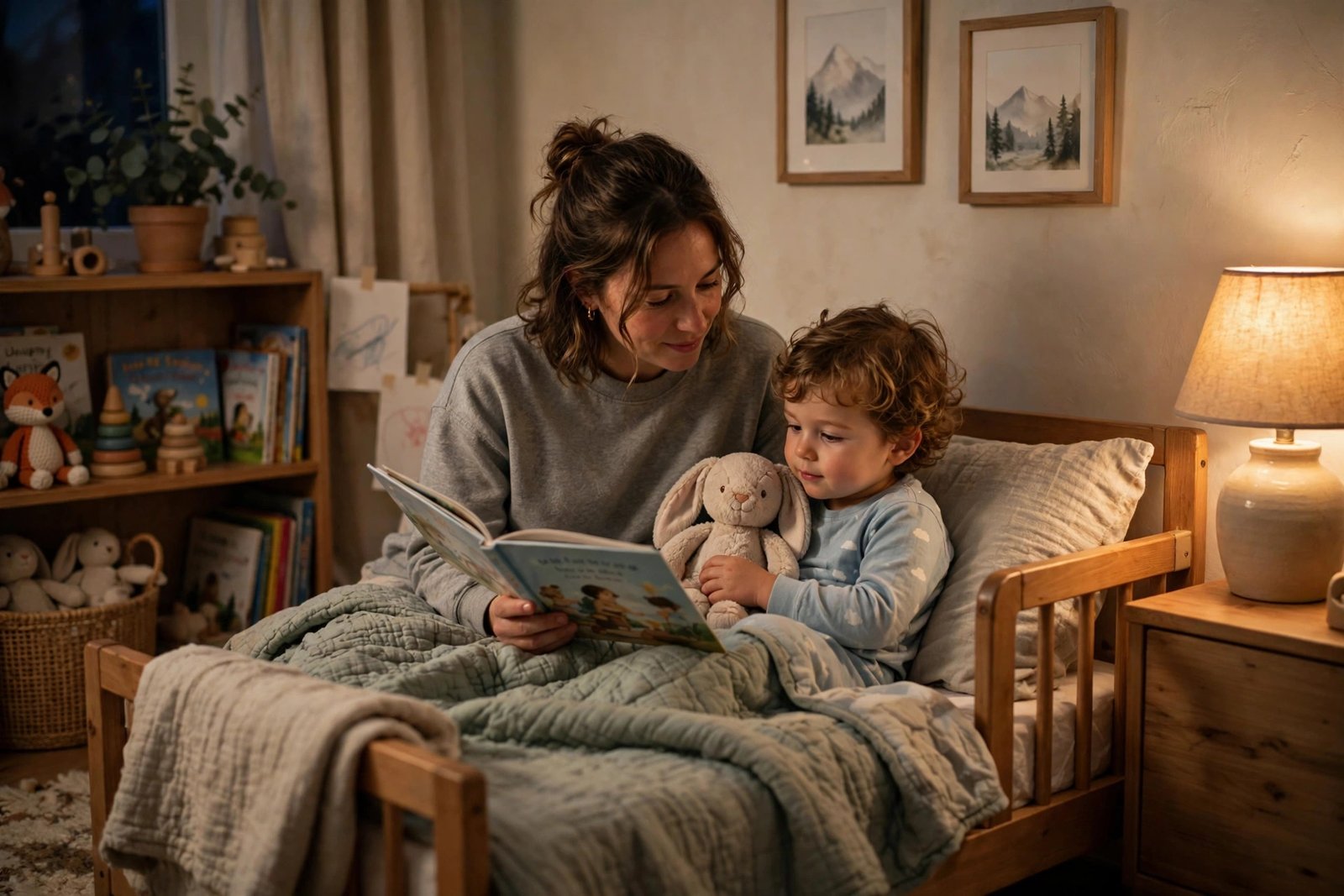
Why Fear of the Dark Is Normal at This Age
It can help to know what is going on inside that busy little mind. Your toddler is not usually trying to delay bedtime on purpose, even when it feels that way. Their fear is real to them.
A growing imagination
Between the ages of two and four, imagination grows very quickly. Your toddler can now picture things that are not in front of them, which is wonderful for play, but it also means they can picture shadows as shapes or worry about monsters under the bed. They cannot yet sort out what is real and what is pretend like an older child can, especially when tired.
Separation anxiety is still strong
Bedtime means a long stretch apart from you, and for many toddlers this is the hardest separation of the day. Worries that are small in the daytime can feel much bigger at night. Your child may call out simply to check you are still there, and hearing your voice can be enough to settle them.
Things still exist when they cannot be seen
Toddlers are still building their understanding that people and things continue to exist when out of sight. In a dark room, favourite toys, pictures, and even the door can seem to disappear, which can feel unsettling. A small nightlight helps your child see that everything is still exactly where it was.
A Calm Bedtime Routine That Feels Predictable
A steady routine is one of the kindest tools you have. When your toddler knows what comes next, there are fewer surprises and less room for worry to grow. Keep the same steps, in the same order, every night.
- Start with a gentle wind-down 30 to 45 minutes before bed, with quiet play, a bath if your child enjoys one, and pyjamas.
- Offer a small drink and a trip to the toilet or a fresh nappy, so there are fewer reasons to get up later.
- Read one or two short, calm stories together.
- Sing the same quiet song or say the same goodnight words each night.
- Give a kiss and a cuddle, remind your child where you will be, and leave while they are sleepy but still awake if you can.
Turn off screens well before bed, keep voices soft, and dim the lights a little during the wind-down. If bedtime often includes a firm refusal to every step, it may help to read about a toddler who keeps saying no to everything, because two simple choices, like which pyjamas or which story, give a sense of control without changing the routine.

Making the Room Feel Safe
Small changes can make a big difference. The goal is not a bright, exciting room, but a calm one that looks much the same all night.
- Use a warm, dim nightlight rather than a bright white one, so the room is never fully dark but sleep is not disturbed.
- Let your child keep a favourite comfort toy or small blanket in bed, as long as it is suitable for their age.
- Leave the door ajar if that helps your child feel connected to the sounds of the house.
- Do a short monster check together, or look around the room with your child before lights out, opening the wardrobe and peeking behind the curtain calmly.
- Keep the room the same at night as at bedtime, with toys in their usual places, so nothing looks strange in the shadows.
Let your child play in their room in the daytime, so it feels happy and familiar, not just a place for the night.
Safe sleep while you build confidence
Your toddler should sleep in their own toddler bed or cot, in safe sleep arrangements, every night. Keep the bed clear of anything not suitable for your child’s age, and choose comfort objects that are soft, clean, and made for young children. Place the nightlight safely away from bedding and curtains, and follow the maker instructions for the light you use.
What to Say and Do at Bedtime and During Night Wakings
Your words matter most when they are simple and the same each time. Try a short phrase such as, you are safe, I am just outside, it is sleep time now. Say it warmly, then keep things brief and boring. Long talks and extra stories can teach your toddler that calling out brings a fun extra hour with you.
If your child gets out of bed, walk them back kindly and calmly, with as little chat as possible. Tuck them in, repeat your short phrase, and leave again. You may need to do this several times on the first few nights, and that is normal. Consistency is hard when you are exhausted, but it is what helps your child learn.
Shouting is never needed here, and it usually makes fear worse. If you worry about that pattern, there is gentle advice in this guide about a toddler who will not listen unless you shout. A quiet, steady voice shows your child the night is not scary and you are calmly in charge.
In the morning, praise brave steps, however small. Say things like, you stayed in your bed even when you felt worried, or you called me once and then went back to sleep. Specific praise builds confidence for the next night.
Building Confidence in the Daytime
Confidence grows in the daytime as much as at night. Gentle play helps your toddler learn that darkness is not dangerous and hidden things are still there.
- Play with torches or flashlights together, shining them on walls and making simple shadows in a relaxed way.
- Play hide-and-seek in dim rooms, starting with easy hiding places and lots of giggling when you are found.
- Read gentle picture books about bedtime and feelings, and talk about characters feeling scared and then safe.
- Talk about feelings during the day, when everyone is calm, using simple words like scared, worried, and brave.
Helping your child name big feelings supports them everywhere, not just at bedtime. The same calm approach can also help when strong emotions spill out elsewhere, such as toddler tantrums in public, where staying steady makes a real difference. Keep practice playful and short, and stop if your child becomes upset. The aim is happy exploring, never a test.
Mistakes to Avoid
- Teasing or mocking the fear, or calling your child a baby for feeling scared.
- Forcing them to stay in a pitch-black room to toughen up, which usually increases fear and damages trust at bedtime.
- Scary stories or shows before bed, even mild ones, because toddler imaginations hold onto those images at night.
- Big, exciting changes to the routine on the nights you are trying to build new habits.
- Any punishment for getting out of bed, including threats or shame, which can make your child afraid to tell you they feel worried.
- Long, fun chats or extra play during night wakings, which can reward getting up even though your intention is kind.
When to Ask for Extra Help
Most fear of the dark fades slowly with time and steady support. Still, please ask for extra help if you notice any of the following, or if you simply feel worried. Asking early is always fine.
- Persistent severe panic at bedtime, or night terrors on most nights, that do not settle with calm reassurance.
- Fear badly affecting sleep and starting to affect daytime health, mood, appetite, or behaviour.
- Loud snoring, breathing pauses in sleep, or very restless sleep that leaves your child tired in the day.
- Any ongoing worry of your own about your child’s sleep, fear, or development.
Talk to your health visitor or doctor and explain what the nights look like and how long it has been going on. They can check for other causes of poor sleep and suggest next steps.
Frequently Asked Questions
How long does fear of the dark usually last in toddlers?
It is different for every child. For many toddlers, the fear is strongest for a few weeks or months and then slowly fades as understanding and confidence grow. A steady routine, a nightlight, and the same calm response each night help things improve bit by bit.
Should I stay in the room until my toddler falls asleep?
If you already do this, you can gradually move away in small steps. Sit a little further from the bed every few nights, then by the door, then just outside, at a pace your child can manage. This teaches your toddler they can fall asleep feeling safe, even when you are not beside them.
Is a nightlight a bad habit?
No. A warm, dim nightlight is a simple, helpful tool for many families. It lets your child see the room is the same safe room they know, without being bright enough to disturb sleep. You can review it when your child is older and more confident.
What should I do if my toddler keeps getting out of bed?
Stay calm, keep it boring, and walk your child back to their own bed each time with the same short phrase. Avoid punishment, threats, or long talks. It can take several nights of consistency before the getting up reduces, but most toddlers learn when the response never changes.
This article shares general parenting information from everyday family experience only and is not medical advice. For the full details, please read our disclaimer.