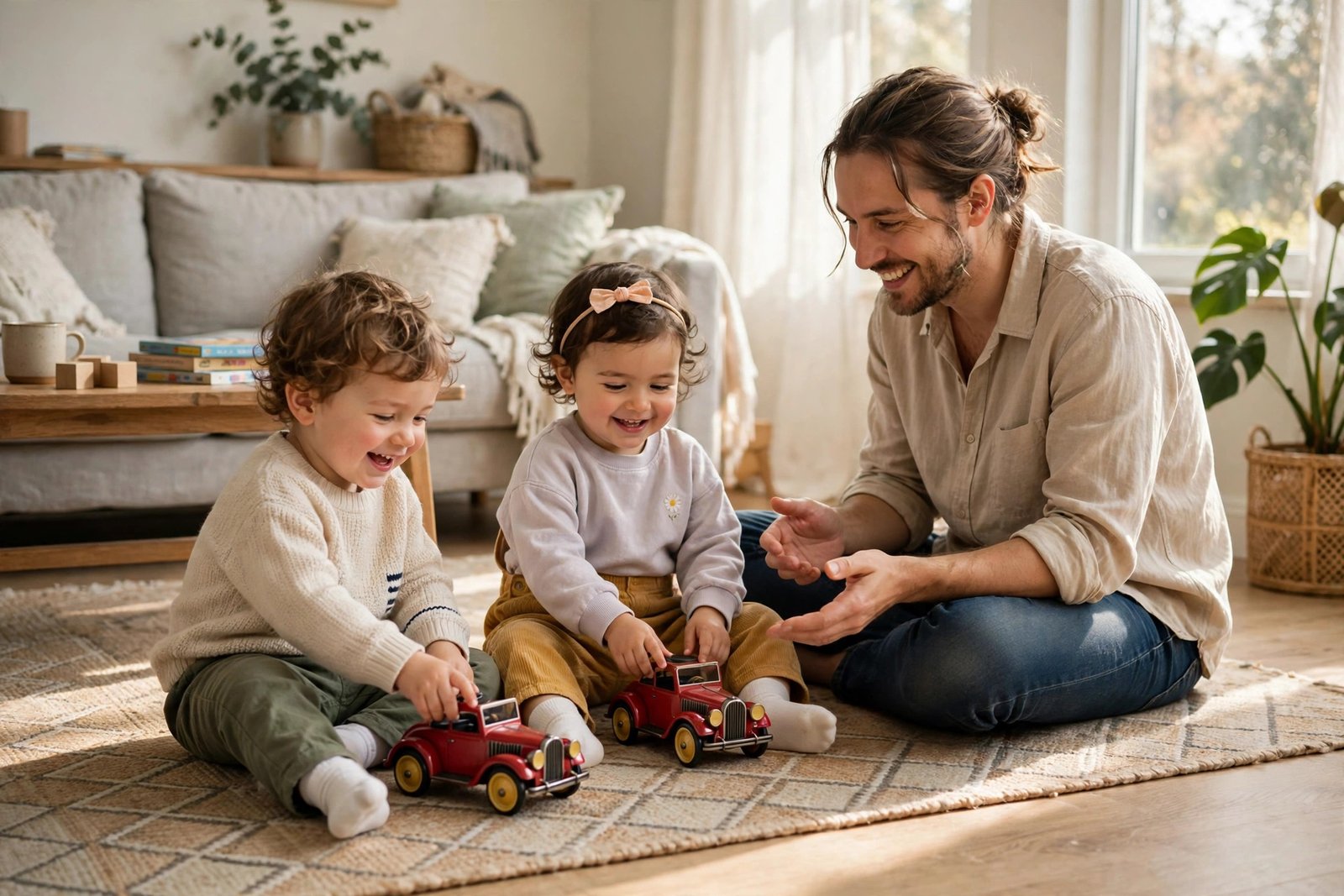
Your toddler is playing happily with a toy car. Another child reaches for it, and suddenly there is shouting, tight holding, and tears. Or your own child grabs a toy from a friend and runs off with it, leaving you embarrassed and unsure what to do.
I have been in that spot many times. Please take a deep breath. A toddler who will not share is not being naughty, and you are not failing. Sharing takes years to learn. The real first step is smaller and easier: taking turns. Here are simple, calm ways to teach it.
Quick Answer
Toddlers find sharing hard because it is a grown-up skill their brains are still building. Teach taking turns instead. Keep turns short, use simple words like “my turn, your turn,” practise with games at home, and praise every small turn. Never force your child to hand over a toy mid-play.
- Not sharing is normal at this age.
- Taking turns is the easier first step.
- Short turns and praise work best.
- Stay calm when toys are grabbed.
Why Toddlers Find Sharing So Hard
The “Mine” Stage Is Normal
If your toddler hugs a toy and shouts “mine,” you are hearing a normal stage. Around two and three, children learn they are their own person, separate from everyone else. Their toys feel like part of them, and holding tight is how they practise this new feeling. It looks a lot like the strong feelings behind a toddler who keeps saying no to everything. In both cases, your child is learning about choice and control. It is learning, not bad behaviour.
Understanding Ownership Takes Time
Adults know which cup is ours and which belongs to a friend. Toddlers are only just learning these confusing rules. They also live in the moment. If they are enjoying a toy now, giving it away can feel like losing it forever. They cannot yet trust it will come back. That trust grows each time a turn ends and the toy really does return.
Empathy Is Still Growing
Sharing asks a child to notice another child’s feelings and care about them more than their own wants. That is a big ask at two or three. Empathy grows bit by bit over many years, and toddlers are only at the start. So try not to see grabbing as selfishness. Your child is usually not able to think about the friend’s feelings yet. Your calm teaching, repeated many times, is how that ability slowly grows.
Sharing and Taking Turns Are Not the Same Thing
Sharing often means giving something up. A child hands over a loved toy and watches someone else enjoy it, with no clear idea when, or if, it will come back. For a toddler, that can feel huge and unfair.
Taking turns is kinder and clearer. One child plays, then the other child plays, then the first child plays again. The toy always comes back. Your child learns, “I wait a little, then it is my turn again,” which feels safe instead of scary. Once turns feel normal, real sharing grows out of them naturally as your child gets older.
Simple Ways to Teach Taking Turns
Model It Yourself
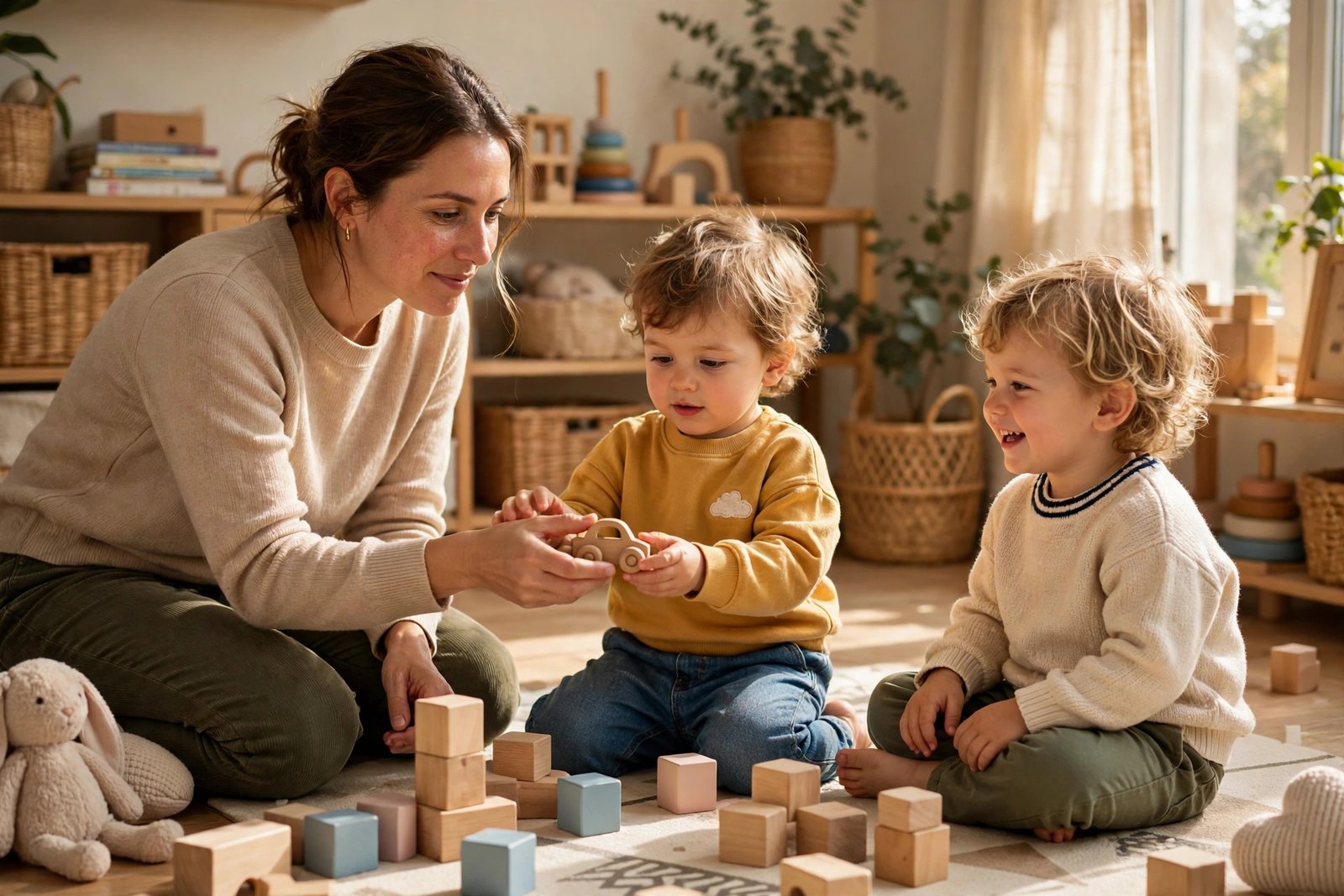
Toddlers copy what they see more than what they hear, so let your child watch you take turns. At snack time say, “My turn to pour, now your turn.” With a book say, “My turn to turn the page, now your turn.” Everyday turns like these teach that waiting is normal, and your turn always comes.
Practise at Home With Games
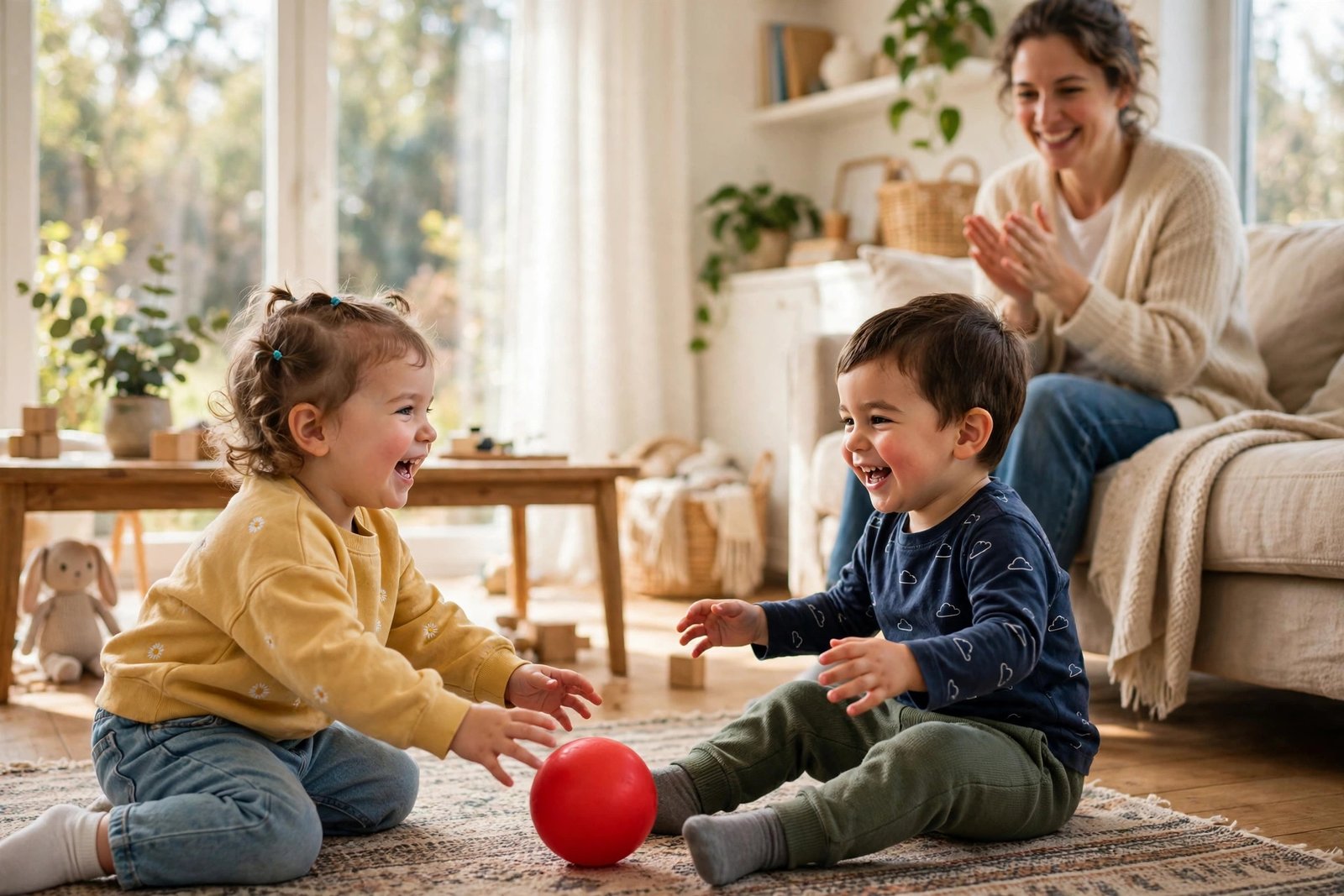
Home feels safe, so it is the best place to learn. Roll a ball back and forth. Take turns adding blocks to a tower, stirring a pretend cake, or placing puzzle pieces one by one. Keep practice short and fun, and stop if your child gets cross. Five happy minutes teach far more than a long, stressful lesson.
Use a Simple Timer
A timer helps because it takes the argument away from you. Instead of you ending the turn, the timer does. Use a kitchen timer, a sand timer, or a song everyone knows. Start with very short turns, one or two minutes, so waiting feels possible. Say, “When the timer rings, it is Maya’s turn, then your turn again.” Keeping that promise builds trust.
Bring Duplicate Toys to Playdates
Playdates go more smoothly when children do not all need the exact same toy. Set out or bring two of popular things: two cars, two balls, two buckets, two dolls. This is not spoiling children. It sets them up to succeed, like putting out enough chairs and cups for every guest. As turns get easier, you can slowly offer fewer duplicates.
Put Truly Special Toys Away Before Friends Visit
Every child has one or two extra special toys, perhaps a loved teddy or a gift from a grandparent. Before friends arrive, put them away together. Say, “These are your special toys. We will keep them safe in your room. The other toys are for playing together.” Adults do not hand their most precious things to every visitor, so this is fair, and it prevents many tears.
Narrate and Praise Turn-Taking
Say what you see, out loud, like a friendly storyteller: “You gave the car to Sam. Now it is Sam’s turn. You are waiting so well.” This helps your child notice turns and learn the words for them. Praise small wins warmly and right away: “You let your sister have a turn with the drum. That was kind.” Children repeat what gets noticed.
Keep Your Phrases Short and Simple
In a busy, emotional moment, long sentences get lost. Use the same few short lines again and again:
- “My turn, your turn.”
- “First Leo, then you.”
- “You are waiting. Your turn is coming.”
- “When the song ends, we swap.”
- “You can have it when she is finished.”
Point to each child as you speak, so the meaning is clear even for children with few words.
Playdates and Siblings: Making Turns Easier
At Playdates
Keep playdates short, one or two hours is plenty, and plan them when children are fed and rested. Set out a few good toys rather than everything you own, and stay close so you can help with turns before small problems grow big. If big feelings spill over, do not panic. Many parents have worried about toddler tantrums in public or at a friend’s home. A calm adult, a drink of water, and a quiet corner help far more than worry.
With Brothers and Sisters
Brothers and sisters have their own hard parts. An older child may feel their things are always taken. A younger child may grab because they cannot yet ask with words. Give each child a small box or shelf for special things that are not for sharing, and keep shared toys in shared spaces. Do not make the older child always give in. Use the timer fairly for both, and praise kind swaps.
What to Say When a Snatch Happens
Even with good practice, snatching will happen. Here is a calm way through it that I have used many times.
- Get down to their level and keep your voice calm.
- Gently return the toy to the child who had it. Say, “It was Ana’s turn. I will help you wait.”
- Comfort both children. Both sets of feelings are real.
- Offer the waiting child something else to hold or do.
- When the turn ends, follow through and praise the waiting.
Sometimes a grab turns into pushing when feelings run high. If that happens, our guide to toddler hitting and biting walks through calm steps for that moment too. Keep your words few and your actions the same each time. Toddlers learn from the pattern.
Mistakes to Avoid
Most of us have done some of these in a tired moment, so read this list with kindness towards yourself.
- Forcing a child to hand over a toy mid-play. This usually teaches fear and anger, not sharing. Wait for a natural pause, or set up a turn with a timer.
- Snatching toys away as punishment. This models the very grabbing you want to stop, and it breaks trust.
- Shaming or labelling your child selfish. Words like “selfish” or “naughty” stick in a child’s heart and teach no skill. Describe the action, not the child.
- Long lectures. A toddler cannot follow a long talk in an emotional moment. A few calm words teach far more.
- Any physical punishment. Hitting or smacking never teaches sharing. It teaches fear and can damage your child’s trust in you. There is always a calmer way.
If you slip, you can repair it. Say sorry, give a cuddle, and try the calm way next time.
When to Ask for Extra Help
For most toddlers, trouble with sharing is a normal stage that fades with time and practice. But sometimes it comes with other worries, and then it is wise to ask for extra help.
Talk to your health visitor or family doctor if your child has very little language for their age, avoids all social play, or seems not to notice other children. The same is true if you have wider concerns about how your child is developing, playing, or communicating. You know your child best, and support is there for both of you.
Frequently Asked Questions
At what age do toddlers start to share?
Most children begin to share a little around three or four, and true sharing keeps growing through the early school years. If your two year old will not share yet, that is completely normal.
Should I make my toddler share with visitors?
No, you do not need to force it. Forcing a child to give up a toy mid-play usually causes tears and teaches little. Instead, put special toys away before visitors arrive, set out toys that are fine for turns, and guide short turns with a timer and praise.
What if my child grabs toys from other children?
Stay calm, return the toy to the child who had it, and comfort both children. Say, “It was her turn. Your turn is next.” Help your child wait, and follow through when their turn comes. With the same calm response every time, grabbing slowly happens less.
How long should a toddler’s turn be?
Keep turns short at first, around one or two minutes, especially for children under three. Short turns make waiting feel possible and build trust that the toy will come back. As waiting gets easier, turns can slowly get longer.
This article shares my own experience as a mom and is for general information only. It is not medical or professional advice. For full details, please read our disclaimer.